On Wednesday, Cuban President Miguel Díaz-Canel expressed his gratitude to Brazilian President Luiz Inácio Lula da Silva for sending 48 tons of milk powder to Santiago de Cuba. The donation is primarily aimed at supporting children in the eastern provinces of the island.
In a message shared on his social media account, Díaz-Canel stated: "Our deepest thanks to Brother President @LulaOficial and the noble people of Brazil for their valuable donation of milk powder. This act of genuine solidarity, received in Santiago, is mainly for the children in the eastern provinces. Thank you, #Brazil!"
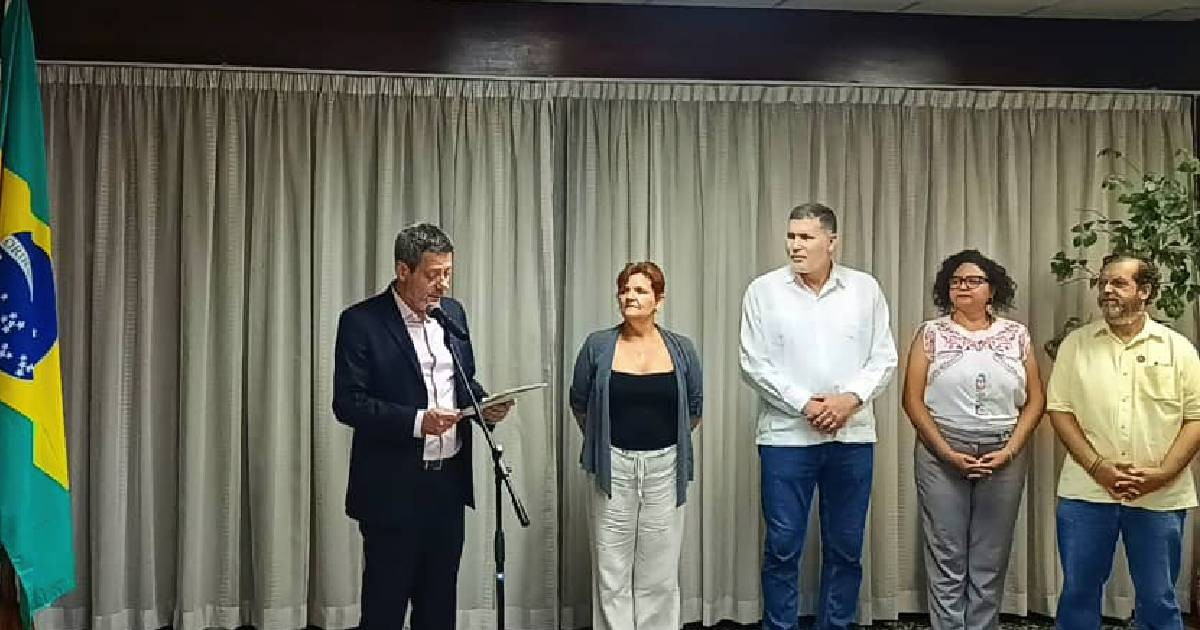
The formal handover was conducted by Brazil's ambassador to Cuba, Christian Vargas, who presented the shipment to the Vice Prime Minister and Minister of Foreign Trade and Foreign Investment. Representatives from the World Food Program and Brazil's Landless Workers' Movement were also in attendance at the ceremony.
The 48 tons were brought into Cuba via two Brazilian Air Force flights. The first flight, on July 13, carried 16 tons from the Canoas Air Base in Rio Grande do Sul, while the second flight, on July 14, delivered 32 tons from Porto Alegre.
Both flights landed in Santiago de Cuba on Wednesday. The decision to send this aid was made during a July 9 meeting chaired by Lula, with coordination handled by the Brazilian Cooperation Agency and food provided by the National Food Supply Company (Conab).
This donation comes amid a severe milk shortage in Cuba, a crisis acknowledged by the government itself. On June 6, the Minister of the Food Industry, Alberto López Díaz, admitted that the official distribution plan is "impossible to fulfill," with over 100,000 children missing their daily milk ration.
National milk production has plummeted by 37.6% recently, and the plan aims to supply 331,000 children with milk powder and 200,000 with fluid milk, targets that are not being met.
This aid is part of a larger shipment announced by Brazil in March 2026, which included 20,000 tons of rice, 150 tons of black beans, and 500 tons of milk powder distributed by the World Food Program. Cuba owes Brazil $676 million with no foreseeable repayment plan.
International aid to Cuba has often been contentious. In May 2026, Cuban lawmaker Leydis Aguilera accused that donated milk powder was being sold in state-run stores priced in dollars, controlled by the military conglomerate GAESA, at $243 per 25-kilogram bag.
Uruguay demanded evidence of the final destination of its donation to ensure it didn't end up in these commercial circuits. The Cuban government has consistently denied these allegations, insisting that the products are distributed freely to children, pregnant women, and vulnerable individuals.
The eastern provinces, the targeted recipients of Brazil's donation, have received several recent shipments: just four days before this cargo arrived, 66 tons of milk donated by Mexico were sent to Santiago de Cuba and Granma, destined for Guantánamo and Isla de la Juventud.
Understanding Cuba's Milk Shortage Crisis
Why is there a milk shortage in Cuba?
Cuba is experiencing a milk shortage due to a significant drop in national milk production, which has decreased by 37.6%. This has made it difficult to meet the planned supply targets for children and other vulnerable groups.
How is Brazil assisting Cuba with the milk crisis?
Brazil has donated 48 tons of milk powder to Cuba, specifically aimed at supporting children in the island's eastern provinces. This is part of a broader humanitarian effort to aid Cuba during its food shortages.
What controversies surround international aid to Cuba?
International aid to Cuba has sparked controversy, with allegations that donated goods, such as milk powder, are being sold in state-run stores instead of being distributed freely to those in need. The Cuban government denies these claims.