In recent weeks, the Pentagon has been examining various scenarios for a potential military operation against Cuba. Among these is an aerial assault spearheaded by the renowned 101st Airborne Division, as reported by CBS News on Wednesday. The report cites several anonymous U.S. officials.
This revelation naturally prompts a significant question: What exactly is the 101st Airborne Division, and why is it being considered for such a mission?
The Elite Aerial Assault Division
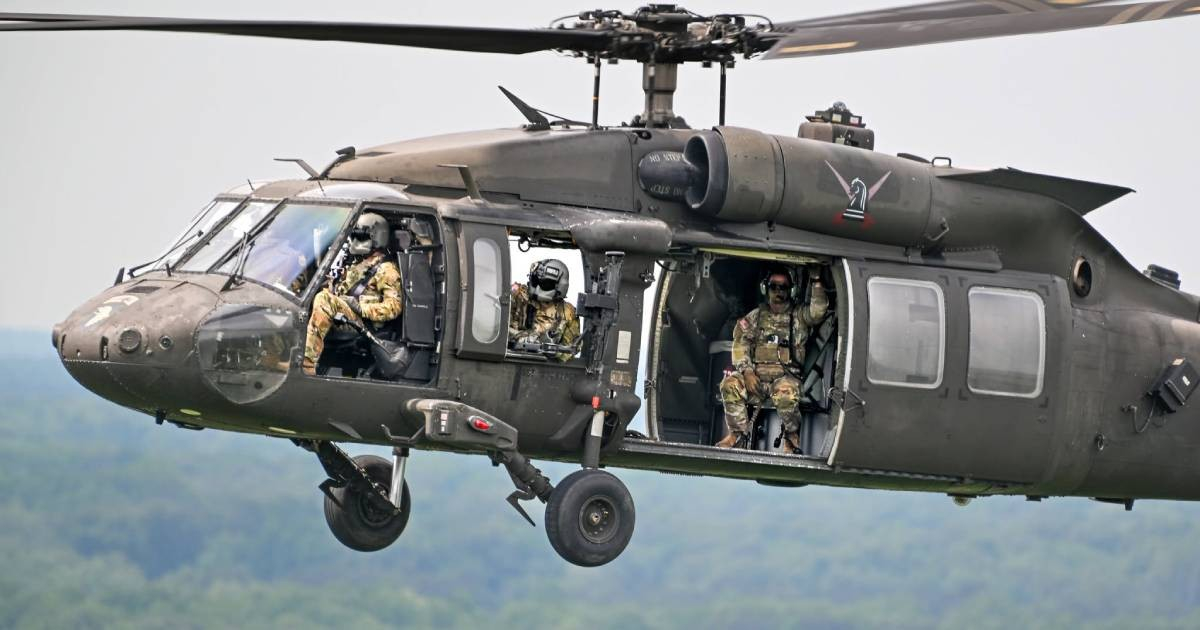
Known as the "Screaming Eagles," the 101st Airborne Division stands as one of the most iconic and battle-tested units in the U.S. Army. According to CBS News, it is the "only unit trained for this specific mission": deploying thousands of troops via helicopter into hostile territory within hours.
Founded on August 15, 1942, at Camp Claiborne in Louisiana, the division originally operated as a parachute unit. Over time, particularly during the Vietnam War, it evolved into an air mobile force specializing in aerial assaults.
Although it retains the "Airborne" designation, its focus has shifted from mass parachute jumps to helicopter-based operations. Stationed at Fort Campbell, Kentucky, the division is capable of deploying a full combat brigade—around 4,000 soldiers—under the cover of night over distances exceeding 500 nautical miles, utilizing CH-47 Chinook, UH-60 Black Hawk, and AH-64 Apache helicopters.
This capability was recently demonstrated during Operation Lethal Eagle 26.1, which involved approximately 7,000 soldiers and 22 rotary-wing aircraft at Fort Campbell.
A Storied Combat History
The 101st Airborne's distinguished combat legacy began during World War II. On June 6, 1944, the division's paratroopers were crucial participants in the Normandy invasion, landing across French territory amid fierce German anti-aircraft fire. Later, they famously held out against the German siege in Bastogne during the Battle of the Bulge.
Since then, the division has been a key player in major U.S. conflicts, including the Vietnam War, the Gulf War, and the Iraq and Afghanistan campaigns. In 2008, it played a pivotal role within the U.S. forces in Afghanistan.
Considerations for Cuba
CBS News reports that the U.S. military held a planning session in late June to explore possible actions concerning Cuba. This meeting evaluated mission objectives, troop requirements, logistics, and potential risks associated with an operation.
Sources emphasized that such planning exercises are routine for the Department of Defense and do not indicate a decision by President Trump or the Pentagon to initiate military action.
Acting Pentagon spokesperson Joel Valdez refrained from confirming any details, stating, "We do not comment on hypothetical military operations."
Officials acknowledged that an immediate intervention is unlikely, partly because many U.S. military resources remain focused on the Middle East, where operations against Iran have resumed.
Increasing U.S. Pressure on Cuba
The CBS News revelation comes amid heightened pressure from the Trump administration on the Cuban government. Recently, Washington expanded sanctions against the military conglomerate GAESA, President Miguel Díaz-Canel, and his family. This includes surveillance flights near Cuban shores and deploying over 1,300 marines in the Caribbean as part of Operation Southern Spear.
During a visit to the Guantanamo Naval Base on June 10, Secretary of Defense Pete Hegseth issued a stern warning to Havana. "It would be unwise for the Cuban government to attempt to acquire or access weapons capable of reaching this base or U.S. territory. Such actions would provoke a confrontation they cannot afford," he stated.
A month later, marking the fifth anniversary of the July 11 protests, Secretary of State Marco Rubio urged Cuban leaders to undertake substantial reforms, warning that it was not too late to choose "real reforms, peace, and prosperity before it's too late."
Understanding the Potential U.S. Military Options in Cuba
What is the 101st Airborne Division's main role today?
The 101st Airborne Division specializes in helicopter-based aerial assaults rather than traditional parachute jumps.
Why is the 101st Airborne Division considered for a potential operation in Cuba?
The division is uniquely trained to rapidly deploy troops into hostile areas, making it suitable for potential operations in Cuba.
Has the U.S. decided to take military action against Cuba?
No, the current planning is routine and does not indicate a definitive decision for military action.