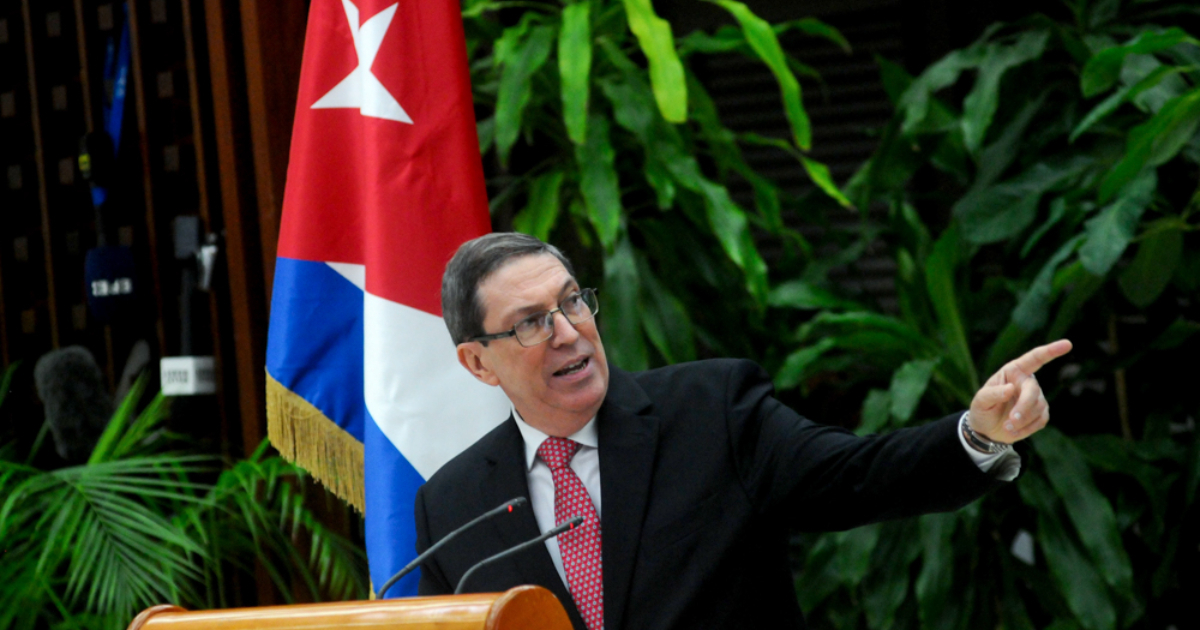
Cuba's Foreign Minister, Bruno Rodríguez Parrilla, placed the blame squarely on the United States for the total collapse of the National Electroenergy System that left the island without power on Tuesday. This blackout followed the shutdown of Unit 1 at the Felton thermoelectric plant in Holguín.
In a statement shared on social media platform X, Rodríguez Parrilla highlighted that the system's failure occurred amid what he described as the U.S. government's "maximum suffocation" of Cuba's economy and energy sector.
The foreign minister specifically targeted U.S. Secretary of State Marco Rubio, accusing American leaders of being indifferent to the hardships faced by Cuban families, including hospitals without electricity and food spoilage due to lack of refrigeration.
Energy Minister's Perspective
Vicente de la O Levy, Cuba's Minister of Energy and Mines, echoed these sentiments, telling the press that the power outage—marking the third in just over a week—was mainly due to a severely impacted electrical system. He pointed to the blockade and former President Donald Trump's executive order aimed at blocking oil shipments to Cuba as key factors.
Levy further elaborated on the dire situation, noting the "complete absence of fuel" and the lack of spare parts for thermoelectric plants and Energás units.
Restoration and Ongoing Issues
State agency Prensa Latina reported that power was restored by 7:00 AM local time on Wednesday, according to the Cuban Electric Union.
The blackout on Tuesday was the fifth complete outage of the year and the tenth in the past two years, with daily blackouts often lasting between twenty to twenty-four hours in many areas.
At the time of the collapse, the system was struggling with only 1,155 MW available against a demand of 3,150 MW, resulting in a shortfall between 1,990 and 2,020 MW.
Impact of U.S. Policies
A critical turning point in this crisis came on January 29, 2026, when Trump signed Executive Order 14380, which imposed secondary tariffs on any country supplying oil to Cuba, slashing Cuban energy imports by 80% to 90%.
Further exacerbating the situation, a second executive order on May 1, 2026, directly sanctioned CUPET, Cuba's state oil company, freezing its assets and threatening foreign companies that dealt with it with sanctions.
Humanitarian Consequences
The humanitarian toll is severe: over 100,000 patients, including 11,000 children, are awaiting postponed surgeries, while 2,888 individuals reliant on hemodialysis have supplies for just three days.
The Cuban government has consistently deflected any internal accountability for the crisis, attributing the collapse entirely to U.S. sanctions. They have not acknowledged the structural decay of a Soviet-era thermoelectric grid that has suffered from inadequate maintenance for decades, nor the effects of 67 years of centralized economic management.
The historical peak of energy deficit was recorded just five days before the latest blackout: on July 10, the system faced a shortfall of 2,341 MW, with only 935 MW available, impacting 73% of the population.
Understanding Cuba's Energy Crisis
What caused the recent power outage in Cuba?
The recent power outage in Cuba was attributed to the shutdown of a unit at the Felton thermoelectric plant, compounded by U.S. policies that have restricted fuel imports and access to spare parts.
How has the U.S. government impacted Cuba's energy sector?
The U.S. government has imposed sanctions and executive orders that restrict oil imports to Cuba and sanction the Cuban state oil company, significantly impacting the country's energy imports and infrastructure.
What are the humanitarian effects of Cuba's energy crisis?
The energy crisis has led to postponed surgeries for over 100,000 patients, including 11,000 children, and limited hemodialysis supplies for nearly 3,000 individuals.