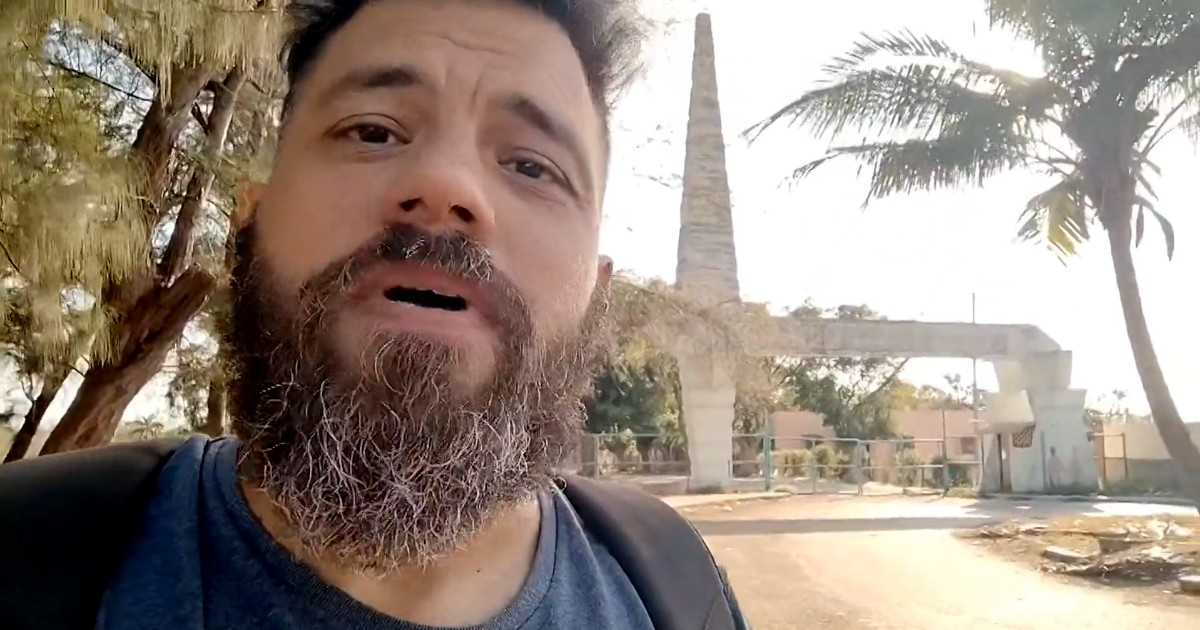
Independent journalist Austin Llerandi, head of the community outlet Amanecer Habanero, endured an intense interrogation by State Security at the Marianao police station. During the more than hour-long session, authorities threatened Llerandi with imprisonment for his role in managing and disseminating the outlet's newsletters.
The situation was reported by the organization Citizenship and Freedom via social media and documented by the Cuban Observatory for Freedom of Expression (OCLE) of the Cuban Institute for Freedom of Expression and Press (ICLEP). The interrogation took place on Tuesday, July 14th, at the police facility in the Havana municipality.
An officer known as Rodrigo presented Llerandi with an open criminal file bearing his name, warning him of impending charges for supposed crimes against State Security, despite the absence of any formal accusation or transparent judicial process.
Among the most alarming threats, the official targeted Llerandi's family, specifically mentioning his wife's pregnancy. The officer ominously stated, "If you distribute the newsletter, next time I call, give your wife a kiss on the belly, because you're going to jail."
Systematic Intimidation and Surveillance
The pressure campaign began on Monday, July 13th, when the same officer visited Llerandi's father's home to locate him, making it clear that the authorities were aware of the couple's address and their hospital visits related to the pregnancy.
Furthermore, State Security claimed to have identified and monitored other members of Amanecer Habanero, tracking their residences and routine movements, underscoring a pattern of systematic surveillance targeting the entire team of the outlet.
History of Repression Against Media Outlets
Amanecer Habanero is part of ICLEP's network, the sole operational community media network in Cuba for over six decades, responsible for printing and distributing clandestine newsletters and newspapers in Havana and beyond. This distribution activity has been a focal point for repression; in March 2026, Páginas Villareñas, another ICLEP network outlet, was shut down following a police raid in Villa Clara.
Llerandi has a record of clashes with the regime. In June 2022, he posted a photo on Facebook of his university degree inside a pot of rice to protest economic hardships, which resulted in his inability to work as a Spanish and Literature teacher.
In May 2026, Llerandi faced another professional setback after releasing a video exposing the neglect of his former educational institution.
Escalating Repression Against Independent Press
This case is part of a broader pattern of increasing repression against independent media in Cuba. ICLEP reported 157 incidents affecting freedom of expression in May 2026, marking a 45.4% rise compared to the same month in the previous year, with State Security being the primary instigator in most events. Throughout 2025, the organization recorded 1,188 violations of freedom of expression, reflecting a 54.7% increase from 2024.
Cuba ranks 160th out of 180 countries in the 2026 World Press Freedom Index by Reporters Without Borders, making it the second worst in the Americas regarding press freedom.
Understanding Cuba's Press Freedom Challenges
Why was Austin Llerandi threatened by State Security?
Austin Llerandi was threatened due to his role in directing and distributing newsletters for Amanecer Habanero, a community media outlet that operates independently from the Cuban government.
What tactics did State Security use to intimidate Llerandi?
State Security used the threat of imprisonment and leveraged the pregnancy of Llerandi's wife as a means of psychological pressure to deter him from distributing the newsletters.
How does Amanecer Habanero contribute to the media landscape in Cuba?
Amanecer Habanero is part of a network that prints and distributes clandestine newsletters and newspapers, offering a platform for independent journalism in Cuba, which is otherwise heavily restricted by the state.