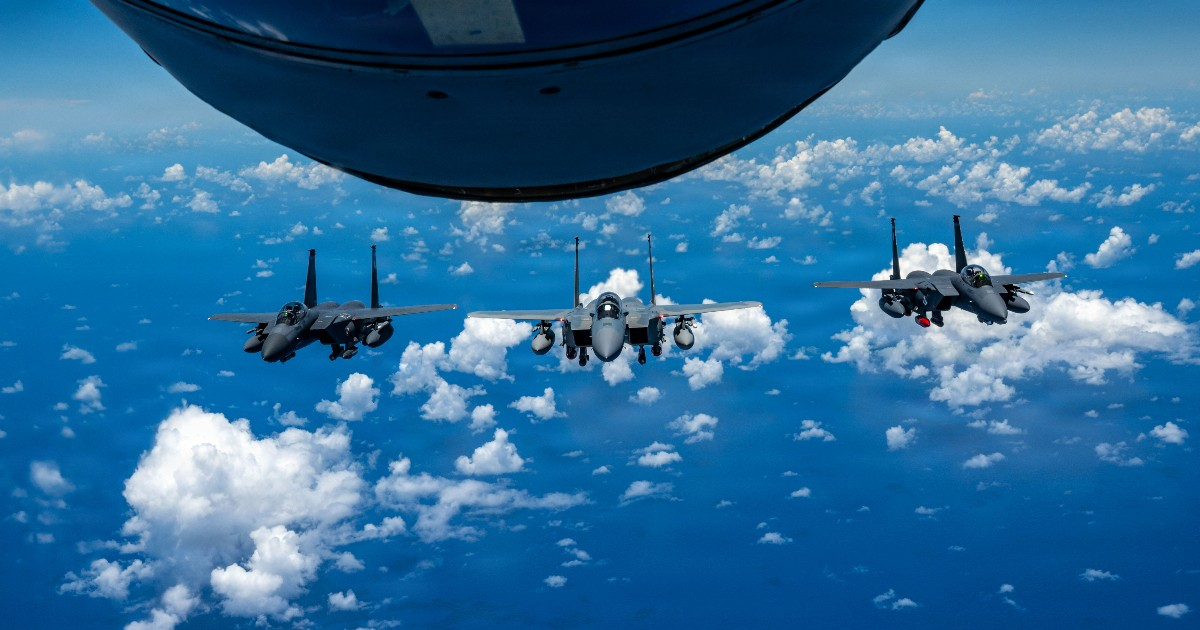
On Wednesday, the United States Central Command (CENTCOM) declared the launch of another wave of military strikes against Iran, marking the fourth night of continuous attacks since President Donald Trump declared the ceasefire void last week.
According to an official statement from CENTCOM, the operations began at 6 a.m. Eastern Time and are intended to "further weaken the military capabilities that Iranian forces have used to target commercial shipping in the Strait of Hormuz."
This new escalation in the conflict follows the collapse of the so-called "Islamabad Memorandum," a 60-day ceasefire agreed upon between June 17 and 19 in Switzerland. The truce ended decisively when Iran used drones to attack three merchant vessels in the Strait of Hormuz on July 6 and 7, breaching the ceasefire agreement.
On July 8, from the NATO summit in Ankara, Trump announced the end of the truce with Iran, issuing a direct warning: "We are going to hit them very hard."
The most recent trigger was an attack by Iran's Revolutionary Guard Corps (IRGC) on the Cyprus-flagged container ship GFS Galaxy on July 12 in the Strait of Hormuz. The assault led to a fire aboard, with ten crew members rescued and one still missing.
Since then, the U.S. has conducted successive bombing waves, which on July 13 targeted locations such as Bushehr, Chah Bahar, Jask, Konarak, Abu Musa, and Bandar Abbas, over a continuous five-hour period.
Within just a week, U.S. forces have struck more than 300 Iranian military targets, according to operational reports.
Simultaneously, the U.S. reinstated a naval blockade on Iranian ports starting at 20:00 GMT on Tuesday, intercepting vessels either departing from or headed to Iran.
The Institute for the Study of War (ISW) described the situation as the "effective end of the ceasefire," cautioning that the intensity of the fighting in the Persian Gulf now exceeds levels seen during the initial phases of the conflict.
In retaliation, Iran attacked military installations in Kuwait and Bahrain, resulting in at least one fatality and over 60 injuries. The IRGC declared that the Strait of Hormuz "will remain closed until the U.S. ceases its malign actions."
CENTCOM dismissed that claim, asserting that the strait "remains open" and that Iran "does not control the passage," a critical route through which 20% of the world’s oil supply passes.
The origins of the conflict trace back to Operation Epic Fury, a joint effort by the U.S. and Israel launched on February 28, 2026, which saw nearly 900 strikes within the first 12 hours. This offensive resulted in the death of Iran's Supreme Leader Ayatollah Ali Khamenei on March 1, 2026, and the destruction of nuclear facilities in Natanz, Isfahan, and Fordow.
Key Questions About the U.S.-Iran Conflict
What triggered the latest U.S. airstrikes on Iran?
The latest U.S. airstrikes were triggered by Iran's breach of the ceasefire, particularly following drone attacks on merchant vessels in the Strait of Hormuz.
What is the significance of the Strait of Hormuz in this conflict?
The Strait of Hormuz is a strategically crucial waterway where about 20% of the world's oil supply passes, making it a focal point in the conflict between the U.S. and Iran.
How has Iran responded to the U.S. military actions?
Iran has retaliated by attacking military sites in Kuwait and Bahrain, and the IRGC has declared that the Strait of Hormuz will remain closed until U.S. actions cease.