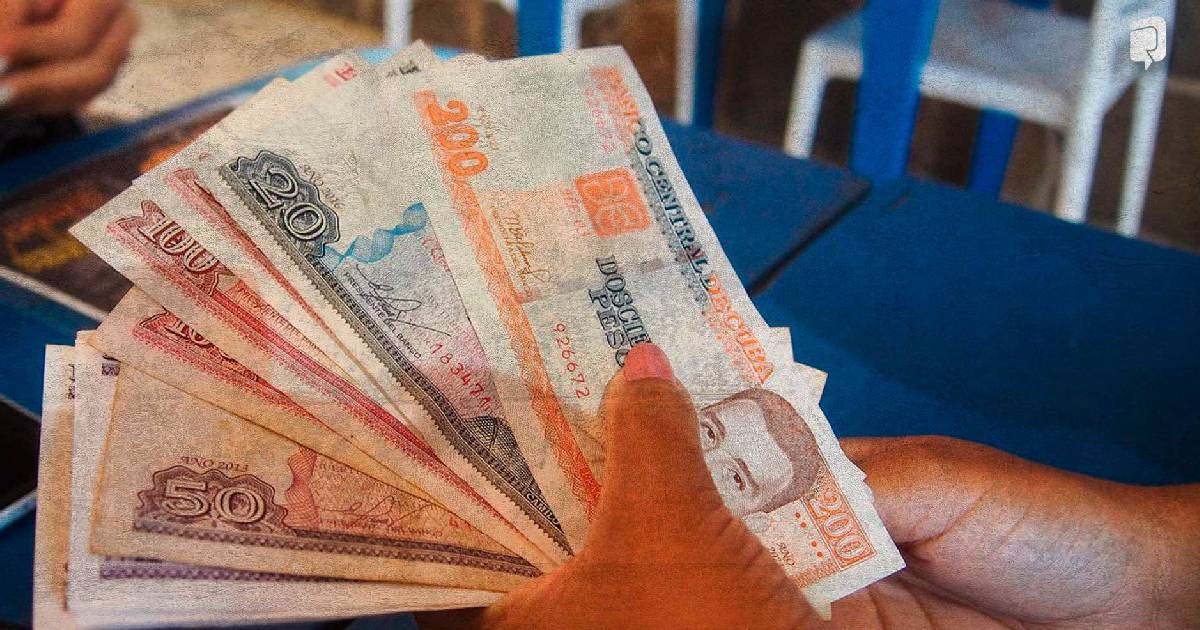
Residents across various provinces in Cuba are expressing outrage over the state-run banks' policy that allows only 500 pesos to be withdrawn per transaction. This meager amount is insufficient for purchasing basic necessities like food and medicine, and often, people can only make a withdrawal once a week after securing an assigned appointment.
A report by citizen journalist Reinaldo Abreu Milián in El Espirituano highlighted that the Banco Popular de Ahorro (BPA) in Sancti Spíritus has implemented a pre-appointment system for cash withdrawals, capping at 500 pesos per customer.
To withdraw cash, individuals must visit the branch, obtain an appointment, and wait for the designated day—often weeks later—hoping that both electricity and funds are available at the bank.
The Struggle to Access Funds
A resident from Sancti Spíritus shared her ordeal, stating that she managed to secure an appointment in August just to withdraw money from a received transfer, underscoring the severe delays.
"Each day, withdrawing money from banks becomes more challenging. You get an appointment and can only withdraw 500 pesos when it's your turn, which solves nothing. To make matters worse, with so many power outages, everything is more complicated. This is the end; life gets harder every day," said Carlos Vegas Mena, a resident of Serafín Sánchez Street in the capital of Sancti Spíritus.
Nationwide Frustration
The issue extends beyond Sancti Spíritus. Daysi Silveira from Jagüey Grande (Matanzas) took to Facebook to complain that retirees were supposed to receive payments by the 20th of the month, yet by the eighth, they hadn't received anything.
"Where is the retirees' money? Bunch of thieves," she wrote, emphasizing her struggle to feed her disabled son.
In San Antonio de los Baños (Artemisa), a Cuban woman identified as Liss Karla La Loba shared a video lamenting that the bank restricts her to a 500-peso weekly withdrawal, inadequate for buying medicine and food for her ailing mother.
"I go to the bank to withdraw money, and all I'm allowed is 500 pesos per day. And when you get there, they say no, it's once a week, and with 500 pesos, my sister, you can't eat here," she expressed.
Economic Disparity and Black Market
Over 80% of people in Sancti Spíritus receive salaries and pensions via magnetic cards, but most stores refuse electronic payments, making cash essential.
This contradiction, highlighted by the collapse of Cuba's banking system, traps citizens with digital balances they cannot convert into goods.
The situation has also given rise to a black market for appointments: people line up to secure them and resell at inflated prices.
In Morón (Ciego de Ávila), individuals must pay 500 pesos to a middleman just to secure a number and receive their salary. In Santiago de Cuba, commissions to convert transfers into cash reach 50%.
Structural Collapse of Banking
The banking crisis has deep roots. The Banco Metropolitano of Havana reduced its withdrawal limit from 5,000 to 3,000 pesos in June 2026 and halted appointment bookings. That same month, the Granma government admitted it lacked funds to pay pensions to over 111,000 retirees.
Only 3.77% of transactions in Cuba are digital, three years after mandatory banking was enforced by law.
Even officialist singer-songwriter Raúl Torres voiced his frustration on Facebook last Sunday: "Today, when I learned the bank gives just 500 pesos per customer, I got a lump in my throat. It's not resentment; it's pain."
The Central Bank of Cuba announced new banking measures to be gradually implemented starting August 3, 2026, but citizens see no immediate solution to a crisis that deprives them of access to their own money.
Cuban Banking Crisis: Key Questions Answered
Why are Cubans limited to withdrawing only 500 pesos?
The 500-peso limit is part of a policy by state-run banks to manage cash flow amid economic challenges, although it fails to meet the citizens' basic needs.
What impact does this limit have on everyday life in Cuba?
This restriction makes it difficult for Cubans to afford essential goods and services, exacerbating daily struggles and creating a black market for bank appointments.
How are Cubans coping with banking restrictions?
Many are forced to engage in black market activities to secure bank appointments, and others pay high commissions to convert digital money into cash.