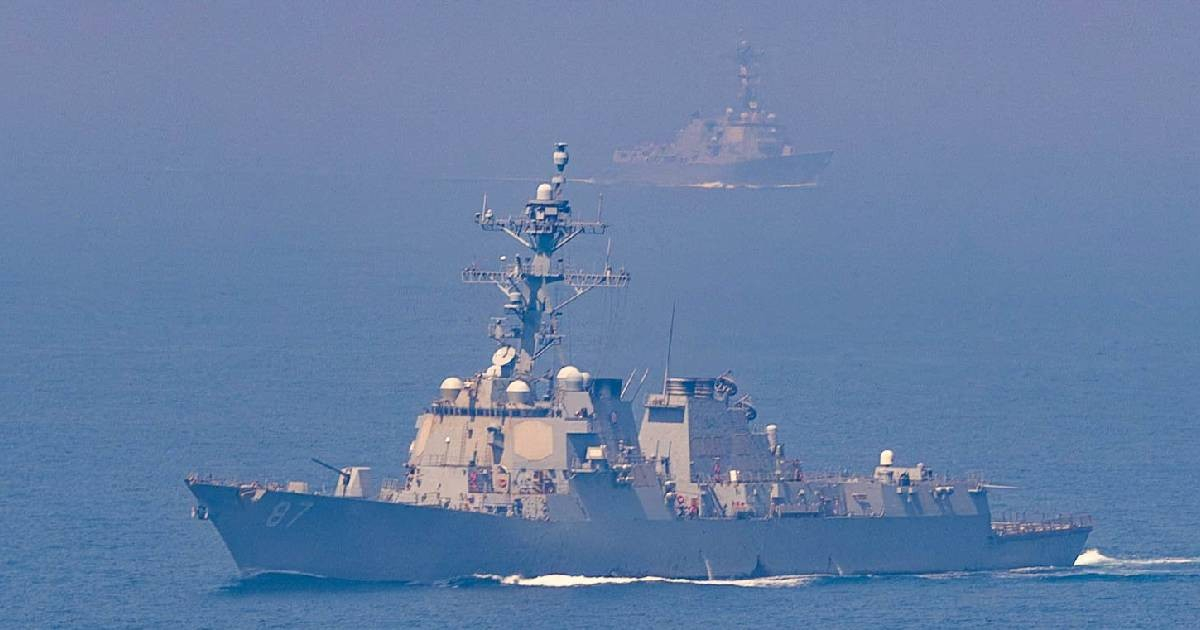
The United States Central Command (CENTCOM) launched another round of military strikes against Iran on Monday at 4:45 p.m. EST, under direct orders from President Donald Trump. This marks the third consecutive night of attacks aimed at reducing Iran's military capabilities in the Strait of Hormuz.
According to CENTCOM's official statement, these operations intend to "continue imposing significant costs on Iranian forces and diminishing their ability to target innocent civilians and commercial shipping in the Strait of Hormuz."
Over the past week, U.S. forces have targeted more than 300 Iranian military sites, including missile and drone facilities, naval assets of the Islamic Revolutionary Guard Corps (IRGC), ammunition depots, communication networks, and coastal surveillance stations.
Escalating Tensions
The immediate trigger for this recent escalation was an attack by the IRGC on the Cypriot-flagged container ship GFS Galaxy on July 12 in the Strait of Hormuz. The ship, carrying 11 Indian crew members, caught fire and sustained damage to its engine room; ten crew members were rescued, while one remains missing, according to the Indian government.
Iran defended the assault, claiming the GFS Galaxy was on an "unauthorized route" with its navigation systems turned off. This incident is part of a series of IRGC aggressions against commercial vessels, violating the temporary ceasefire signed in Switzerland on June 18-19, 2026, which called for a 60-day truce and the reopening of the Strait.
U.S. Response and Global Implications
Following Iranian attacks on three commercial ships on July 6 and 7, President Trump declared the ceasefire "over" on July 8 and authorized strikes on over 80 Iranian targets, including anti-aircraft systems, radar installations, and more than sixty IRGC small boats.
In tandem, the U.S. reinstated a naval blockade against Iran starting Tuesday, imposing a 20% levy on traffic through the Strait of Hormuz, which Tehran denounced as "piracy." In retaliation for this week's bombings, Iran launched ballistic missiles and drones targeting U.S. military bases and allied forces in Jordan, Kuwait, Bahrain, Oman, Qatar, and the United Arab Emirates.
During this conflict, CENTCOM utilized maritime drones in combat for the first time, deploying them against Iran's Bandar Abbas port. The ongoing dispute, rooted in Operation Epic Fury on February 28, 2026, saw a joint U.S.-Israeli campaign strike over 1,000 Iranian targets, including nuclear facilities. Since then, Iran has repeatedly closed the Strait of Hormuz, disrupting up to 97% of naval traffic and causing global oil prices to surge.
The Strait of Hormuz handles roughly 20% of the world's crude oil trade, making any closure a significant blow to the global economy.
On July 10, Israel alerted the U.S. to an alleged Iranian plot to assassinate President Trump, an element that adds another layer to the ongoing escalation and one that Washington has not publicly ruled out as a factor in its military decision-making.
Understanding the U.S.-Iran Conflict
Why is the U.S. targeting Iran in the Strait of Hormuz?
The U.S. aims to degrade Iran's military capabilities in the region and prevent Iranian forces from threatening commercial shipping and civilian safety in the Strait of Hormuz.
What was the trigger for the recent U.S. attacks on Iran?
The immediate trigger was an IRGC attack on the container ship GFS Galaxy in the Strait of Hormuz, which led to President Trump authorizing military strikes on Iranian targets.
How does the conflict affect global oil prices?
Iran's closure of the Strait of Hormuz disrupts significant portions of the world's crude oil trade, causing oil prices to spike due to reduced supply.