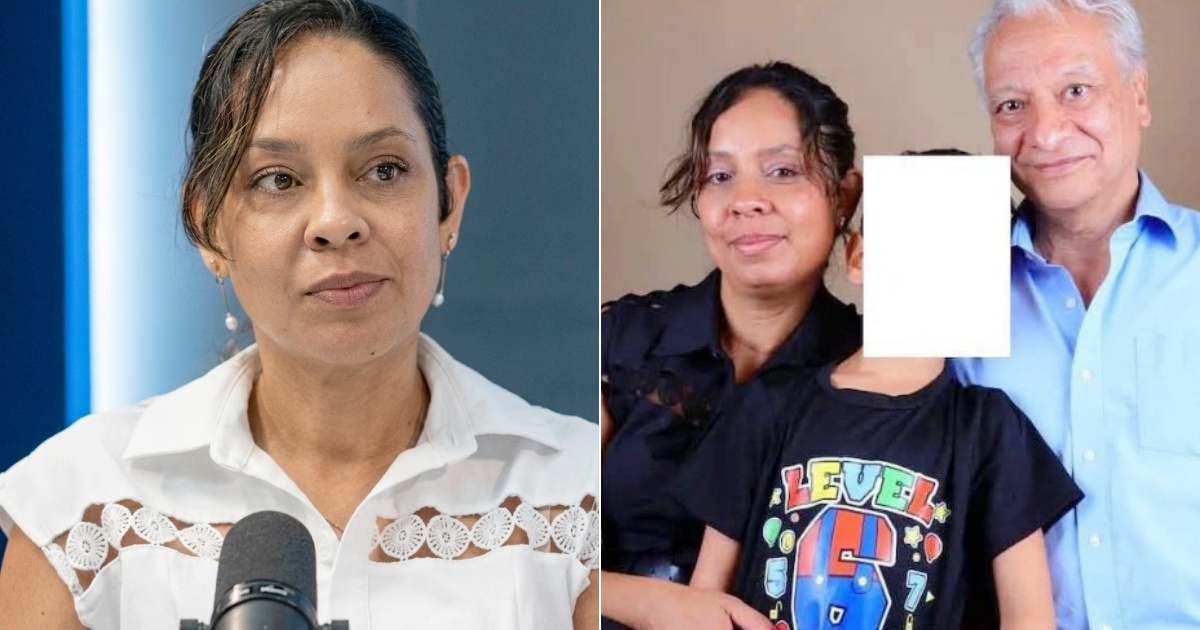
María Felicia Jiménez Lavié, a Cuban nuclear engineer, has made headlines in Mexico after sharing a video in which her husband, Víctor Rodríguez Padilla, former director of Petróleos Mexicanos, is seen assaulting her in front of their six-year-old son. On Monday, she submitted a formal letter of forgiveness to the judge overseeing the case, aiming to halt the criminal proceedings against him.
Signed on July 10 and filed with the Morelos Prosecutor's Office, the letter was read aloud by Judge Adriana Correa Ortiz during Rodríguez Padilla's second court appearance at the Atlacholoaya Judicial Center.
Witnesses reported that Rodríguez Padilla displayed a noticeable smile in the courtroom upon hearing the letter read. The unexpected move caught both the defense and the Public Prosecutor by surprise, especially since just the day before, compelling evidence, including a security video from March 3, 2026, had surfaced showing the former official repeatedly hitting his wife.
Jiménez Lavié's Rationale for Forgiving
In her letter, Jiménez Lavié articulated four main reasons for requesting the cessation of investigations in Morelos and Mexico City.
The first reason cited is the alleged reconciliation between the couple. She stated that they have achieved a "genuine reconciliation, stemming from a process of reflection, dialogue, and mutual commitment primarily aimed at ensuring the emotional stability, harmonious coexistence, and overall well-being of our young son."
Secondly, she highlighted her well-being and that of her children: "Continuing the legal proceedings is an unnecessary source of stress, uncertainty, and emotional strain for me and my minor children concerning a conflict that has been resolved through family reconciliation."
The third reason is legal in nature. The letter argues that proceeding without her consent amounts to "institutional revictimization contrary to the spirit of the law and international protection standards," and that "forcing the victim to continue participating in a process she no longer desires or needs is equivalent to using her complaint against her own will and well-being."
The final argument references a Supreme Court of Justice ruling prioritizing the best interest of the child to maintain family unity, provided there is no risk to the child's safety—a condition that, according to the letter, is not present in this case.
The letter ends with a decisive statement: "I have no intention of pursuing any claims against Mr. Víctor Rodríguez Padilla."
A Surprising Turn from Previous Statements
The forgiveness is particularly striking as, on July 1, Jiménez Lavié, in an interview with Radio Fórmula, dismissed the possibility of reconciliation. She revealed that Rodríguez Padilla had apologized through an intermediary but insisted there was no turning back, planning to seek a divorce once the legal proceedings concluded. In the same interview, she described the impact of power on her husband: "I never imagined the magnitude of Pemex, never imagined how power can change you. Pemex made him more arrogant, unfortunately."
Previously, she recounted the escalation of violence: "It started with verbal insults, then a slap, shoves, but none as brutal as this one. I was in pain for days after."
She also explained why she delayed reporting: "Breaking the silence meant losing my job, money, having nowhere to live, and potentially losing my children due to his connections with the presidential circles."
Judge's Response: Forgiveness Doesn't End Legal Proceedings
Judge Correa Ortiz did not immediately accept the letter as valid due to a lack of certification verifying the signature's authenticity. She scheduled a hearing for 8:00 a.m. the following morning for Jiménez Lavié to personally appear and confirm the document.
The judge emphasized a crucial legal point: domestic violence charges are pursued ex officio in Morelos, meaning the victim's forgiveness does not automatically terminate the criminal action.
Consequently, Rodríguez Padilla was bound over for trial on charges of domestic violence, maintaining the preventive detention ordered on July 8 when he was arrested in the Narvarte neighborhood of Mexico City and transferred to the Atlacholoaya prison.
The charge of coercive control was dismissed due to insufficient evidence.
The case began on June 26, when Jiménez Lavié released the security video that led to the opening of two investigations and public condemnation by Mayor Claudia Sheinbaum, who demanded "the full weight of the law" and assured that the former official "will not hold any public office again."
If Jiménez Lavié confirms her letter in the upcoming hearing, the defense will seek a reparation agreement, which, as confirmed by the defense attorney, includes financial compensation for the victim and her child, potentially allowing Rodríguez Padilla to face trial out of custody.
Key Questions on the Pemex Director's Case
What are the main reasons María Felicia Jiménez Lavié cites for forgiving her husband?
Jiménez Lavié mentions reconciliation, personal and children's well-being, legal concerns about institutional revictimization, and a Supreme Court ruling on the best interest of the child as her main reasons for forgiveness.
Why did the judge not immediately accept the letter of forgiveness?
The judge did not accept the letter because it lacked certification to verify the authenticity of Jiménez Lavié's signature. She required a hearing for personal confirmation.
Does the forgiveness from the victim end the legal proceedings?
No, in Morelos, domestic violence charges are pursued ex officio, meaning the victim's forgiveness does not automatically end the legal proceedings.