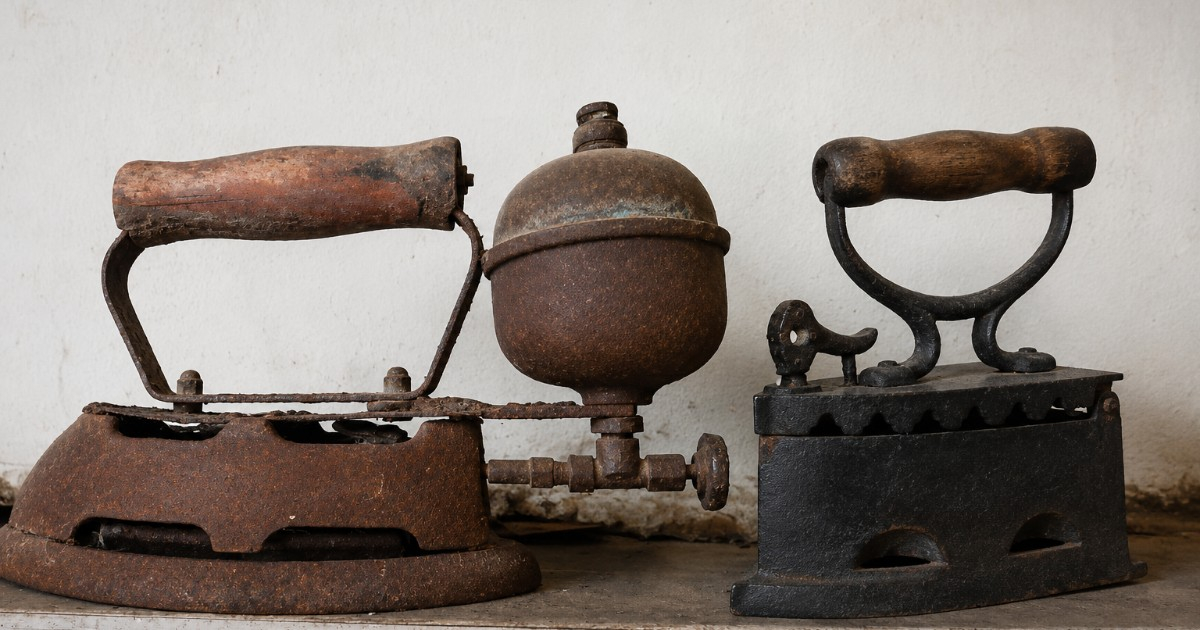
The official newspaper of Matanzas province, Girón, recently published an article about old cast-iron irons still found in rural areas of Cuba, describing them as a "curious story" of bygone artifacts. The Cuban public's reaction was swift and harsh.
In a piece featured in the "Matanzas Postcards" section, the publication whimsically asked readers if they knew that "in rural parts of the nation, various ancient cast-iron irons, especially those commonly known as charcoal irons, still exist."
While the official media saw nostalgia, Cubans interpreted it as a stark reminder of the country's regression. In July 2026, Matanzas experienced up to 87 consecutive hours without electricity, marking the longest provincial blackout on record.
Under such circumstances, a charcoal iron is no longer a relic but a practical tool. Comments on the article conveyed a mix of outrage and bitter humor.
"What poverty! We've returned to the 19th century," one reader remarked. Another was more blunt: "A prelude before we start using them again. Welcome to Cuba's modern Stone Age."
Many noted that these artifacts might soon be more than historical. "At the rate Cuba is regressing, it won't be long before we're in loincloths with feathers in our hair. Don't normalize poverty and backwardness, for God's sake. Publishing this in the 21st century is an ode to poverty," expressed another reader.
One person went further: "All that's missing for Columbus to discover us is the arrival of the three caravels. We're currently more behind than the early agriculturists and hunter-gatherers. At least they had means to farm, hunt, and fish; we don't even have that anymore."
The question of fuel quickly arose, with some comments pointing out that these old irons used gasoline: "And where is the fuel?" a user questioned. "At this rate, the charcoal iron will undoubtedly become widespread," another concluded.
Cuba is experiencing a documented technological regression. In May 2026, a scooter modified to run on charcoal through a homemade gasifier went viral in Villa Clara.
In March, a mechanic in Havana converted a 1980 Fiat Polski to run on charcoal due to gasoline shortages.
The industrial production index in 2024 fell below the levels of the Special Period in the 1990s, one of the worst economic crises Cuba has faced since 1959. The fuel crisis is so severe that Miguel Díaz-Canel has officially urged the provision of materials for cooking with charcoal and firewood.
A comment summed up the sentiment of many Cubans regarding the country's backward slide. "Soon we'll be making fire by rubbing stones together. Publications like this about charcoal irons leave us speechless, giving us a glimpse of what's to come."
The Impact of Technological Regression in Cuba
What was the reaction of Cubans to the Girón article about charcoal irons?
Cubans reacted with immediate and strong criticism, interpreting the article as a sign of the country's technological regression rather than nostalgia.
Why are charcoal irons becoming relevant again in Cuba?
Due to frequent power outages and severe fuel shortages, charcoal irons are seen as practical tools rather than historical artifacts.
How has the fuel crisis affected Cuba's technological progress?
The fuel crisis has led to a technological regression, with adaptations like scooters and cars being modified to run on charcoal, highlighting the severity of the situation.