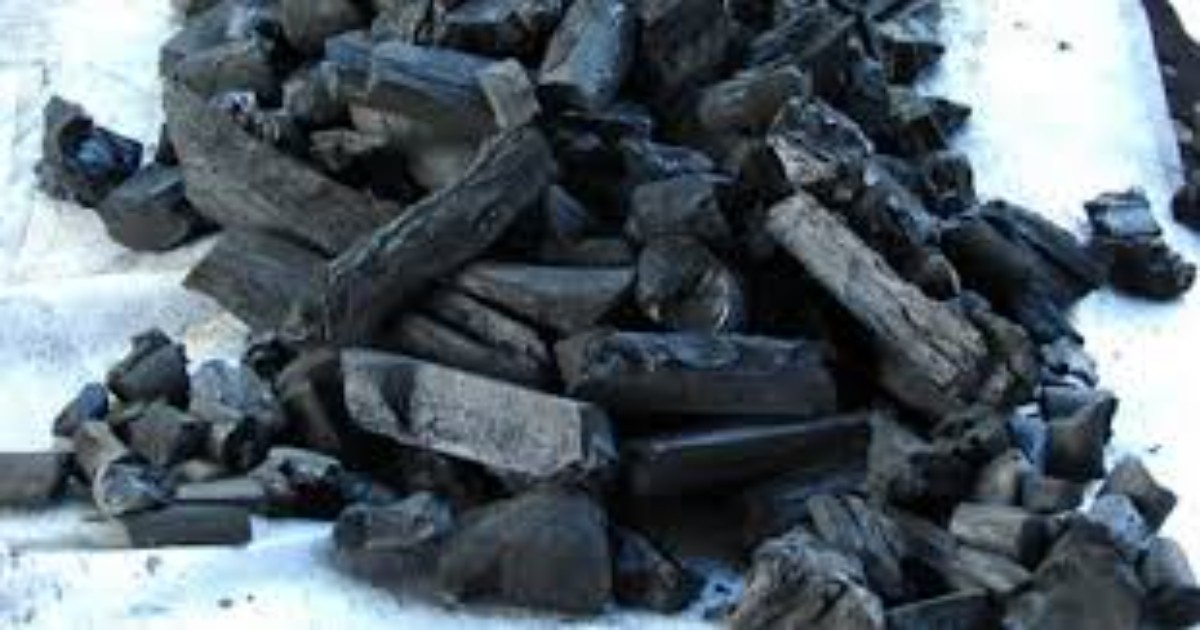
In a move to combat rising prices and increase supply, Dr. Alexis Lorente Jiménez, the governor of Sancti Spíritus, has instructed the province's agricultural companies to engage in charcoal production. This directive was reported on Monday by Radio Sancti Spíritus, a state-run broadcaster.
The shortage of charcoal has made it a luxury item for many families in Sancti Spíritus, especially amidst power outages that last over 20 hours in some areas, while liquefied gas is nearly impossible to find on the black market.
José Martínez Hernández, the provincial government's Program and Objectives Coordinator for agriculture, outlined the plan: utilize available staff—relocated due to electrical issues—to produce charcoal or collaborate with independent charcoal producers.
"The governor's directive is to leverage companies with available personnel who have been reassigned due to complex electrical issues, encouraging them to achieve production levels or find means to collaborate with independent charcoal producers," stated Martínez Hernández.
Charcoal's Vital Role in Public Services
The charcoal is not just for direct sale to the public. Martínez Hernández mentioned that it is also crucial for daycare centers, family care systems, schools, and healthcare units, which rely on it for cooking.
However, Martínez Hernández acknowledged the difficulties: the production of charcoal requires specialists who dedicate almost a week to oversee each kiln, and the companies lack the resources such as fuel and transportation to support this activity.
"Today's charcoal producers are specialized personnel who know how to construct and light the kiln, spending nearly a week monitoring it. Currently, companies face resource limitations like fuel and transportation," he admitted.
Independent Producers and Market Challenges
Independent producers fill this gap, but their resale activities drive up prices. In Cabaiguán, a location known for selling sacks at prices between 2,000 and 2,200 pesos, the market has seen changes.
In the province's informal market, a sack exceeded 4,000 pesos by the end of June, surpassing more than half of the average monthly official salary of 6,930 pesos.
The situation is under daily review by the Provincial Defense Council, but when asked about a stable supply guarantee, the official was forthright: "No, we cannot guarantee it today."
Export vs. Local Needs
The irony is stark: Sancti Spíritus hosts exporting companies like Forestal Integral, Flora y Fauna, and Agroindustrial de Granos Sur del Jíbaro that supply charcoal to Germany, the UK, Spain, and Portugal. In 2023, Cuba exported charcoal worth $61.8 million, ranking ninth globally, while its citizens struggle to afford it.
Other provinces have attempted similar approaches with varying outcomes. Camagüey's government set an official price of 1,400 pesos for a 20-kilo sack as of June 21, compared to 3,500-4,000 pesos in the informal market.
Despite having enough marabú to produce between 15,000 and 20,000 tons annually, Las Tunas achieved only 16% of its export charcoal plan in the first five months of the year.
Understanding the Charcoal Crisis in Sancti Spíritus
Why is there a charcoal shortage in Sancti Spíritus?
The shortage is due to extended power outages and limited access to liquefied gas, making charcoal a crucial and scarce resource for cooking and heating.
How are local companies addressing the charcoal supply issue?
Local companies are being directed to produce charcoal using available personnel or by collaborating with independent producers, despite challenges such as lack of resources and transportation.
What impact does the charcoal export industry have on local availability?
While Cuba is a major exporter of charcoal, local residents face difficulties in affording it due to high prices and scarcity, highlighting a disconnect between export success and domestic availability.