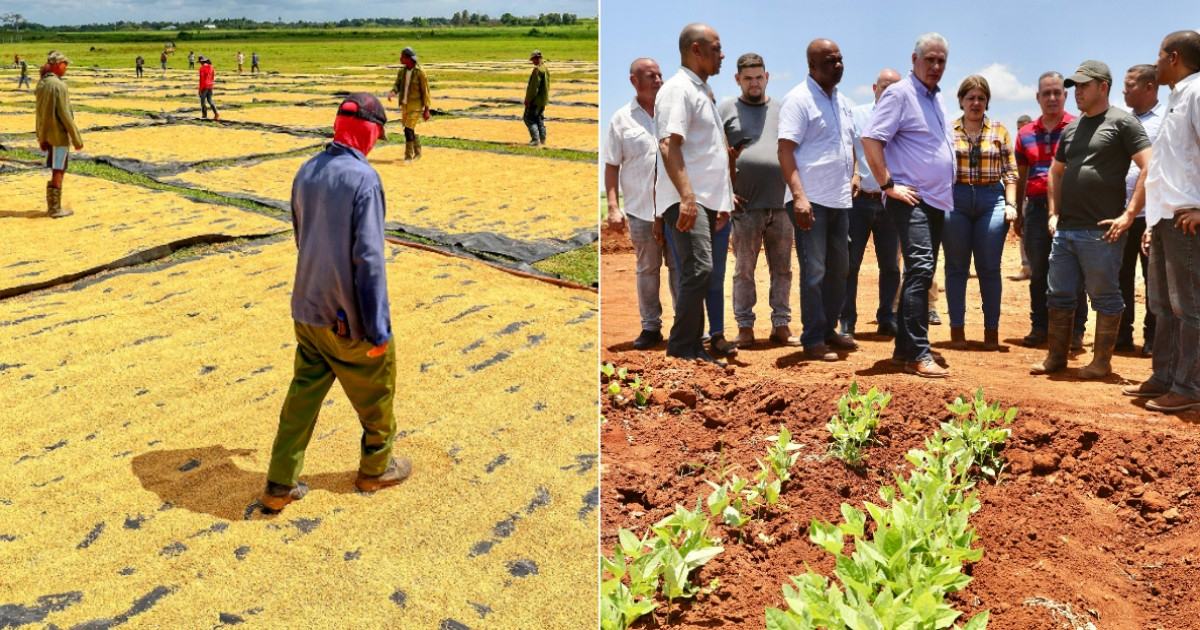
News that emigrants with effective nationality can apply for land under usufruct sparked a flood of skeptical and mocking comments on social media this Monday. The prevailing sentiment is that the Cuban government will reclaim the land as soon as it is cleared and productive.
This announcement, made on Sunday by Deputy Prime Minister Jorge Luis Tapia Fonseca during a meeting with agricultural producers, was perceived by the Cuban diaspora as a sign of economic desperation rather than a genuine opening.
One user sarcastically commented, "I'm rushing to the plane with my cash to invest! Wait for me, Díaz-Canel!" This remark became one of the most shared comments on CiberCuba's Facebook post.
The skepticism stems from real experiences. Many Cubans recalled personal or family stories of lands taken away once they started to yield. "They gave it to me and took it back when everything was set up," one user recounted. Another added, "Usufruct is useless, it's never yours; you get the land, make it perfect, and then someone else decides they want it, and you're done."
Usufruct: A System Under Scrutiny
The legal term "usufruct" itself drew much criticism. Under the usufruct system that has existed in Cuba since 2008, the state retains ownership of the land and can revoke the right to use it if contracts are breached or simply if the state decides to reclaim it.
"Usufruct is the name of the poison," summarized one commentator. Another bluntly stated, "Don't get your hopes up. In usufruct, once the land is productive, they take it back so you don't get tempted to become rich."
Historical Contradictions and Economic Realities
Many highlighted the historical contradiction in the proposal. For decades, the regime labeled emigrants as "worms" and "traitors," and now it calls on them to invest in lands that remain state-owned.
"Those they once rejected and called traitors are now called 'tridollars' because they need the money," remarked a user. Others echoed a phrase popularized by the regime itself: "Where did 'we don't want them, we don't need them' go?"
Questions about the specifics of the measure also went unanswered. The notion of "effective nationality," introduced in new migration laws published in May 2026, lacks clear regulation on how it will be verified for usufruct access.
"Effective nationality or nationality with cash?" quipped a commentator, one of the most celebrated lines in the thread.
Challenges of Agricultural Investment in Cuba
Users also pointed to material conditions that make any agricultural investment on the island unfeasible: scarcity of fertilizers, lack of fuel for machinery, absence of legal guarantees, and the state's practice of taking the majority of production.
"No one wants to work the land: first, because they steal everything; second, because there are no fertilizers; and third, because they themselves taught the population not to work the field," explained a user in a detailed comment that generated numerous agreeing responses.
An analytical voice warned that even if the measure shows visible economic results, the system will reverse them as soon as the political context changes: "Prepare for when Trump leaves the White House, because they will roll everything back in a month or two. That's always been the nature of that system."
The measure comes amid the worst food crisis in Cuba in decades: 96.91% of the population lacks adequate food access, tuber production fell by 44%, and the country imports between 70% and 80% of what it consumes.
The new Agricultural and Forestry Land Law, which will formalize these changes, is set for approval on July 29, 2026, during the ordinary session of the National Assembly, although implementation mechanisms for emigrants have yet to be published in the Official Gazette.
Understanding Usufruct and Its Implications in Cuba
What is usufruct in the context of Cuban land laws?
Usufruct is a legal arrangement where the state retains ownership of the land but grants the right to use it to individuals or entities. In Cuba, this means the government can revoke these rights at its discretion.
Why are Cubans skeptical about the government's offer of land under usufruct?
Cubans are skeptical because of past experiences where the government reclaimed lands once they became productive, leaving individuals without the expected returns on their investment and effort.
What are the main challenges for agricultural investment in Cuba?
The main challenges include a lack of fertilizers, inadequate fuel supplies for machinery, insufficient legal protections, and the state's tendency to take a large portion of agricultural output.