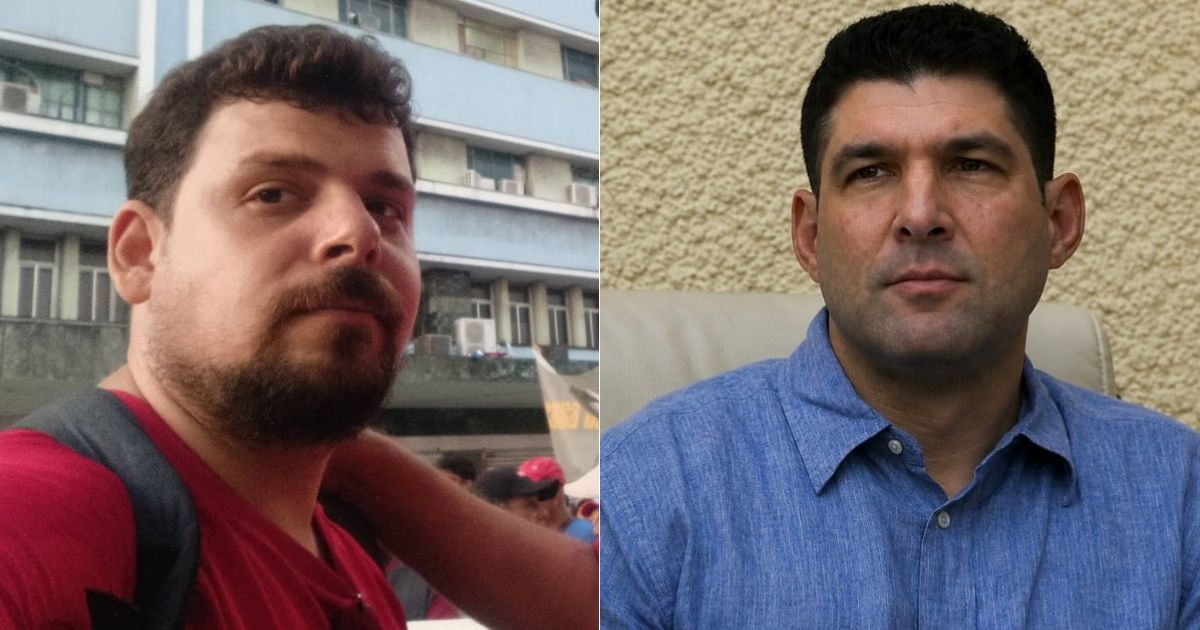
On the fifth anniversary of July 11th, writer and former TV director Yin Pedraza Ginori shared a fictional account on his Facebook page. He imagines the reaction of Raúl Guillermo Rodríguez Castro—known as "El Cangrejo" and the grandson of Raúl Castro—after reading an article by Michel Torres Corona on the Uruguayan site Mate Amargo. "El Cangrejo's" verdict? Three angrily scribbled letters: PLP, standing for "Break His Legs."
The narrative sets the scene at 4 a.m. on July 11th, an ominous date that justifies the early start as "those in power have extra work controlling the situation." In Ginori's tale, El Cangrejo arrives at the Convention Palace—the office that "now belongs to him," the same place where his grandfather announced Fidel's death. He is dressed in Italian selvedge denim jeans, a Hugo Boss shirt, and €890 Hermès sneakers. His attire is reminiscent of a real interview given to USA Today on July 6th, where he discussed negotiating Cuba's future with Trump while sporting the same wardrobe and a Rolex Submariner.
On the historic desk, his secretary Yunisleidys—named with sarcastic precision by Ginori—lays out a printed copy of "The Crab and the Vampire" by Torres Corona, published on July 9th in Mate Amargo. The article leaves "Raulito" speechless, branding him as a "proto-bourgeois Cuban with a penchant for showy bars and the typical nouveau riche aesthetic." It accuses him of mocking public servants and flirting with adversaries, while photos of his vanity-laden escapades circulate on social media.
The Response: An Unforgiving Verdict
After finishing the "tome"—a term Ginori uses deliberately—El Cangrejo scrawls the initials and signs the document. By noon, with a Salvatore Ferragamo leather portfolio, he heads to his daily meeting with his grandfather, presenting him the papers: "This is something by a Michel who hosts a TV show, putting me to shame." The elderly general notices the initials and inquires. "I see you wrote PLP." The grandson's response is unequivocal: "Yes, I think 'Break His Legs' is the least he deserves."
In Ginori's version, Raúl Castro not only agrees but extends the directive: "You're right. You can't be lenient with these people. Find out who's backing him and break their legs too." This threat strikes a familiar chord for those aware of the State Security's operations in Cuba, though here it's delivered with the casualness of ordering dessert.
A Satirical Lens on Power
The satire's bite is sharp because Torres Corona isn't a dissident or exile; he's the host of Cuban TV's "Con Filo." He was censored in April 2026 after attempting to critique Sandro Castro—the "Vampire," Fidel's grandson—following his CNN interview. This time, Torres Corona turned to a Uruguayan outlet to ask what official TV forbids: "What justifies his impunity?"
The week leading up to the chronicle was marked by internal turmoil. Singer-songwriter Israel Rojas apologized for being "naïve" about elite privileges. The mother of the head of communications at the Palace of the Revolution demanded on Facebook that someone "shut up" Raúl's grandson. Meanwhile, Prime Minister Manuel Marrero accused critics of a "well-designed plan to sow uncertainty and distrust," labeling dissenting voices as "character assassinations." All this while ordinary Cubans remain without power, food, or answers.
Pedraza Ginori, who worked in Cuban TV between 1965 and 1995 before going into exile, has long been crafting humor-laced narratives that cut to the heart of power, making them unsettlingly believable.
Understanding the Satirical Chronicle of Pedraza Ginori
What is the significance of the initials "PLP" in the chronicle?
The initials "PLP" stand for "Break His Legs," symbolizing the aggressive response imagined by Pedraza Ginori from El Cangrejo after reading Torres Corona's critique.
How does the chronicle reflect on the Cuban regime?
The chronicle uses satire to highlight the regime's intolerance towards dissent and its tendency to respond with hostility, reflecting a broader commentary on the lack of freedom and accountability in Cuba.