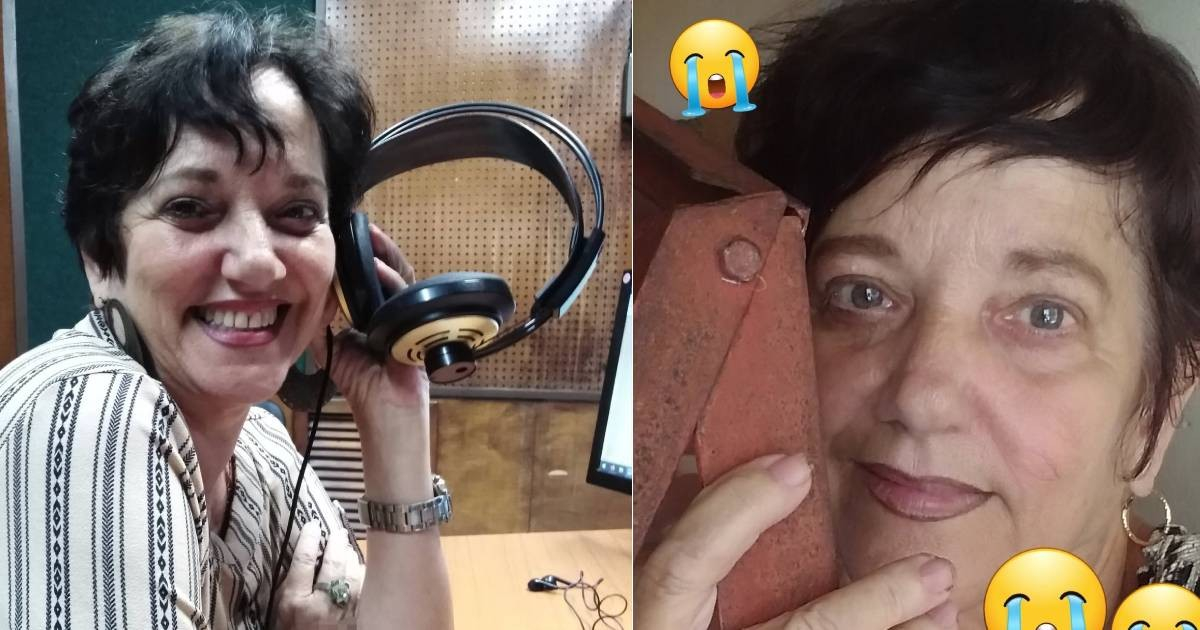
A broadcaster from Radio 26, the official station of Matanzas province, took to social media to share an unexpected revelation. She expressed feeling overwhelmed by Cuba's ongoing crisis and admitted to questioning for the first time whether it was a mistake not to emigrate when she had the chance.
Iris Castro Gutiérrez, the host of the program Frecuencia Abierta, shared her thoughts on Facebook on Saturday, shortly after the fourth total collapse of the National Electric System (SEN) in 2026. Her comments have drawn attention because she is a professional working for a state-run media outlet.
"Feeling discouraged, with tears in my eyes, I thought and rethought: gosh, why so much punishment? What crime did I commit? Was it not leaving back then? Am I being punished for love? For not abandoning my people and my homeland?" she wrote.
Everyday Struggles in Cuba
In her post, the broadcaster painted a picture of the daily struggles faced by millions of Cubans. She described using a brief return of electricity to cook rice and recharge essential devices like a portable fan, a solar lamp, and an emergency flashlight. She then set out with two goals: to find medication for her high blood pressure and to get a manicure.
Unfortunately, neither task was accomplished. The medication was unavailable at the intended pharmacy, and the beauty salons she visited only accepted cash—a payment method increasingly scarce on the island.
"You go out to 'solve' your needs and interests and return home, as we say in Cuba, with your head hung low," she recounted.
Reflections on Past Choices
Upon returning to her apartment, she found that the power outage had resumed. The most poignant part of her message came when she recalled having the opportunity to leave Cuba during the Special Period but choosing to stay.
"I went back to the 90s, a time when I could have left my country; I had all the possibilities, but strong ties held me back: an almost obsessive love for my family, passion for my profession, and patriotic feelings," she explained.
Now, over three decades later, she views that decision from a new angle. "Without a doubt, never like now... we are living today in ways we never imagined or desired," she added.
Challenging the Official Narrative
Castro's message holds particular significance due to her position. Radio 26 is part of the national network of state media outlets that adhere to the government's official line, often blaming the U.S. embargo for the country's economic and energy woes.
In this environment, it's rare for someone affiliated with the official press to publicly express such frustration and question whether they should have emigrated when they had the chance.
Her post coincided with one of the toughest weeks for Cuba's electrical system. The country experienced its fourth nationwide blackout of 2026 on Friday, while Matanzas endured up to 87 consecutive hours without power in several municipalities.
The crisis also affects access to medication. Official data reveals that only about 30% of essential drugs are available in Cuba, a shortage impacting patients with chronic illnesses like hypertension daily.
Iris Castro's testimony adds to the growing dissatisfaction emerging even from spaces traditionally aligned with the official narrative, at a time when the prolonged economic crisis, power outages, and lack of essential goods continue to deteriorate living conditions for the Cuban population.
Understanding Cuba's Current Crisis
What has caused the frequent blackouts in Cuba in 2026?
The blackouts are primarily due to the collapse of Cuba's National Electric System, exacerbated by infrastructure failures and a lack of resources to make necessary repairs and upgrades.
How has the medication shortage impacted Cubans?
The shortage affects many Cubans, especially those with chronic diseases like hypertension, as only about 30% of essential medicines are available, making it difficult to manage their health conditions.
Why is Iris Castro's message significant?
Her message is significant because it comes from a professional within the state-run media, challenging the official narrative and highlighting the growing dissatisfaction even among those traditionally aligned with the government.