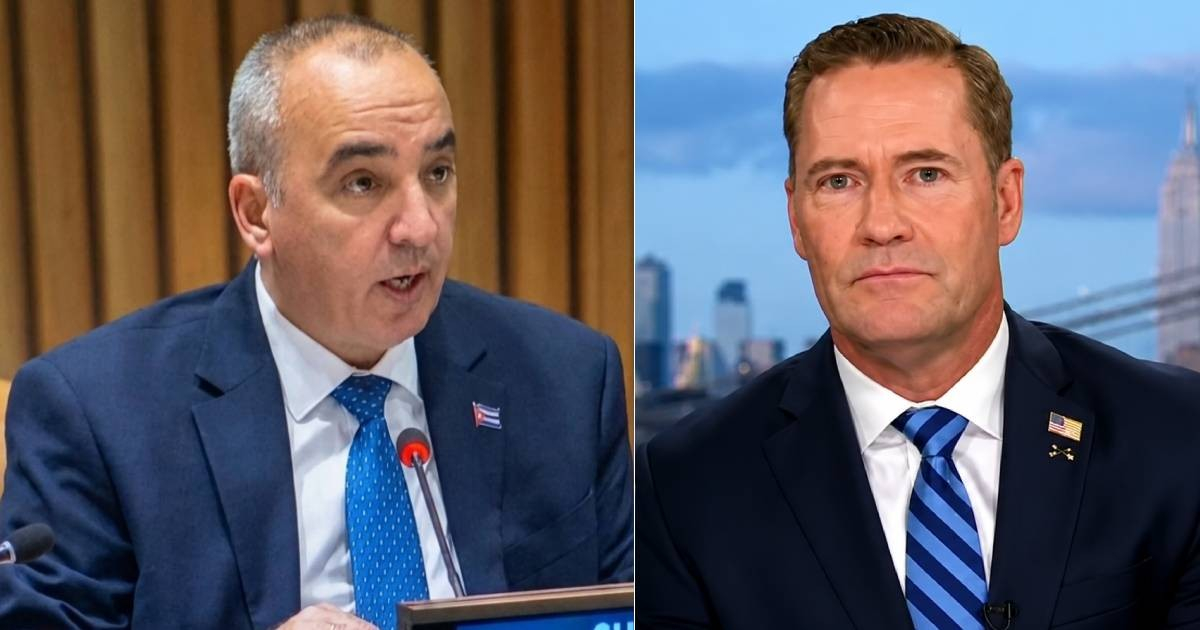
The Cuban representative to the United Nations, Ernesto Soberón Guzmán, recently referred to the U.S. Ambassador to the UN, Mike Waltz, as "Pinocchio," accusing him of perpetually lying. This accusation marks another chapter in the ongoing diplomatic conflict between the two nations following a recent UN debate focused on Cuba.
In a social media post on X last Saturday, Soberón responded to Waltz's criticisms of the Cuban regime, asserting that the American diplomat "conveniently ignores" the fact that a vast majority of the Cuban population took to the streets on May 1st to reinforce their commitment to protecting Cuba's independence, sovereignty, and territorial integrity.
Soberón also accused Washington of intensifying the embargo through what he described as an "energy blockade," which he claims causes severe suffering for the Cuban people. Furthermore, he argued that the U.S. government restricts its citizens' freedoms by preventing them from freely traveling to Cuba and doing business with island-based private entrepreneurs.
The Retaliation to Waltz's Remarks
This exchange coincided with the fifth anniversary of the July 11, 2021, protests and came just days after a heated interaction between the two delegations during a special UN General Assembly session on Cuba. During this debate, Waltz labeled the Cuban regime as "illegitimate and brutal," presented images of Cuban political prisoners, and held the government accountable for the island's ongoing crisis.
The U.S. ambassador also dismissed claims of an energy embargo, attributing shortages of food, medicine, and fuel to "decades of mismanagement and political repression." During his speech, Cuban Foreign Minister Bruno Rodríguez Parrilla attempted to interrupt several times with procedural motions, which were denied by the session's chair. Waltz concluded with a memorable statement, emphasizing, "This is not Havana. This is the United States of America, the UN, and we will not be silenced."
May Day March Sparks Controversy
A central point in Soberón's argument was the May 1st government-organized demonstration, which he presented as evidence of popular support for the Cuban government. However, independent observers, activists, and analysts have challenged this portrayal. Various reports suggested a lower turnout compared to previous years and accused the government of using state mechanisms to ensure participation. Cuban academic Hilda Landrove even described the event as "a staged performance of a corpse."
This exchange of allegations occurs amid increasing international pressure on Havana. The July 7 special UN General Assembly session concluded with 136 votes in favor of a resolution supporting Cuba, with nine against and 30 abstentions—the highest number of abstentions in such votes in over thirty years.
Meanwhile, Cuba's internal crisis continues to worsen. On Sunday, Prime Minister Manuel Marrero Cruz once again blamed the U.S. embargo for the prolonged blackouts affecting the country, as many areas face power cuts lasting up to 25 hours. According to the Cuban Observatory of Conflicts, May 2026 saw 1,311 protests across the island, marking the highest monthly number recorded by the organization and highlighting the growing social unrest that contradicts the government's portrayal of popular support on the global stage.
Understanding the U.S.-Cuba Diplomatic Dispute
What sparked the recent exchange between Cuban and U.S. diplomats at the UN?
The recent exchange was triggered by a UN debate on Cuba, where U.S. Ambassador Mike Waltz criticized the Cuban regime, prompting Cuban representative Ernesto Soberón Guzmán to respond with accusations against Waltz.
How did the May Day march become a point of contention?
Ernesto Soberón cited the May Day march as evidence of support for the Cuban government. However, independent observers and analysts questioned this, noting lower attendance and state-driven mobilization efforts.
What are the main criticisms from the U.S. regarding Cuba's situation?
The U.S. criticizes the Cuban regime for being illegitimate and brutal, attributes shortages to decades of mismanagement, and denies the existence of an energy embargo.
What is the current status of protests in Cuba?
In May 2026, there were 1,311 protests documented across Cuba, marking the highest number in a month, reflecting increasing public dissatisfaction.