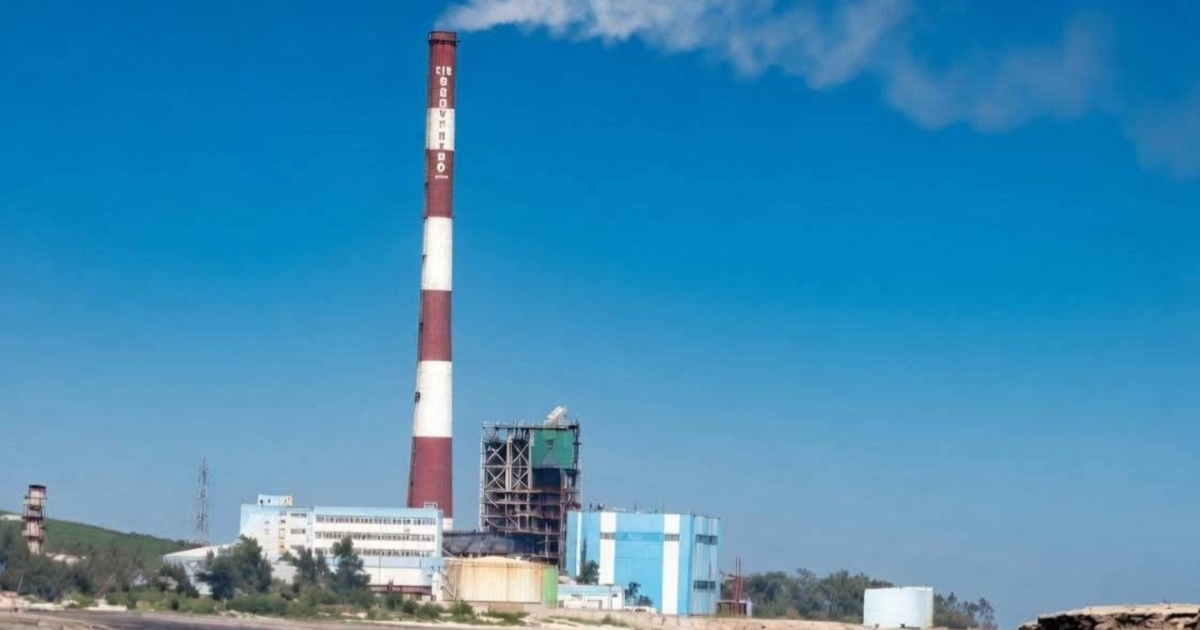
The state-run company, Unión Eléctrica (UNE), reported on Sunday that the National Electric System (SEN) was restored at 6:30 a.m. following the fourth nationwide blackout of 2026, which occurred on Saturday.
According to an official Facebook post from the Antonio Guiteras Thermoelectric Plant, the facility resumed operations, generating 200 MW. Additionally, Units 3 and 4 of the Carlos Manuel de Céspedes Thermoelectric Plant and Unit 1 of the Lidio Ramón Pérez Felton Thermoelectric Plant were also reported to be online.
However, the announcement sparked skepticism and irony rather than relief in the comment section of the post.
One comment captured the public sentiment succinctly: "Countdown starts now to see how long Guiteras stays online."
Others were equally blunt. "200 MW. It won’t last long," one user noted.
Another commenter did some quick math: "It’s been nine hours already, so how many are left? 48 - 9 = 39." A third user sarcastically questioned the plant itself: "Hey Antonio Guiteras Holmes, quick question: were you coming in or going out?"
The skepticism isn't unfounded. The Guiteras plant has experienced 17 shutdowns so far in 2026 and hasn't had major maintenance since 2010, with pipes over four decades old still in use.
Its most recent shutdown, on July 3, was due to a leak in the boiler economizer. The SEN collapse on Saturday interrupted the synchronization process that was underway at that time.
While UNE celebrated the reconnection, dozens of Cubans commented that outages persisted in their areas.
"But most of Holguín is still in the dark, who understands this?" one user asked. Another pointed out that La Sierpe, in the province of Sancti Spíritus, had been without power since Thursday.
From Güira de Melena in Artemisa, someone wrote: "We haven't had power since before the collapse." Areas like Campechuela, Colón, and Manopla were also mentioned as still without electricity.
The disparity between the official announcement and the on-the-ground reality was summed up by another Cuban in one sentence: "So, according to you, more is being generated and less is being delivered."
The blackout on Saturday, marking the eighth total collapse of the SEN in roughly 24 months, was caused by a failure in the 220 kV line between Santa Clara and Sancti Spíritus at 4:30 p.m., which split the system and left over nine million Cubans without power.
This occurred during one of the most severe energy crises in recent Cuban history: on July 9, a record generation deficit of 2,341 MW was recorded, with only 935 MW available against a demand of 3,100 MW, and Cuba hasn't received oil shipments for over three months.
The Minister of Energy, Ángel Díaz-Canel, acknowledged on Friday that the projected 400 MW increase for July wouldn't meet demand and urged for "better organization" of the blackouts, a statement that sparked widespread outrage on social media.
Understanding Cuba's Energy Crisis
Why is there skepticism about the Guiteras plant's restoration?
The skepticism stems from the Guiteras plant's history of frequent shutdowns and the fact that it hasn't undergone major maintenance since 2010. With outdated infrastructure, many doubt its ability to remain operational for long.
What caused the latest nationwide blackout in Cuba?
The blackout was triggered by a failure in the 220 kV line between Santa Clara and Sancti Spíritus, which resulted in the separation of the electric system and left millions of Cubans without power.
How severe is Cuba's current energy crisis?
Cuba is facing one of its worst energy crises, with a significant generation deficit and a lack of oil shipments for over three months. The country recently recorded a historic generation shortfall of 2,341 MW against a demand of 3,100 MW.