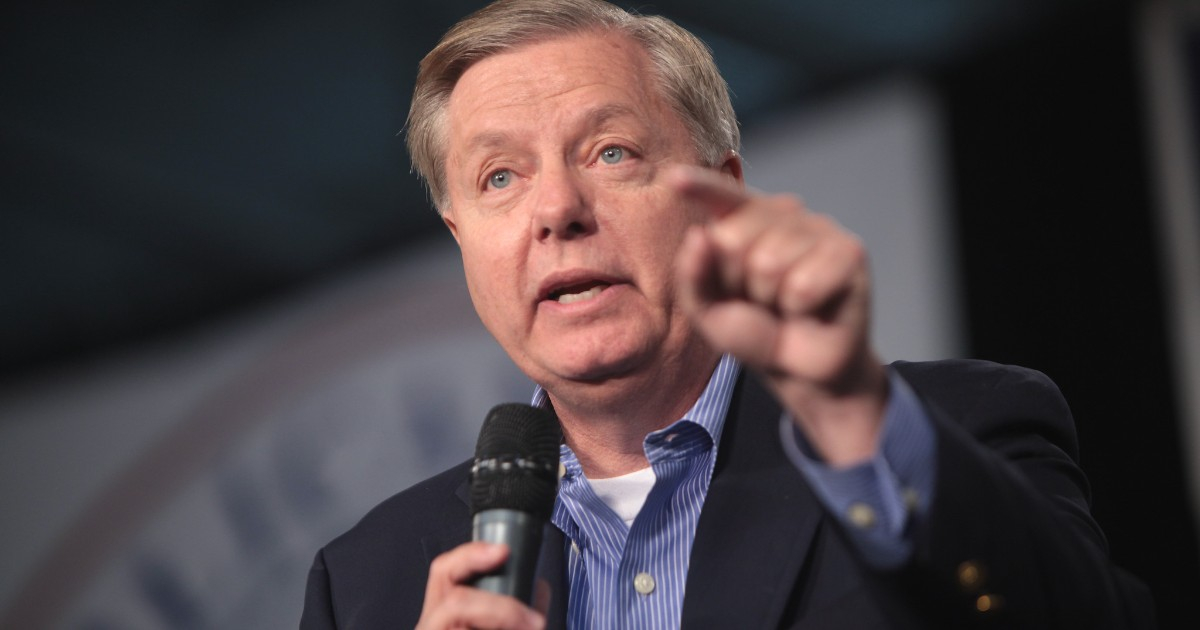
Republican Senator Lindsey Graham, a key ally of former President Donald Trump and a staunch opponent of the Cuban regime, has died at the age of 71. His passing this Saturday marks the loss of a significant political figure in the U.S. Congress.
The announcement of his death was made through a statement from his office, shared on the senator's official account on the social media platform X.
Senator Graham's family expressed gratitude for the support and prayers they have received, while requesting privacy during this "incredibly difficult" time. No additional details regarding his illness or the circumstances surrounding his passing have been released.
Legacy in the Senate and Military Service
Having celebrated his 71st birthday just two days prior, Graham served as the representative for South Carolina in the Senate since 2003. Throughout his extensive political career, he held several influential positions, including the chairmanships of the Senate Budget and Judiciary Committees.
Before embarking on his national political journey, Graham served as a military lawyer in the U.S. Air Force, retiring from the Reserve in 2015 with the rank of colonel after over three decades of service.
From Rival to Ally: Relationship with Trump
Initially a rival and critic of Trump during the 2016 Republican primaries, Graham later became one of Trump's closest allies, particularly on matters of national security and foreign policy.
A Fierce Critic of the Cuban Regime
Graham's passing resonates deeply within the Cuban community and among Cuban exiles, as he had prioritized the liberation of Cuba as one of his main political causes in recent months.
The senator openly supported the Trump administration's "maximum pressure" policy, led by Trump and Secretary of State Marco Rubio, against the ruling powers in Havana.
Following the capture of Nicolás Maduro, Graham labeled Cuba as the "head of the snake" of authoritarianism in Latin America, warning that the days of the communist dictatorship were numbered.
“Watch what happens with Cuba,” Graham declared, holding the Castro regime responsible for maintaining and exporting repressive systems to countries like Venezuela and Nicaragua.
In a bold statement, Graham advised Cuban communist leaders to contact Maduro for advice and suggested they start searching for “a new place to live.”
In March, he publicly asserted that “Cuba is next,” drawing parallels between Trump's international strategy and Ronald Reagan's approach to the Soviet Union.
Shortly thereafter, he appeared on television wearing a hat with the phrase “Free Cuba,” urging the audience to stay alert as he proclaimed that the Cuban regime's time was running out.
In April, he delivered one of his most direct messages to the Cuban people, urging them to “kick out the communists” and to align themselves with President Trump and the United States.
This statement came in response to Miguel Díaz-Canel’s declaration that Cuban leaders were ready to die to prevent an alleged U.S. invasion. Graham questioned how many citizens Díaz-Canel truly represented.
The senator also supported efforts to hold Raúl Castro criminally accountable for the 1996 shootdown of Brothers to the Rescue planes, which resulted in the deaths of four pilots, three of whom were U.S. citizens.
Graham described the incident as a “cowardly and despicable” act, stating that accountability had been long overdue.
In one of his final remarks related to the island, he assured that “the liberation of the wonderful people of Cuba from the grips of communism is very near.”
His death signifies the loss of one of Trump's leading allies in the Senate and a Republican figure who consistently championed the end of the Cuban dictatorship and advocated for a democratic transition on the island.
FAQs on Lindsey Graham's Legacy and Impact
What were Lindsey Graham's main contributions to U.S. politics?
Lindsey Graham was known for his strong stances on national security and foreign policy, his chairmanship of the Senate Budget and Judiciary Committees, and his advocacy for a free Cuba.
How did Lindsey Graham's relationship with Donald Trump evolve?
Initially a critic and rival during the 2016 Republican primaries, Graham became one of Trump's closest allies, particularly in areas related to national security and foreign policy.
Why was Lindsey Graham a significant figure for Cuban exiles and the opposition?
Graham was a strong advocate for the liberation of Cuba, supporting policies aimed at pressuring the Cuban regime and standing firmly against its authoritarian practices.