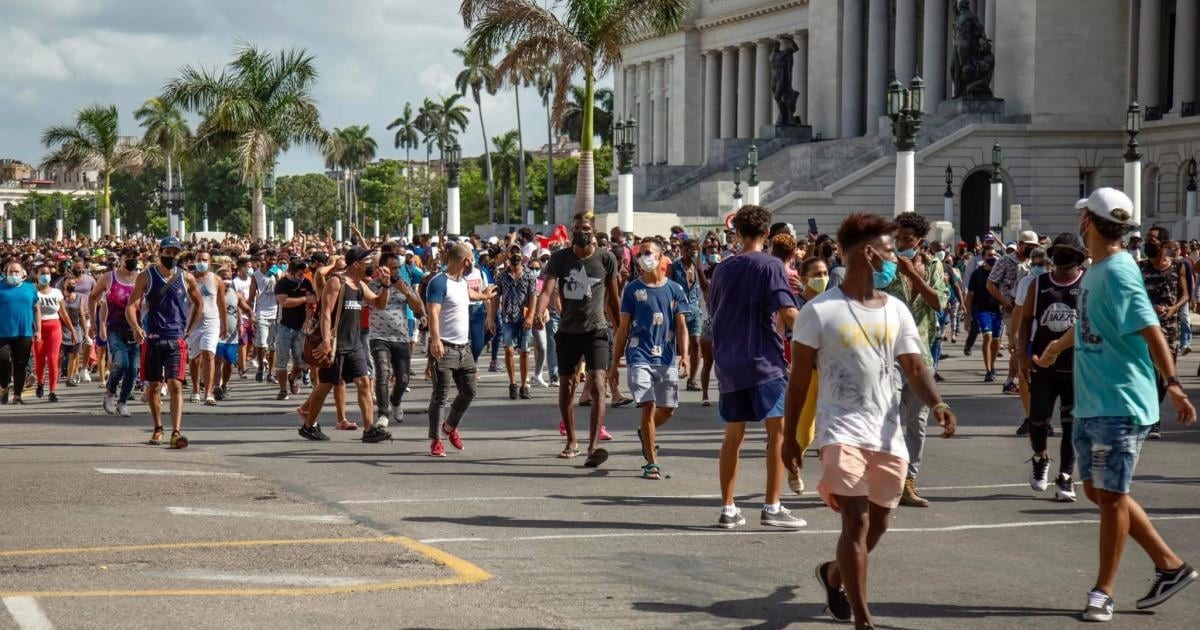
Senator Ashley Moody and Senator Rick Scott, both Republicans from Florida, introduced a resolution this Saturday in the U.S. Senate to mark the fifth anniversary of the July 11, 2021, protests in Cuba. The resolution aims to condemn the oppressive regime of Miguel Díaz-Canel and demand the immediate release of over 1,300 political prisoners still held on the island.
Announced by Moody via her social media in Spanish on Friday, the initiative contains eight specific points, drawing a parallel between the courage of the Cuban people and that of America's Founding Fathers.
"Five years ago, the Cuban people rose in a series of protests against the tyrannical Communist Party that has ruled Cuba for more than half a century," Senator Moody stated on her X account.
"The brave men and women who stood up to their government faced beatings and torture, yet they remained steadfast in demanding fundamental rights eroded by socialist policies," she added.
Moody concluded her message with: "We present this resolution as a reminder not only of the evils of the oppressive Cuban regime but also of the power of a people who stand courageously against communism. Patria y Vida."
The resolution submitted to the Senate outlines eight specific demands: to commend the bravery of the Cuban pro-democracy movement; denounce the repression of activists and political prisoners, including minors; condemn the totalitarian dictatorship; call for international solidarity with the Cuban people; urge coordinated sanctions and diplomatic pressure; request the Trump administration maintain strong sanctions until U.S. legal conditions are met; support the right to peaceful assembly and free expression; and encourage backing for Cuban civil society organizations and independent media.
This initiative arises in a particularly dire context. According to June 2026 data from Prisoners Defenders, Cuba reports a record 1,306 political and conscience prisoners, including 40 minors—16 of whom are in adult prisons—and 148 women facing charges or serving sentences.
Justicia 11J reports 338 individuals directly linked to the 2021 protests who remain imprisoned.
Moody took over the Senate seat from current Secretary of State Marco Rubio, after being appointed by Governor Ron DeSantis in January 2025. Since her Senate entry, she has consistently advocated for maximum pressure against the Cuban regime, co-leading with Scott the DEMOCRACIA Act to sanction regime officials for human rights violations, and reading the Justice Department's formal charges against Raúl Castro for the Brothers to the Rescue pilots' murders in May 2026.
This Saturday, marking the fifth anniversary of the July 11 protests, Rubio also demanded the immediate release of Cuban political prisoners and warned that the United States would utilize all available tools to pressure the regime, as Ambassador Mike Hammer visited families of July 11 political prisoners in Havana.
Understanding the July 11 Protests and U.S. Senate Actions
What sparked the July 11, 2021, protests in Cuba?
The protests were triggered by widespread dissatisfaction with the Cuban government's handling of economic hardships and restrictions on liberties, prompting citizens to demand change.
What does the resolution introduced by Senators Moody and Scott entail?
The resolution calls for the condemnation of the Cuban regime's repression, demands the release of political prisoners, and outlines various measures to support the Cuban people's fight for democracy.
How has the U.S. responded to the situation in Cuba?
The United States has implemented sanctions against the Cuban regime and continues to exert diplomatic pressure while expressing solidarity with the Cuban people's quest for freedom.