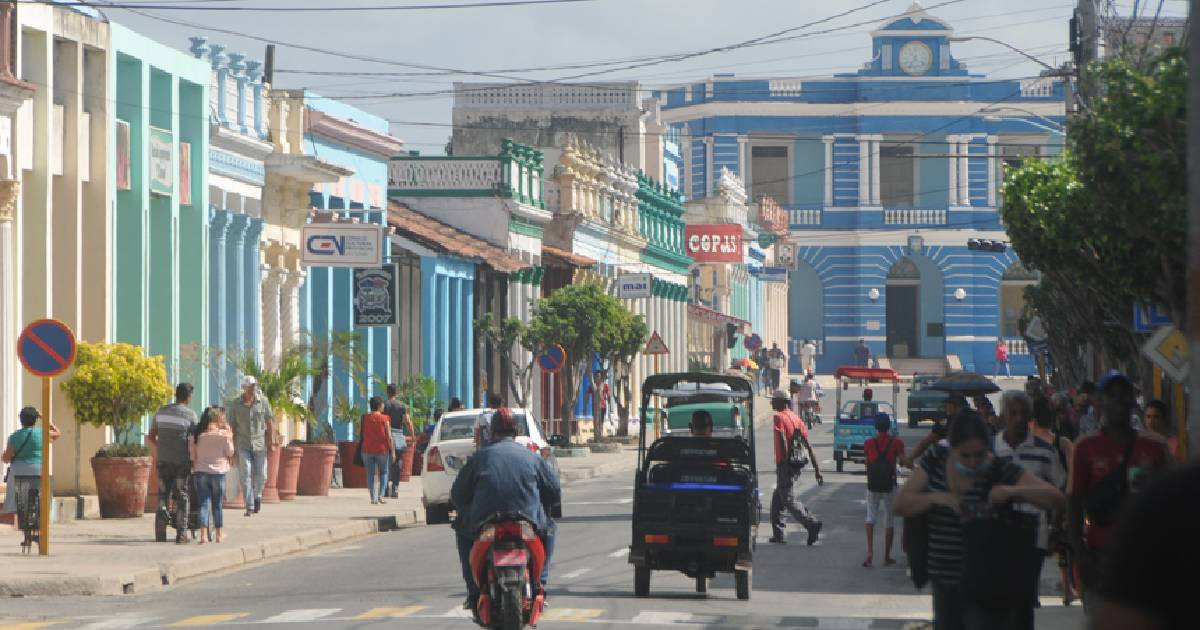
The head of Education in Las Tunas, Nilser Piñeda, made a rare public acknowledgment that reducing the school day to a single session for the 2025-2026 academic year left children unsupervised during unusual hours, making them vulnerable to street crime. This admission is unusual for an official of the Cuban regime.
The decision, which was a response to the ongoing energy crisis and fuel shortages, had direct social repercussions that required attention from both the educational authorities and the Ministry of the Interior (Minint), Piñeda stated to the official newspaper 26.
"Operating on a single session caused students to be out of school during times they normally wouldn't be. Families weren't always able to look after them, leading many to wander the streets," Piñeda explained.
He also noted an increase in school absenteeism throughout the academic year, reaching figures that needed to be consistently reviewed by the provincial social policy groups.
More concerning, Piñeda admitted, "there have been instances where minors have committed crimes," a situation addressed with specific strategies coordinated with the Minint.
The shift to a single session was characterized by Piñeda as an "unprecedented reorganization" in Las Tunas' educational system, exacerbated by Cuba's severe fuel shortage.
"This decision to concentrate teaching into one session resulted in students leaving at times when they would traditionally be in school with lunch provided," Piñeda elaborated.
By May 2025, power outages had already forced schools in provinces like Artemisa to adopt flexible schedules and forego school uniforms, with secondary schools moving to single sessions without snacks.
In March of that year, the government insisted on sending children to school despite the energy collapse, sparking widespread outrage among parents on social media.
This lack of child protection coincides with a documented decline in public safety. The Cuban Citizen Audit Observatory reported 2,833 verified crimes in 2025, a 115% increase from 2024, with theft being the most common offense.
Additionally, youth gangs have grown both in presence and organization across various municipalities. The use of synthetic drugs has also infiltrated schools, with authorities in Guantánamo confirming in April 2025 that over a dozen minors were found using narcotics on school grounds, including eight who were hospitalized due to intoxication.
With the summer of 2026 underway and the school year over, Piñeda shifted the responsibility to families, emphasizing that teachers exhausted their resources to conclude the school year "under extreme conditions."
The article in newspaper 26 concludes with a stark warning that encapsulates the severity of the situation: "If the family does not step in, the street and crime will fill the void in a society that cannot afford to lose its younger generation."
The Impact of School Schedule Changes in Las Tunas
What prompted the reduction in school hours in Las Tunas?
The reduction was prompted by the ongoing energy crisis and fuel shortages in Cuba, forcing a shift to a single-session school day.
What social consequences did the schedule change have?
The change left children unsupervised during unusual hours, increasing their exposure to street crime and leading to higher absenteeism and instances of minors committing crimes.
How did the authorities respond to the increase in crime among minors?
Authorities coordinated with the Ministry of the Interior to implement specific strategies aimed at addressing the issue of minors involved in criminal activities.