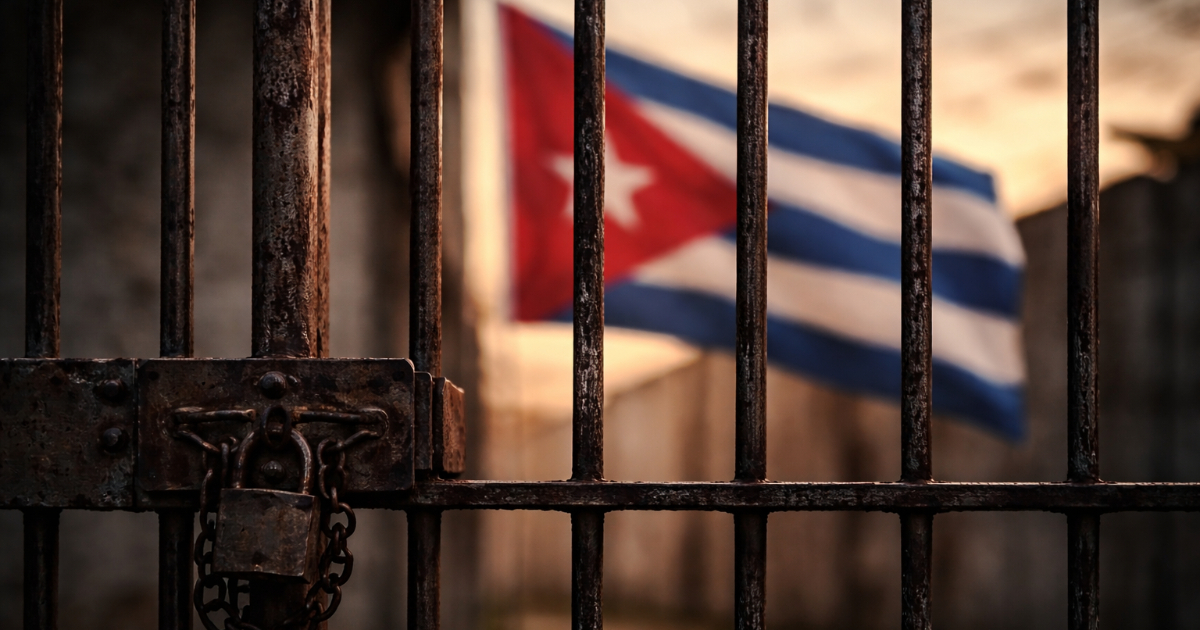
Marking the fifth anniversary of July 11, 2021, Cuban writer and journalist Pablo J. Socorro has offered a scathing assessment of the changes, or lack thereof, since the most significant public uprisings in Cuba since 1959. Writing from Florida, his conclusion is blunt: "Five years on, the regime remains unchanged, continuing its repression with even greater brutality and fear."
Socorro, known for his book Cuba 11-J-21: We Were So Hungry We Ate Our Fear (Lunetra Publishing), titled his reflection "11-J-21: From Eating Fear to Vomiting Fury." He recalls that the protests "barely lasted 48 hours but were enough to shake the foundations of the regime," only to be quelled "with brutality and the spilling of innocent blood."
The Regime's Fear: An Unsteady Power Grid
The writer highlights a telling sign of the regime's current mindset: the collapse of the National Electric System. "They're so afraid of another citizen uprising that they've allowed the National Electric System to collapse," he argues, noting that without electricity, antennas fail and connectivity disappears, disrupting any potential public coordination.
This analysis is not without basis. On Friday, the National Electric System experienced its fourth total collapse of the year, with a historic shortfall of 2,341 MW affecting 73% of the population. In Havana, power outages average 15 hours daily, reaching up to 87 consecutive hours in provinces like Matanzas.
A Grim Outlook: Political Prisoners and Continued Repression
Socorro paints a picture of widespread deterioration over the past five years. Cuba now has a record of over 1,281 political prisoners, 338 of whom were jailed specifically for their involvement in the 11J protests, according to independent organizations. The April 2026 pardon, which released 2,010 inmates, deliberately excluded those convicted of "crimes against authority," meaning the 11J participants.
Among the notable cases, Socorro mentions Luis Manuel Otero Alcántara and Maykel Osorbo. Otero was removed from Guanajay prison on July 7 by state security agents without notifying his family, just days before his sentence was due to end. Amnesty International declared his situation as enforced disappearance, prompting the UN to issue an Urgent Action demanding a report from Cuba by July 25. Osorbo, co-author of the renowned song "Patria y Vida" and sentenced to nine years, was transferred from Kilo 8 prison (Pinar del Río) to the maximum-security facility in Guanajay (Artemisa), again without official notification.
Accountability and Unaddressed Injustices
Socorro does not shy away from naming those he holds accountable. He asserts that Miguel Díaz-Canel "will have to answer for his murderous words" when he announced on camera that "the order to combat has been given." He also points to Raúl Castro, who faces allegations in the United States for the downing of the Brothers to the Rescue planes. Both remain unaccounted for their actions.
The writer also brings attention to Yoennis Pelegrín Hernández, the police officer implicated in the death of Diubis Laurencio Tejeda—the only officially recognized death during the July 12, 2021, protests—who remains free and unprosecuted. Some of those involved in the repression now live in exile.
A Nation in Distress
The inequality in Cuba as of 2026 is as stark as the repression: "More children go to bed hungry, while more wealthy individuals drive imported cars through Havana's broken streets. There's more thirst and less water, more repression and less fear."
This past Saturday, Senator Marco Rubio demanded the release of Cuban political prisoners, warning that the United States will use "all available tools" to pressure the regime. Socorro concludes his piece with words from essayist José Hugo Fernández, who wrote the foreword to his book: "The atmosphere of terror that propped up the regime for decades was finally dismantled. And from that moment, fear gripped the oppressors, leading them to escalate violence as a last resort, failing to foresee their defeat by the excesses of their own cruelty."
Understanding Cuba's Political Climate Post-11J
What was the significance of the 11J protests in Cuba?
The 11J protests marked the largest public demonstrations against the Cuban government since 1959, revealing widespread dissatisfaction with the regime and triggering a harsh crackdown.
How has the Cuban government responded to the 11J protests?
Since the 11J protests, the Cuban government has intensified its repression, increasing arrests and maintaining a strict control over dissent, often through violence and media censorship.
What role does electricity play in Cuba's political repression?
Electricity outages disrupt communication, limiting citizens' ability to organize and protest, thus serving as a tool for the regime to control public dissent and maintain power.