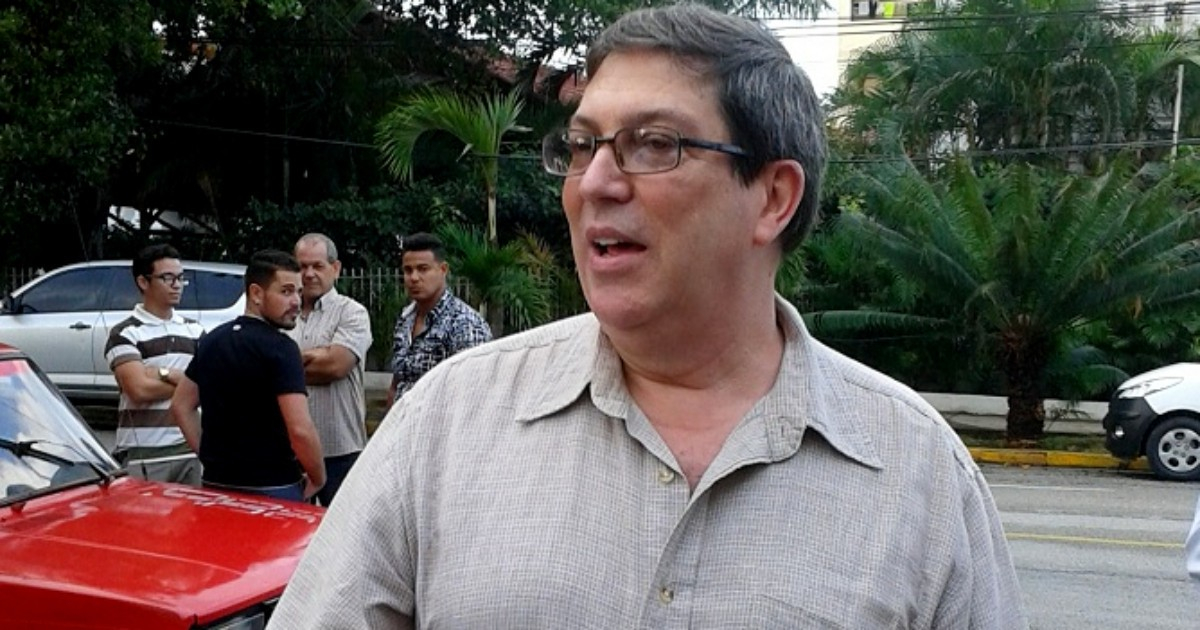
Cuban Foreign Minister Bruno Rodríguez Parrilla once again pointed fingers at the U.S. embargo for the fourth complete blackout that struck Cuba in 2026, dismissing the widespread structural collapse of an electrical system that has long lacked proper maintenance.
In a statement posted on X, Rodríguez claimed, "The latest disconnection of the National Electric System is a direct result of the energy blockade and the extreme tightening of the U.S. embargo against Cuba.”
Rodríguez argued that this crisis stems from the "collective punishment of the Cuban people that the U.S. government is pursuing to dismantle the Cuban Revolution."
He added, “Our Party and Government, together with our valiant electrical workers, will continue to work tirelessly for the restoration and gradual improvement of the National Electric System.”
The Overlooked Realities Behind Energy Failures
Rodríguez's rhetoric overlooks key facts that challenge his narrative: Cuban thermoelectric plants have aged between 40 and 60 years without comprehensive maintenance. The largest, CTE Antonio Guiteras, has not undergone major intervention since 2010 and has failed 17 times this year alone.
The fourth total collapse of the National Electric System in 2026 occurred on Friday at 4:30 PM, triggered by a failure in the 220 kV transmission line between Santa Clara and Sancti Spíritus, splitting the system in just 35 minutes. At that time, the system's availability was merely 935 MW, against a demand of 3,100 MW, leading to a deficit exceeding 2,100 MW.
Consequences of an Aging Infrastructure
Early Saturday morning, the restoration process faced another setback: a new voltage collapse in the western microsystem further worsened the plight of millions of Cubans enduring prolonged power outages.
This marks the eighth nationwide blackout in roughly 24 months. On July 8, the country faced its largest energy deficit in history: 2,341 MW, impacting 73% of the population simultaneously. In some areas of Matanzas, power cuts lasted up to 87 consecutive hours, while in Havana, outages exceeded 30 continuous hours.
The true cause of this crisis is not the embargo but the end of subsidized Venezuelan oil and the outdated infrastructure. At its peak, Venezuela sent 100,000 barrels daily, a number that dropped to 27,000 by 2025 and ceased entirely in January following the capture of Nicolás Maduro. Cuba requires 110,000 barrels daily, produces only 40,000, and has been without consistent external supplies for over three months.
International Reactions and Implications
U.S. Secretary of State Marco Rubio publicly refuted the regime's narrative, emphasizing that no oil blockade exists. He stated that the crisis is due to the collapse of Venezuelan subsidies and decades of neglected infrastructure.
Mike Waltz, the U.S. ambassador to the UN, further criticized that, while the public remains in darkness, the Castro family residences and government buildings maintain continuous electrical supply.
Rodríguez is not alone in his narrative: Prime Minister Manuel Marrero also blamed the embargo for the blackout, while Energy Minister Vicente de la O Levy simply declared, "We will not surrender here," without announcing any structural measures.
Modernizing Cuba's electric system would require an investment of between $8 billion and $10 billion, a sum the regime neither possesses nor has the means to secure.
The blackout coincides with the fifth anniversary of the July 11, 2021 protests, the largest anti-government demonstrations since 1959, partially triggered by power cuts.
This past May, Cuba experienced over 1,300 protests driven by power outages lasting up to 40 hours, a clear indication that the Cuban people's patience has limits that no tweet from the foreign minister can overlook.
Understanding Cuba's Energy Crisis
What is causing the power outages in Cuba?
The power outages in Cuba are primarily due to the aging infrastructure, lack of maintenance, and the cessation of subsidized oil shipments from Venezuela.
Is the U.S. embargo responsible for the energy crisis in Cuba?
While the Cuban government blames the U.S. embargo, the real issues stem from the end of Venezuelan oil subsidies and decades of neglect of the electrical infrastructure.
How often are these blackouts occurring?
Cuba has experienced eight total blackouts in about two years, with some regions facing outages lasting up to 87 hours.