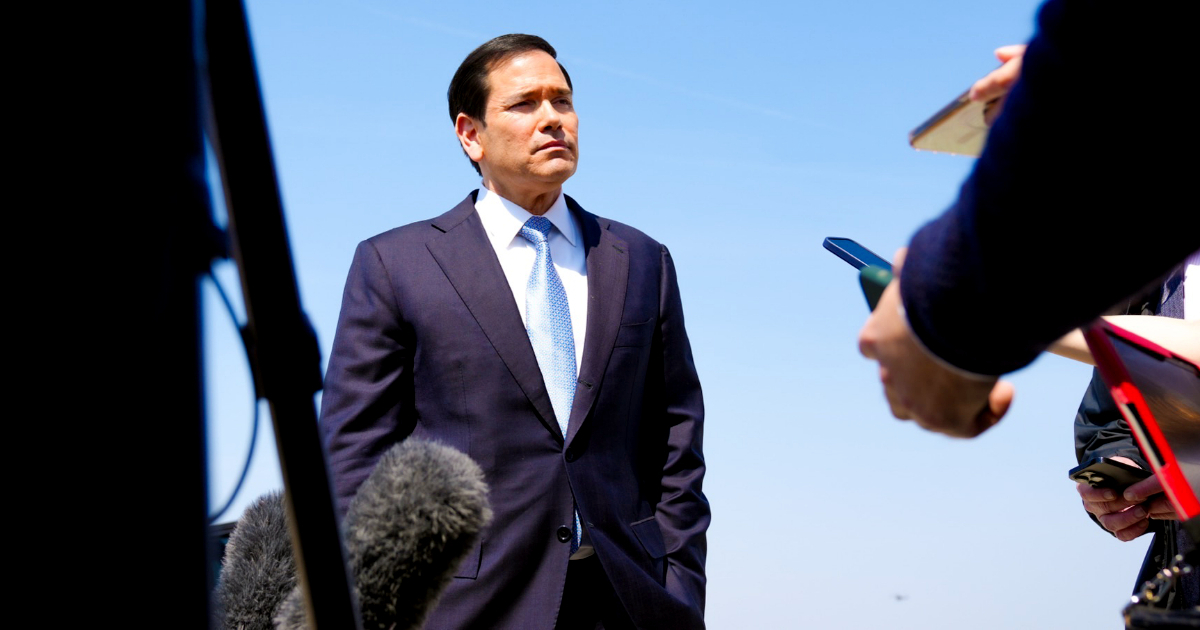
On the fifth anniversary of the July 11, 2021 protests, Secretary of State Marco Rubio unveiled that the Trump administration had extended an offer of economic aid, reconstruction assistance, and a fresh bilateral relationship to Cuba, contingent upon the regime initiating genuine political and economic reforms.
In an official statement from the State Department, Rubio emphasized that "President Trump and I envision a brighter future for Cuba and its people, who have endured so much hardship." He acknowledged that the Cuban economy is "in free fall," with citizens enduring blackouts, hunger, and deprivation following decades of repression and mismanagement.
The Secretary clarified that Washington had made this offer explicitly: "Under this administration, we've proposed aid, reconstruction assistance, and the promise of a renewed relationship between our two nations, provided the regime agrees to undertake political and economic reforms that could offer the country a chance at prosperity."
However, Rubio criticized Havana's consistent rejection of any form of openness. "Regrettably, the regime and its corrupt elites persist in dismissing any significant reform efforts, opting instead to maintain their totalitarian grip on the Cuban people and their dogmatic adherence to a failed, ideologically corrupt Marxist ideology," he stated.
Rubio further accused Cuba's leaders of embezzling and hiding the few remaining resources abroad while blaming others for their own failures. He also warned that Cuba poses a direct threat to U.S. national security by hosting military, intelligence, and terrorist-linked networks from hostile nations just under 100 miles from U.S. shores.
"The United States will continue to employ all available tools to address the national security threats posed by the communist Cuban regime and to promote economic and political reforms that offer Cuba a better future," Rubio vowed.
The Secretary reiterated his call for the immediate release of all political prisoners on the island.
Rubio concluded his statement with a stark warning to the regime's leadership: "Cuban leaders must simply commit to genuine reforms, peace, and prosperity before it's too late."
This announcement comes amidst heightened pressure from Washington on Havana. In May 2026, the U.S. offered $100 million in humanitarian aid distributed through the Catholic Church and independent non-governmental organizations, bypassing the Cuban government. The regime formally accepted these funds on July 3, 2026.
Concurrently, in June 2026, the administration imposed new sanctions on GAESA entities and Annalie Lilliam Rueda Cardero, wife of Alejandro Castro Espín, son of Raúl Castro, in response to the 176 economic reforms approved by the Cuban National Assembly, which Washington dismissed as "superficial smoke signals."
Five years after the 11J protests, hundreds of Cubans remain imprisoned for taking to the streets that day. According to human rights organizations like Justicia 11J and Prisoners Defenders, Cuba has between 1,281 and 1,306 political prisoners, with at least 338 directly linked to the protests.
Frequently Asked Questions About U.S. and Cuba Relations
What was the U.S. offer to Cuba?
The U.S. offered economic aid, reconstruction assistance, and a new bilateral relationship, contingent upon Cuba implementing genuine political and economic reforms.
Why did Cuba reject the U.S. proposal?
Cuba's leadership consistently rejected the proposal, prioritizing their control over the Cuban populace and adhering to their Marxist ideology instead of embracing significant reforms.
What actions has the U.S. taken against Cuba recently?
The U.S. imposed new sanctions on GAESA entities and key individuals linked to the Castro family, while also offering humanitarian aid through independent channels.
How many political prisoners are currently in Cuba?
There are between 1,281 and 1,306 political prisoners in Cuba, with at least 338 related to the July 11 protests.