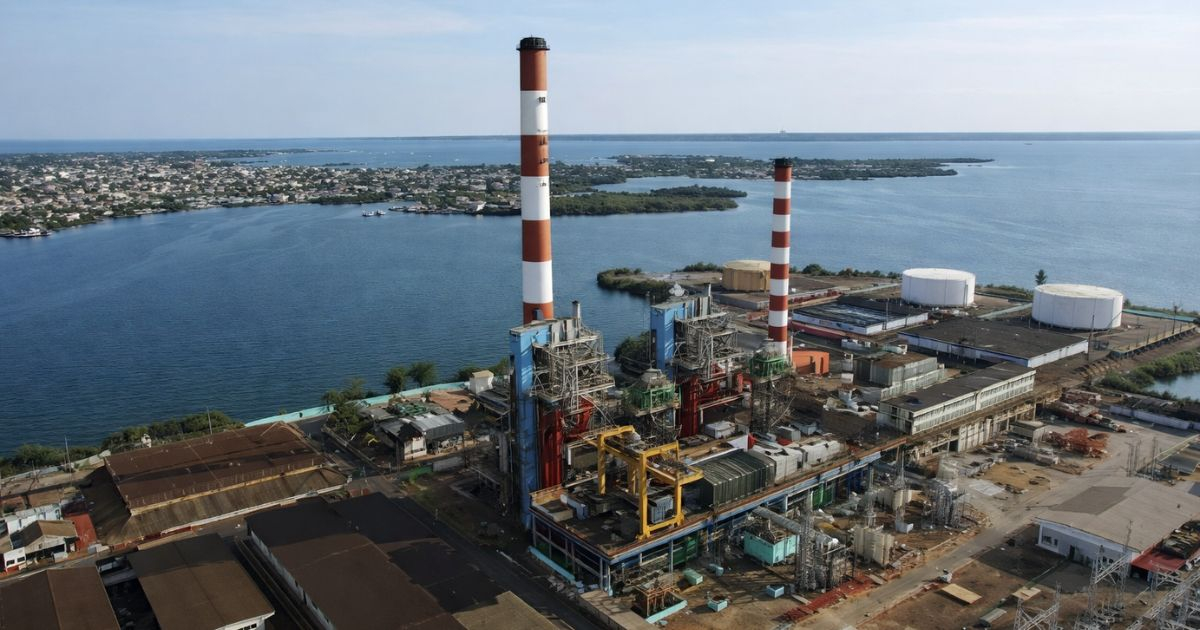
Cuba's Minister of Energy and Mines, Vicente de la O Levy, responded to the fourth nationwide blackout of the year with a defiant message on X, blending rhetoric of resilience with a brief promise of recovery: "We are already working on restoring the National Electric System (SEN)," the minister stated, hours after the system's failure.
The National Electric System (SEN) completely disconnected at 4:30 PM this past Friday, as confirmed by the Electric Union on social media: "Now, 4:30 PM. Total collapse of the National Electric System."
Resilient Workers and a Struggling System
In his post, Levy highlighted the dedication of sector workers, asserting, "The committed and honorable electric and oil workers of Cuba battle the blackouts daily. No one surrenders here."
The minister's declaration arrives amid one of the worst energy crises in Cuban history. Just four days earlier, on July 6th, Cuba experienced its third total blackout of the year, affecting approximately 9.6 million people.
Chronic Energy Deficiencies
This recent collapse marks the eighth such event in about 24 months, occurring under severely strained conditions: the SEN could only supply around 935 MW against a demand of 3,100 MW, with an anticipated shortfall of over 2,100 MW.
Moreover, 106 distributed generation plants were offline due to fuel shortages, accounting for an additional 890 MW of unavailable capacity.
Unfulfilled Promises and Structural Issues
On the same day, authorities had pledged to restart the Antonio Guiteras Thermoelectric Plant to contribute to the SEN during peak demand, a promise met with widespread skepticism as the plant has been out of service 17 times so far in 2026.
On July 8th, Cuba recorded the largest energy deficit in its history: 2,341 MW, affecting 73% of the population simultaneously.
The roots of these issues are structural. Cuban thermoelectric plants are between 40 and 60 years old and have not received comprehensive maintenance. Furthermore, Cuba has gone over three months without oil shipments, relying on solar energy, natural gas, and precariously operating plants.
In May 2026, Levy had publicly acknowledged that Cuba lacks reserves of fuel oil and diesel, relying solely on accompanying gas and domestic crude oil.
Official Responses and Public Frustration
While Levy was issuing his message of defiance, President Díaz-Canel called for "better organization" of the blackouts without announcing any concrete measures to boost electricity generation. Meanwhile, the Havana Electric Company abandoned block management in favor of a circuit-based system due to the inability to maintain any rotational scheme.
In some areas of Matanzas, blackouts have lasted up to 87 consecutive hours, while in Havana, the average is 15 hours of daily power outages, sparking protests and pot-banging demonstrations in various cities.
FAQs About Cuba's Energy Crisis
What is causing the frequent blackouts in Cuba?
The frequent blackouts in Cuba are primarily caused by an aging infrastructure, with thermoelectric plants that are over 40 years old and lack comprehensive maintenance. Additionally, there is a significant shortage of fuel, compounding the problem.
How is the Cuban government addressing the energy crisis?
The Cuban government has made promises to restart power plants and improve blackout management. However, there are no concrete measures announced to significantly boost electricity generation, leading to public skepticism and ongoing unrest.
How are Cuban citizens affected by the energy crisis?
Cuban citizens are experiencing prolonged power outages, with some areas facing up to 87 consecutive hours without electricity. This has led to widespread frustration, protests, and demonstrations across the country.