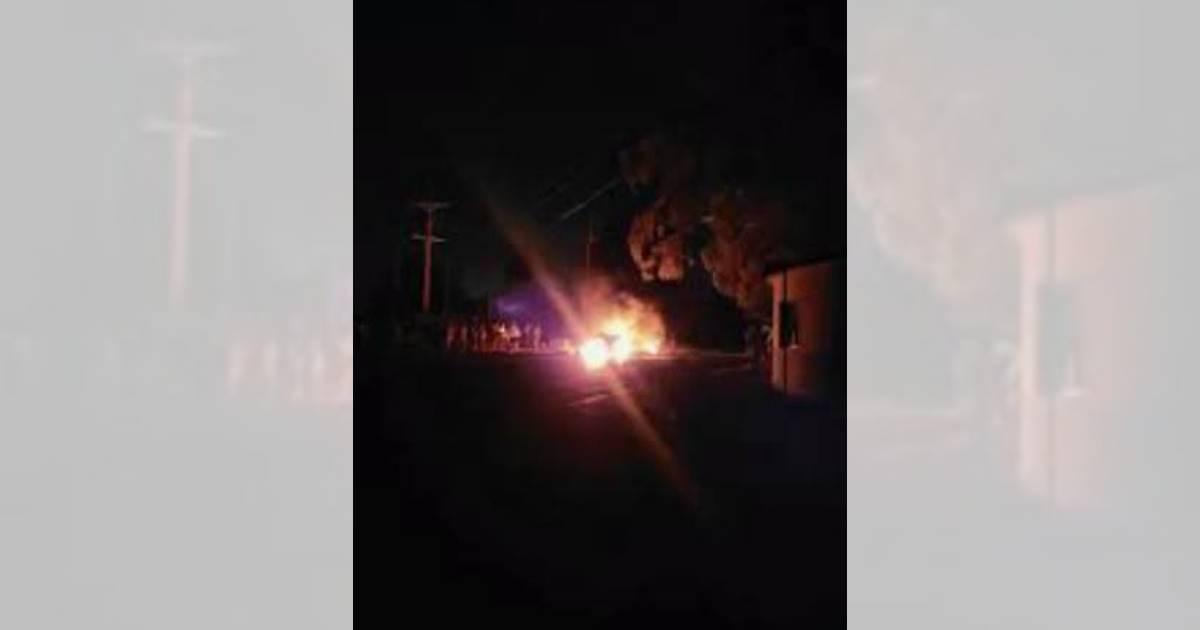
A resident from the Santa Fe neighborhood, located in the Playa district of Havana, shared an account on Friday detailing a series of nightly protests that have escalated into physical confrontations between locals and riot police. The resident warned of potentially increased violence in the anticipated clashes later today.
Ramón García Guerra, who shared his experiences on Facebook, described how the Panamerican Highway was obstructed with trash, which was later set on fire. The most intense skirmishes were reported near the Santa Fe Bank.
"Following three days of protests against the government's negligence, tensions in my neighborhood have intensified, with predictions of even more violent clashes between the police and dissatisfied citizens today," García wrote.
Personal Accounts of Protest and Police Confrontation
García recounted witnessing a mother confront the head of the riot troops, expressing a sentiment shared by many Cuban families: "I haven't seen my daughter in three years. Do you know why? Because you stole her future in the name of a Revolution she never got to know."
The neighborhood delegate, accompanied by a police officer, attempted to justify the situation to a small group of 10 to 12 residents with a remark that further inflamed tensions: "Now you'll understand the country's situation. We've become too accustomed to DAP, and now we're like everyone else."
One neighbor quickly retorted, "Don't forget, you represent the people to the government, not the other way around."
Police Surveillance and Community Resilience
García also noted the presence of undercover political police officers photographing and filming protesters to later identify the most active participants. "They're a machine for creating enemies," a friend whispered to him during the disturbances.
After the clashes, local political and police authorities left the bank's security—doors wide open—in the hands of five elderly individuals, which García Guerra criticized as irresponsible given the clear risks.
As dawn broke on the third day, García described a community both weary and invigorated: "I see faces lit up as if a newfound hope has taken root in the community. You can also smell gunpowder in the air." A state-run bakery was damaged that morning, following three days without deliveries to the neighborhood.
Public Reaction and Historical Context
Followers of the testimony on social media responded with a mix of outrage and hope. "They've always counted on our fear, believing it would last forever; but as fear recedes, they'll find themselves at a disadvantage," one follower commented.
Another, more skeptical remark noted, "While protesting is a right, practically speaking, it won't change anything."
A third comment captured the bewilderment of many: "I truly don't know how the oppressed have endured for so long."
The Santa Fe demonstrations occur on the brink of the fifth anniversary of the July 11, 2021 protests, the largest in Cuba in over six decades, with at least 338 people still imprisoned for their involvement in those events.
These protests are part of a wave of unrest that shook Jaimanitas on July 6, when residents took to 5th Avenue after more than 24 hours without electricity.
Since March, the Playa district has become a focal point of discontent in the capital, with recurring incidents in Jaimanitas, Miramar, Buenavista, Querejeta, and Santa Fe.
The Cuban Conflict Observatory documented 107 protests across the island in June 2026, nearly doubling the previous high of 54 in March, with 82 of them concentrated in Havana.
Slogans have evolved from "We want electricity!" to "Freedom!" and "Down with the dictatorship!" indicating that dissatisfaction extends beyond the energy crisis.
Frequently Asked Questions About Protests in Santa Fe, Havana
What sparked the recent protests in Santa Fe, Havana?
The protests were triggered by the community's frustration with government negligence and the worsening daily living conditions, including power outages and shortages of essential goods.
How has the government responded to the protests?
The government has deployed riot police to suppress the protests, leading to physical confrontations with demonstrators. Undercover officers have also been documenting protestors to identify key participants.
What is the significance of the July 11 anniversary in Cuba?
The July 11 anniversary marks the largest protests in Cuba in over six decades, with significant numbers of people imprisoned for participating. It serves as a reminder of the ongoing struggle for freedom and change in the country.