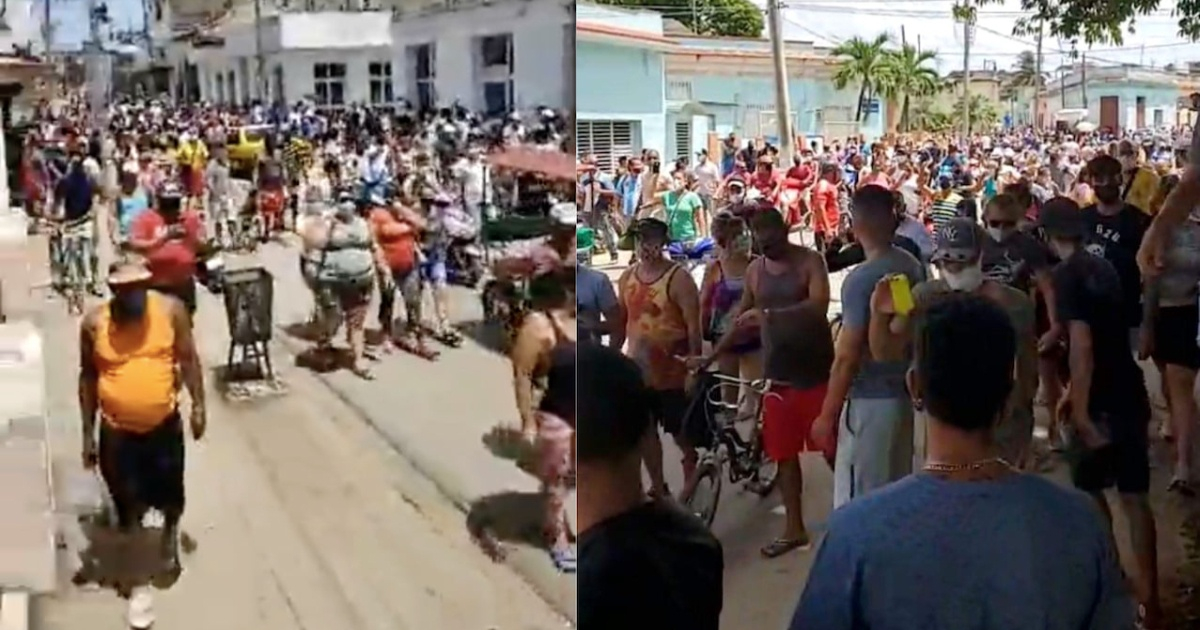
Cuba’s history is punctuated by instances where a generation is faced with the choice of either shouldering the past or paving the way for a new chapter. Some dates are simply marked on calendars, while others are etched into the collective consciousness of the people because they signify the moment when a nation begins to see itself with newfound clarity.
The events of July 11, 2021, fall into this latter category.
In the future, when Cuba can examine its history without censorship or ideological bias, this date will be recognized as a pivotal turning point in the contemporary Cuban narrative. It wasn’t just the protests that occurred on that day; it was the psychological break from decades of enforced silence. A society that had long been submissive realized that absolute obedience was no longer an inevitable fate.
July 11 was not merely a protest. It was when the real Cuba emerged, challenging the official narrative constructed by the regime.
The People's Breakthrough
For decades, Cuban authorities maintained that any dissent was due to external influences or isolated groups. However, the reality on July 11 was starkly different.
The protests erupted from various parts of the nation. It was not confined to Havana or specific societal groups. Towns and cities across Cuba simultaneously expressed a sentiment that had been building for years.
From San Antonio de los Baños to Palma Soriano, from Cárdenas to countless communities across the country, thousands of citizens shattered what seemed an insurmountable barrier: fear.
The historical significance of this uprising lies in its spontaneous and nationwide nature. The Cuban periphery stopped being mere observers of history and became its protagonists.
For the first time in a long while, the nation spoke from the grassroots up.
The Collapse of an Ideological Construct
A cornerstone of the Cuban regime was the creation of the so-called "New Man," a figure meant to embody the revolutionary values. The historical paradox of July 11 was that those who took center stage were, largely, the descendants of that educational and ideological project.
This generation was not raised outside the system; they were born into it. Their demands carried extraordinary historical weight, revealing that no doctrinal framework can fully suppress human consciousness when reality consistently contradicts the promises of power.
July 11 signaled the failure of the notion that a society could be indefinitely shielded from the truth through propaganda and control.
Many Cubans discovered a fundamental truth that day: the silence of millions did not equate to acceptance; it often signified fear.
A Shift in Historical Inquiry
For over six decades, the Cuban government's narrative attributed national issues primarily to external factors. But July 11 changed the nature of the debate.
The voices filling the streets were not calling for international negotiations or intergovernmental conflicts. They demanded solutions to internal realities: the lack of freedoms, the economic crisis, the daily struggles, and the exhaustion with a model that promised a better future but never delivered.
The historical question shifted from external threats to what had transpired within the nation that led its citizens to shed their fear and publicly demand change.
The Erosion of Legitimacy
Governments may weather economic challenges or temporary crises. But when they lose the ability to convince their own citizens, a deeper crisis emerges: a crisis of legitimacy.
The Cuban government's response to the protests exposed a reality that will be of great significance to future historians. A regime that claimed to represent the popular will resorted to repression in the face of spontaneous civic expression.
This contrast is now embedded in the national memory. Force can clear a street for a day, but it cannot erase the historical experience of a society that has realized its potential to demand rights.
The 11th of July and the Future of Cuba
Significant national transformations rarely begin with a change in government; they start with a shift in the people's consciousness.
Cuba's independence was not solely born on battlefields; it first arose from the belief that colonial rule could not persist.
The Republic did not emerge merely through official documents; it was preceded by the desire of millions to build a sovereign nation.
Similarly, the future democratic Cuba will need to study July 11 as a moment when a new historical phase began. On that day, a substantial portion of Cuban society understood that fear could be conquered and that national dignity could not forever rely on a power structure.
July 11 was a turning point for a nation. It was the moment when the real Cuba began to assert itself against the imposed narrative. And it will be history, with the distance and freedom of analysis still lacking today, that will determine the true impact of that day on Cuba's destiny.
Understanding July 11th's Impact on Cuba
What made the protests on July 11th significant in Cuba?
The protests on July 11th were significant because they represented a nationwide, spontaneous uprising against decades of government control and propaganda, highlighting a shift in the Cuban people's consciousness.
How did the Cuban government respond to the July 11th protests?
The Cuban government responded to the July 11th protests with repression, revealing a deep crisis of legitimacy as they resorted to force against spontaneous citizen demands for rights and freedoms.
What does July 11th mean for Cuba's future?
July 11th marks a turning point, indicating the beginning of a new era in which the Cuban people are more vocal in their demands for change, potentially leading to significant national transformations.