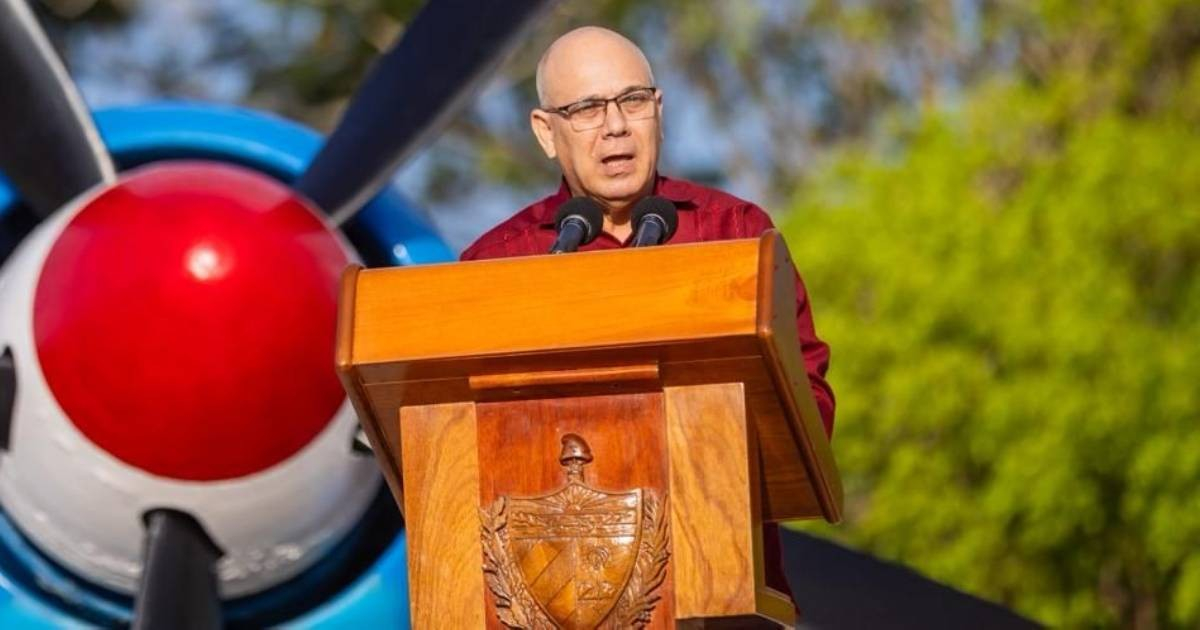
Roberto Morales Ojeda, the Organization Secretary of the Central Committee of the Communist Party of Cuba, recently took to Facebook to evoke the 1990s Special Period as a backdrop for what he describes as "innovative and even uncomfortable solutions." However, his message conspicuously lacks any specific measures and fails to acknowledge that the very regime he serves is primarily accountable for the ongoing crisis.
The Nostalgic Invocation of Fidel Castro
In typical fashion, Morales Ojeda begins by quoting Fidel Castro, asserting that the historical leader "implemented profound measures to save the Revolution" during the Special Period. These actions, he claims, were characterized by "leadership that combined firmness with an understanding of the historical moment," aimed at "withstanding the crisis's impact with minimal social cost." Yet, the harsh reality of that era—widespread hunger, mass exodus on makeshift rafts, and severe rationing—remains conveniently omitted from his narrative.
Revisiting the Revolutionary Legacy
Morales Ojeda's rhetoric leaps to a call for Cuban "revolutionaries" to revisit this legacy, not to replicate it blindly, but to harness "the ability to prioritize national defense over any dogma and to find creative and even uncomfortable solutions when reality demands it." In simpler terms, the regime needs to adopt measures it once deemed capitalist heresy, now cloaked in revolutionary bravado.
The Reality Behind "Uncomfortable Solutions"
The phrase "uncomfortable solutions" has already manifested in the form of a 176-measure economic package approved in June 2026, introducing private banking, cryptocurrencies, and the removal of universal subsidies. Under different circumstances, the Communist Party might label these actions as "betrayal," yet now they are marketed as sovereign decisions. The courage, it seems, lies in who signs the decree.
An Economic Crisis Unfolding
The backdrop of this propaganda is stark. Cuba faces its most severe economic crisis since the Special Period Morales Ojeda references, with the GDP projected to fall between 6.5% and 15% this year alone. The informal market exchange rate for the dollar soared from 435 Cuban pesos in December 2025 to over 670 pesos by July 7. The monthly basic goods basket costs around 50,000 pesos, over seven times the average state salary, illustrating the crippling cost of living in Cuba in 2026.
Disconnected Rhetoric Amidst Desperation
This isn't the first instance of Morales Ojeda resorting to rhetoric disconnected from reality. On June 20, he proclaimed "Cuba rises" while the island suffered from power outages exceeding 1,975 MW in deficit. Shortly after, he spoke of "union democracy" in a country where independent unions are outlawed.
A Public Figure in Controversy
Morales Ojeda's public standing is telling: an April 2026 survey revealed that 94% of Cubans surveyed have "no confidence" in him, with an average rating of 1.1 out of five. On May 18, 2026, the U.S. Treasury Department listed him as a Specially Designated National under Executive Order 14404 from the Trump administration, due to his links to repression in Cuba.
Understanding Cuba's Current Economic and Political Climate
What are the "uncomfortable solutions" proposed by the Cuban regime?
The "uncomfortable solutions" include a set of 176 economic measures such as the introduction of private banking, cryptocurrencies, and the removal of universal subsidies.
How has the economic crisis impacted the Cuban population?
The crisis has seen the GDP projected to drop significantly, with the cost of living rising sharply, as the basic goods basket now costs over seven times the average state salary.
What is the public perception of Roberto Morales Ojeda in Cuba?
A survey from April 2026 indicated that 94% of Cubans lack confidence in Morales Ojeda, reflecting widespread disapproval of his leadership and policies.