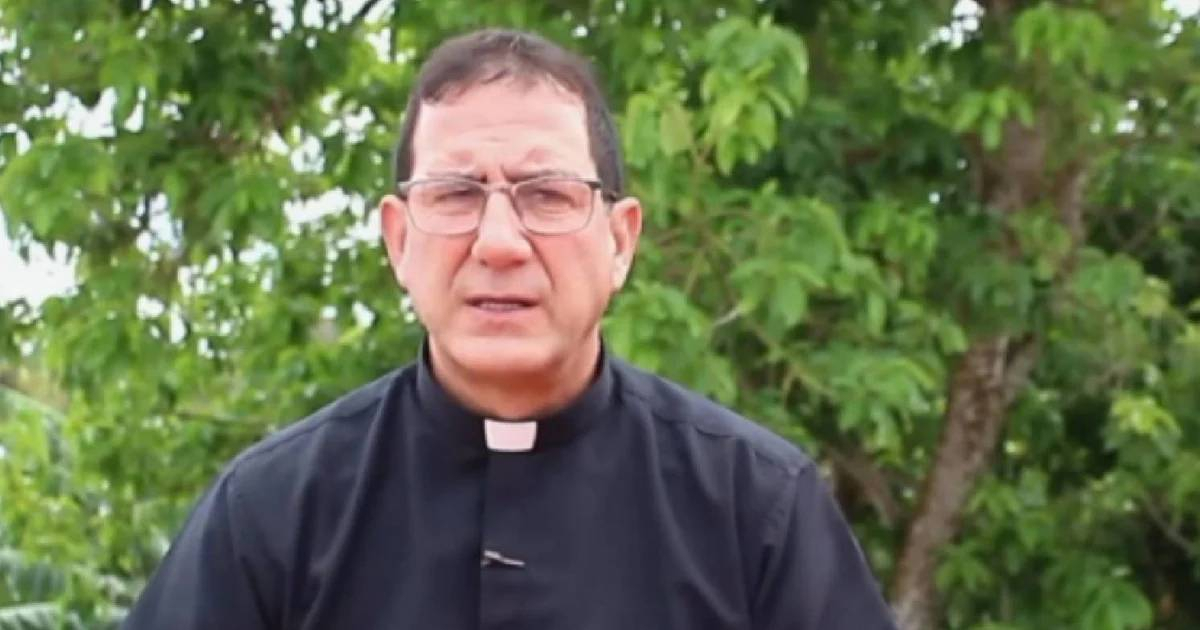
The Cuban priest, Alberto Reyes Pías, who serves as the parish priest at the church in Esmeralda, Camagüey, shared his 165th entry in his Facebook column "I've Been Thinking" this Friday. In it, he characterizes Cuba as a country perpetually at war with its own people.
"Cuba is a nation under siege. There are no bullets, no explosions, no bombs, but every single day, at any given moment, you are under attack... through the electricity that flickers out or takes its time to return, through the medications you can't find, through the overwhelming isolation, through the things that break or run out and can't be replaced, through the prices you can't afford, through the heat you can't escape, through mornings without breakfast and nights without rest..." the priest expressed.
The Ongoing Struggle in Cuba
This reflection emerges during one of the most critical periods in the island's recent history. On July 6, Cuba experienced its third nationwide blackout of the year—the seventh in 18 months—leaving millions without power. The electrical generation deficit reached a historic high of 2,341 MW on July 8, with Havana enduring average outages of 15 hours daily and Matanzas suffering up to 87 consecutive hours without electricity.
Father Reyes vividly describes this accumulated exhaustion: "The day is built on blows, which you endure, withstand, dodge, but they chip away at your soul, pierce your spirit, and leave you utterly spent."
The Invisible Damage of Constant Pressure
He warns about the unseen damage caused by relentless pressure: "Sometimes, the struggle is so overwhelming that you don't even realize it; the wear is so extensive that you don't notice you're breaking, because the soul has no bones, and you can't see it when it fractures."
The crisis Father Reyes outlines extends far beyond blackouts: only 30% of essential medications are available, 89% of the population lives in extreme poverty, 97% lack regular access to basic foods, and approximately 96,000 surgeries have been postponed in 2026, including 11,000 for children. Despite this, Bruno Rodríguez, the foreign minister, dismissed claims of a humanitarian crisis in July.
A Call to Spiritual and Human Connection
In light of this dire situation, Father Reyes urges the nurturing of the soul as a form of resistance: "It's time to embrace faith and seek God, to learn to pray, to cross the thresholds of churches, and to reestablish Christ as the savior in our homes."
He also advocates for strengthening human connections through what he calls "forming a pack": those moments when "you simply gift your presence to another," and teaching children "the beauty of choosing honesty over lies, respect over theft and violence, solidarity over selfishness, diversity over uniformity, critical thought over indoctrination."
Standing Against Complicity with the Regime
Furthermore, the priest issues an unequivocal warning against complicity with the regime: "It's time to stop wasting time on lies and slogans, on insincere applause, on despicable acts that fuel our enslavement. It's time to live in truth, even if it hurts, even if it costs."
Since 2020, Father Reyes has consistently used his weekly column to denounce the repression and crisis in Cuba. In January 2026, State Security summoned him and fellow priest Castor José Álvarez Devesa to issue warning documents under the threat of legal prosecution. The regime accuses him of being a "promoter of hatred," and in June, pro-regime troubadour Raúl Torres publicly criticized him.
Despite these pressures, Father Reyes continues to speak out, concluding his 165th reflection with the same image he began with: "Care for yourself amid this war, care for and protect the soul, because never forget: the soul has no bones, and you can't see it when it breaks."
Understanding the Crisis in Cuba: Key Questions
What are the main challenges facing Cuba today?
Cuba is grappling with severe electricity shortages, a lack of essential medications, extreme poverty, limited food access, and a backlog of medical surgeries, all exacerbated by governmental policies.
How is Father Alberto Reyes responding to the crisis?
Father Alberto Reyes is calling for spiritual resilience, urging people to embrace faith, strengthen community ties, and resist complicity with the regime through truth and integrity.
Why does Father Reyes describe Cuba as a country at war?
Father Reyes uses the metaphor of war to depict the daily struggles and constant pressures faced by Cubans, which he sees as a form of aggression by the state against its citizens.