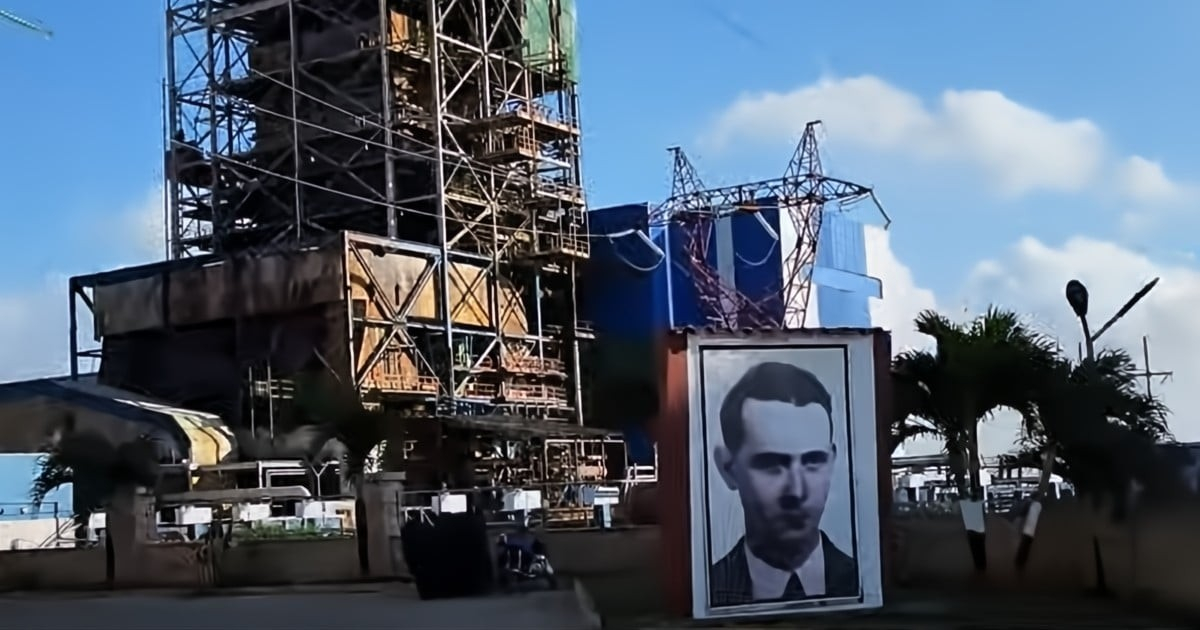
The Antonio Guiteras Thermoelectric Power Plant, located in Matanzas, announced on Friday that it was in the process of starting up and was expected to be integrated into the National Electric System (SEN) during peak demand hours, according to a Facebook post by José Miguel Solís.
This announcement immediately sparked a wave of skeptical and sarcastic responses from Cubans weary of the plant's recurring cycles of startup failures and breakdowns.
Public Skepticism and Ironic Comments
The prevailing sentiment was one of distrust. "I give it 48 hours," one user commented. "I think it will last two or three days... place your bets," another added. A third was more blunt: "It won't last until tomorrow."
Resignation mixed with dark humor: "Miss Guiteras entering the dance... Get her out, get her out!" joked a Cuban woman.
Underlying Issues of Power Outages
Many comments pointed directly to the root of the problem. "With or without Guiteras, blackouts everywhere," summarized one user.
Another was even more direct: "Completely irrelevant, you can take it out of the system permanently and nothing will change, there's no difference anymore."
Local Impact and Energy Shortages
A resident from Mayabeque highlighted that her municipality had been without power for almost 30 hours, and even if the plant joined the system, her circuit wouldn't benefit.
Some suggested not announcing the startup at all. "I would keep the Guiteras startup quiet to see if it can stay in the system for 24 hours and avoid embarrassment when it exits the SEN," wrote a user.
Another, addressing the author of the post, warned: "We Matanzas residents ask you not to promote it too much; we already know you're the black sheep: you praise it, and Guiteras immediately fails."
Historical Failures and Current Energy Crisis
The skepticism stems from a devastating track record. Guiteras left the SEN for the 17th time in 2026 on July 3, due to a leak in the economizer of its boiler, and the plant's director has publicly acknowledged lacking necessary parts for major repairs.
Inaugurated in 1988, the thermoelectric plant has never received comprehensive capital maintenance in over 36 years.
The energy context surrounding this startup is dire. On July 8, Cuba experienced its largest energy deficit in history: 2,341 MW, affecting 73% of the population simultaneously.
Two days earlier, on July 6, the country suffered its third total blackout of the year, leaving approximately 9.6 million people without electricity.
According to the Union Eléctrica report on July 3, SEN availability was just 944 MW against a demand of 2,745 MW, with 1,605 MW affected.
For this Friday's peak hours, availability hovered around 935 MW against a demand of 3,100 MW, implying an expected deficit of over 2,100 MW.
Additionally, 106 distributed generation plants remain offline due to a lack of fuel, representing another 890 MW unavailable.
Local Hardships and Hope for Stability
Matanzas, the city where the Guiteras is located, paradoxically suffers from some of the worst power outages in the country. "It doesn't solve anything for Matanzas residents," a local user noted.
Another reported that the San Juan neighborhood in Sagua la Grande had been without power for more than 48 hours. A Cuban woman praying for the plant not to fail again summed up the general sentiment: "Hopefully it stays online, because things are getting worse."
Understanding Cuba's Energy Challenges
Why is there skepticism about the Guiteras plant's operation?
The skepticism is due to the plant's history of frequent breakdowns and the lack of necessary parts for repairs, which leads to repeated failures and erratic service.
What is the current energy crisis in Cuba?
Cuba is experiencing severe energy shortages, with a significant deficit between available power and demand, leading to widespread blackouts that affect a large portion of the population.
How do local residents view the Guiteras plant's performance?
Local residents are largely cynical about the plant's effectiveness, viewing it as unreliable and incapable of alleviating the ongoing power outages in their areas.