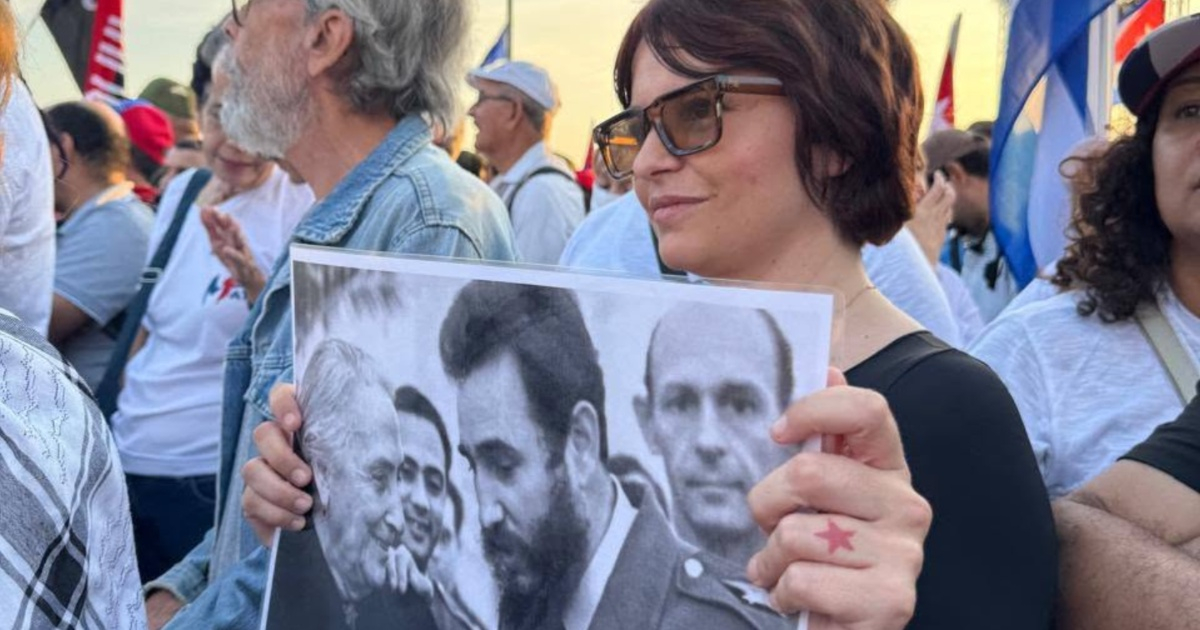
Spanish propagandist Ana Hurtado, married to Senén Casas, the son of the late General Senén Casas Regueiro who was a close aide to Raúl Castro, recently shared on Facebook her idea of organizing a pot-banging protest in front of the U.S. embassy in Cuba, dubbing it the "embassy of hate in Havana."
This announcement comes as Cuba grapples with its most severe energy crisis in recent history. Hurtado's call mirrors the rhetoric of President Miguel Díaz-Canel, who, following the June 2026 protests, encouraged Cubans to direct their grievances towards the United States with the phrase, "bang the pots for the neighbors up north."
While acknowledging the struggles faced by the Cuban people, Hurtado shifts the blame to the U.S. "It's understandable to vent one's frustrations after enduring endless hours, sometimes days, without electricity and water. This is why I propose once again a gathering with pots and pans, as they enjoy, in front of the embassy of hate in Havana," she stated.
Her proposal arrives at a time when Cubans are using pots and pans to protest against their own government. In June 2026, 107 street protests were recorded across Cuba—a historic high—with 82 occurring in Havana, featuring slogans like "Freedom!", "Power and food!" and "Down with the dictatorship." Activists orchestrated daily pot-banging events at 5:00 pm and 9:00 pm through July 11.
Energy Crisis Worsens as Protests Grow
The energy context Hurtado briefly touches upon is dire: Cuba set a new record for electricity deficits on July 8, with 2,341 MW not being generated, surpassing the previous record of 2,208 MW on June 25.
Regions like Matanzas experienced blackouts lasting up to 87 consecutive hours, while Granma and Santiago went over 48 hours without power, and Havana faced outages ranging from 15 to 22 hours daily.
Rather than questioning the regime, Hurtado concludes her post expressing full confidence in the government: "I have complete trust in those who know what they are doing. But it's necessary to explain to the people what is being done."
The Controversial Background of Ana Hurtado
Hurtado's background adds another layer to her proposal. She arrived in Cuba in October 2022, reportedly seeking political asylum to avoid Spanish justice, which had ordered her to pay 10,000 euros to Cuban doctor Lucio Enríquez Nodarse after calling him a "trafficker" and "terrorist."
In April 2024, she secretly married Lieutenant Colonel Senén Casas, son of General Senén Casas Regueiro, who had been Chief of the General Staff of the Revolutionary Armed Forces and a trusted figure of Raúl Castro.
Since her arrival, Hurtado has contributed articles to state media outlets like Cubadebate and Telesur, labeling independent Cuban activists and journalists as "criminals" and "mercenaries." In April 2026, she publicly denied that Cuba is a dictatorship, attributing such labels to the "dominant perspective" of Europe and the United States.
This Friday, as Hurtado suggested her protest in front of the U.S. embassy, Díaz-Canel called for better "organization" of the blackouts amid the ongoing crisis, offering no tangible solutions for the millions of Cubans enduring weeks without power or water.
Understanding the Impact of Cuba's Energy Crisis
What is the current energy situation in Cuba?
Cuba is experiencing its most severe energy crisis, with recent records showing a deficit of 2,341 MW in electricity generation, leading to widespread and prolonged blackouts across the island.
How are Cubans responding to the energy crisis?
Cubans have taken to the streets in historic numbers, using pot-banging protests to voice their dissatisfaction with the government's handling of the crisis and demanding basic needs like electricity and food.
Who is Ana Hurtado and why is she controversial?
Ana Hurtado is a Spanish propagandist who sought political asylum in Cuba. She is controversial due to her public support for the Cuban regime, her marriage to a military figure connected to the government, and past legal issues in Spain.