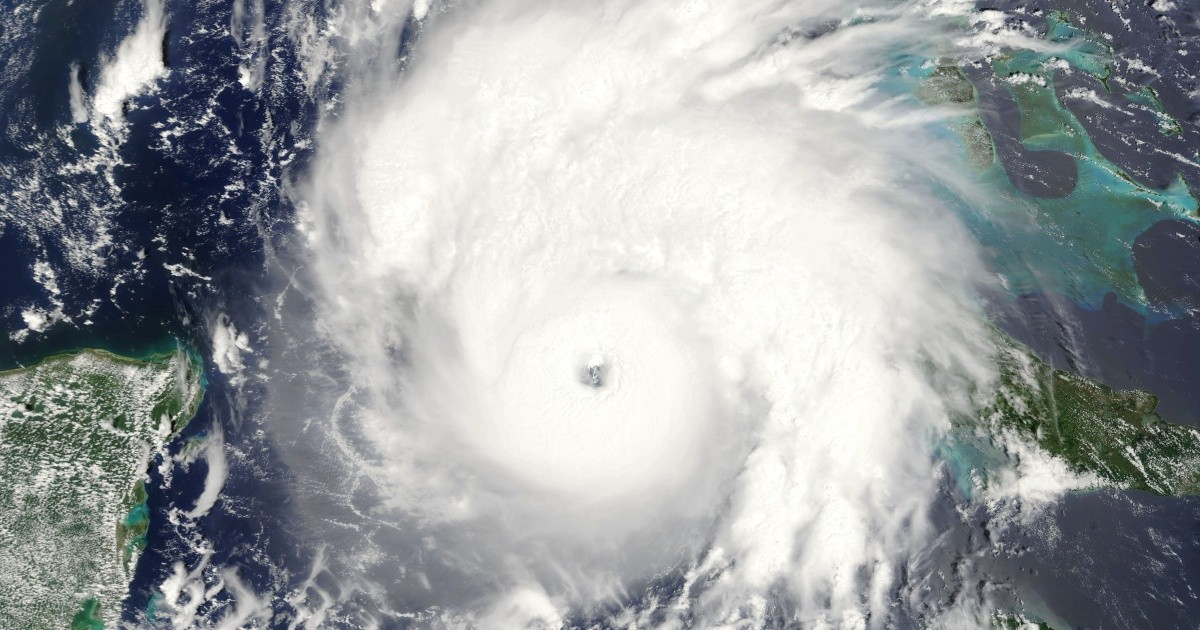
The Colorado State University (CSU) has once more adjusted its predictions for the 2026 Atlantic hurricane season, now anticipating just nine named storms, four hurricanes, and only one major hurricane (category 3 or higher). These figures fall significantly below historical averages.
Released on Wednesday, July 8, this update is the third consecutive reduction this year. Initially, in April, CSU predicted 13 storms, which was reduced to 11 in June, and now stands at nine.
The climatological average from 1991-2020 is 14.4 named storms, 7.2 hurricanes, and 3.2 major hurricanes.
The Influence of El Niño on the Forecast
The primary factor contributing to this calmer outlook is the strengthening El Niño phenomenon, expected to reach a strong or very strong phase between August and October, coinciding with the peak of historical cyclone activity.
El Niño increases the temperature of the equatorial Pacific waters and strengthens westerly winds, which enhances vertical wind shear over the tropical Atlantic, making it difficult for storms to form and intensify.
The National Oceanic and Atmospheric Administration (NOAA) officially declared the phenomenon on June 11, 2026, with a 63% chance of reaching very strong intensity between November 2026 and January 2027.
CSU estimates that cyclonic activity in 2026 will be between 40% and 45% of the 1991-2020 average, compared to the 105% observed in 2025.
Reduced Risks for Landfall
The likelihood of a major hurricane making landfall on the continental United States has dropped to 17%, compared to the historical average of 43%. For the Gulf of Mexico coast, the probability is down to 10%, from a historical average of 27%.
In the Caribbean, CSU predicts just a 19% chance that a major hurricane will pass through, compared to the annual average of 47%.
NOAA had projected in May between eight and 14 named storms and three to six hurricanes, with a 55% likelihood of a below-normal season. The CSU forecast sits at the lower end of this range.
Cuba's Cyclonic and Winter Outlook
For Cuba, the hurricane outlook also appears less active, although the Institute of Meteorology (INSMET) estimated in May a 40% chance of at least one hurricane affecting the island and a 75% chance of impact from a tropical storm.
The paradox of El Niño is evident: while it diminishes Atlantic cyclone activity, it intensifies winter conditions in Cuba and the Caribbean. Cuban meteorologist Yosmelvi Páez Cornell warned that the winter of 2026-2027 will be anything but quiet.
"While we will have one of the calmest hurricane seasons in decades due to the very strong El Niño, the winter season will be quite the opposite," Páez Cornell stated.
The specialist also cautioned that prefrontal lines "can produce heavy rains, intense winds, and even tornadoes, especially in western and central Cuba."
This scenario has precedents: during the El Niño winter of 2009-2010, Cuba experienced seven cold fronts in February 2010, more than double the historical average of 3.34 for that month.
A detailed analysis of this risk was published in a report on the potential rainy winter Cuba could face.
The Uncertainty of Hurricane Seasons
Despite a favorable forecast, experts emphasize that reduced activity does not equate to an absence of danger.
The 2025 season is a case in point: it saw 13 named storms and three category 5 hurricanes, the second-highest number in history, though none made landfall in the United States for the first time in a decade.
Hurricane Melissa struck Jamaica as a category 5 with winds reaching 295 km/h, causing nearly $12 billion in damages, and later made landfall in eastern Cuba as a category 3, impacting over 116,000 homes and affecting more than 3.5 million people.
"It only takes one hurricane hitting a community to turn a quiet season into a devastating one," warned CSU specialists.
The next forecast update is scheduled for August 5, 2026.
Frequently Asked Questions about the 2026 Atlantic Hurricane Season
What factors are influencing the reduced hurricane forecast for 2026?
The primary factor is the strengthening El Niño phenomenon, which increases vertical wind shear over the Atlantic, inhibiting storm formation and intensification.
How does El Niño affect weather patterns in Cuba?
While El Niño reduces cyclone activity in the Atlantic, it intensifies winter conditions in Cuba, leading to heavier rains, stronger winds, and even tornadoes.
What historical comparison can be made regarding the 2026 forecast?
The forecast suggests a significant reduction in activity compared to the 1991-2020 averages, and is much lower than the activity observed in 2025, which was 105% of the average.