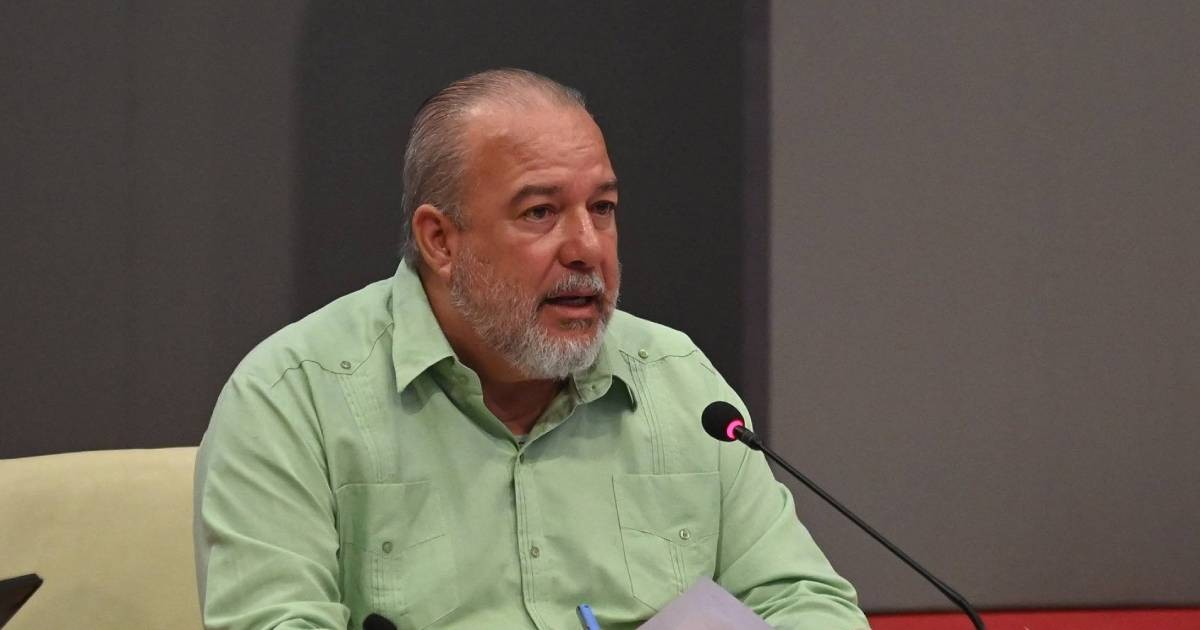
In a bold defense of ongoing dialogues with the United States, Cuban Prime Minister Manuel Marrero Cruz addressed the criticisms surfacing around these discussions, suggesting they are part of a "well-orchestrated plan" aimed at sowing doubt and distrust.
Through a series of posts on his X account, Marrero confirmed that Havana has been engaging with U.S. government representatives. He emphasized the full support of Cuba's leadership for the team handling these crucial negotiations.
"Conversations with U.S. government officials are underway, focusing on resolving bilateral differences through dialogue," Marrero stated.
The Backing of Cuba's Leadership
Marrero highlighted that the negotiating team has the "trust, support, and mandate of the General of the Army and the First Secretary of the Central Committee of the Party and President of the Republic," referring to Raúl Castro and Miguel Díaz-Canel.
However, it was his forceful response to critics that stood out in his messages.
"Reputation assassinations, manipulations, and calls for disunity and fracture are part of a well-designed strategy to create uncertainty and distrust. Every step in this pivotal historical moment is in defense of the Revolution and our sovereignty," he declared.
The Controversy of "El Cangrejo"
Marrero's comments come in the wake of an interview given to USA Today by Raúl Guillermo Rodríguez Castro, also known as "El Cangrejo," Raúl Castro's grandson and a colonel in the Ministry of the Interior.
Published on July 6, Rodríguez Castro expressed his willingness to negotiate directly with the administration of former president Donald Trump if tasked with that responsibility.
"If appointed, I can negotiate with anyone selected by the U.S. government. Given the chance, certainly with Trump," he stated.
The interview sparked a wave of reactions both inside and outside Cuba. Intellectuals, artists, and even those aligned with the regime questioned his prominent role in the negotiations, given his lack of an official political or governmental position.
Critics also pointed out the stark contrast between Rodríguez Castro's public image—associated with a high standard of living—and the deep economic crisis afflicting the Cuban populace.
On the same day, Communist Party leaders also defended the negotiation process and Rodríguez Castro's role, insisting he acts under the "mandate of the country's top leadership."
Slow Progress in U.S.-Cuba Talks
The statements from Marrero and the Communist Party aim to validate the ongoing talks with Washington, publicly endorse the negotiating team, and frame the criticisms as part of a campaign to undermine the process.
Negotiations between the two governments commenced in early 2026. According to a report by Axios in February, Secretary of State Marco Rubio engaged in discreet discussions with individuals close to Raúl Castro, recognizing that real power in Cuba remains concentrated around the former leader.
Initially, Cuban authorities were reticent to acknowledge these contacts, but by March, Díaz-Canel confirmed the existence of the talks, later admitting that Raúl Castro played a pivotal role.
Despite this acknowledgment, the Cuban government has admitted that the negotiations are progressing slowly. Both Foreign Minister Bruno Rodríguez and Deputy Minister Josefina Vidal have noted that while communication channels remain open, significant progress is lacking.
These developments unfold as Cuba faces an acute economic and energy crisis, characterized by prolonged blackouts, food and fuel shortages, and a shrinking economic activity that continues to worsen living conditions on the island.
Key Aspects of Cuba-U.S. Relations
What is the significance of Manuel Marrero Cruz's statements?
Manuel Marrero Cruz's statements aim to defend the ongoing negotiations with the U.S. and address criticisms by framing them as part of a deliberate campaign to create doubt and distrust.
Who is "El Cangrejo" and why is he controversial?
"El Cangrejo" is Raúl Guillermo Rodríguez Castro, Raúl Castro's grandson. His involvement in negotiations has sparked controversy due to his lack of an official position and the contrast between his lifestyle and Cuba's economic hardships.
How have the U.S.-Cuba negotiations progressed?
Negotiations have been slow, with open communication channels but little significant progress, as acknowledged by Cuban officials.