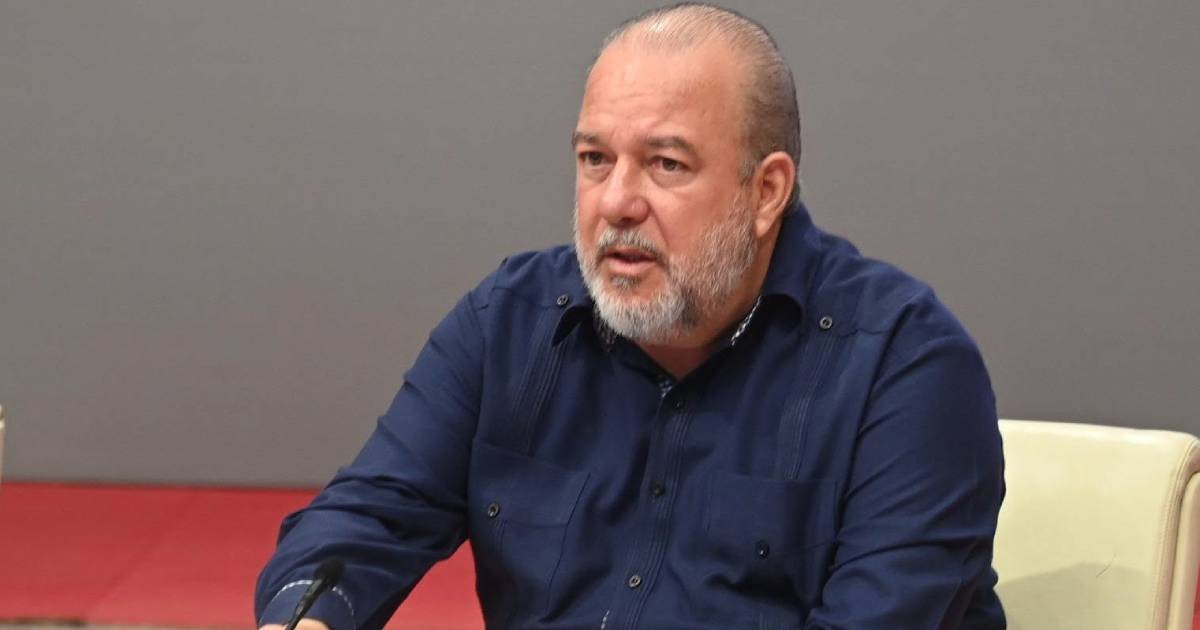
Cuban Prime Minister Manuel Marrero Cruz has revealed that the regime is currently engaged in discussions with representatives of the United States government. He emphasized that the team leading these negotiations operates with the explicit support of both Raúl Castro and Miguel Díaz-Canel.
In a series of posts on the social media platform X, Marrero reiterated that these interactions with Washington are a core part of the Cuban government's official strategy.
"As President Díaz-Canel has expressed, consistent with the Revolution's steadfast policy, conversations have been held with U.S. government representatives aimed at resolving bilateral differences through dialogue," he stated.
Marrero further noted that the negotiation team "has the trust, support, and mandate of the Army General and the First Secretary of the Central Committee of the Party and President of the Republic," referring to Raúl Castro and Miguel Díaz-Canel.
The Controversial Role of 'El Cangrejo'
These statements come amid controversy surrounding the emerging role of Raúl Guillermo Rodríguez Castro, known as "El Cangrejo." As a colonel in the Ministry of the Interior and grandson of Raúl Castro, he has become a key figure in these talks with Washington in recent months.
On July 6, Rodríguez Castro made his first public appearance related to the negotiations, expressing his willingness to "sacrifice for the Revolution." On the same day, Elier Ramírez Cañedo, a member of the Communist Party's Central Committee, defended his role as a negotiator, emphasizing that he acts under the mandate of "the country's highest leadership."
Challenges and Slow Progress in Dialogue
Marrero's messages echo the Communist Party leadership's narrative in response to criticism of the negotiation process.
"Reputation assassinations, manipulations, and calls for disunity and fracture are part of a carefully crafted plan to sow uncertainty and distrust. Every step at this critical historical juncture is in defense of the Revolution and our sovereignty," he wrote.
To date, these statements are one of the most explicit public confirmations of the Cuban power structure's backing of the team engaging with the U.S. administration.
The dialogue between the two governments, which began in early 2026, has seen limited progress.
On April 17, delegations from the United States and Cuba met in Havana, led by officials from the State Department and the Cuban Foreign Ministry. Later, on May 14, CIA Director John Ratcliffe visited the island and met with "El Cangrejo," marking the highest-level visit by a Trump administration official to Cuba.
Despite these interactions, Cuban authorities acknowledge that the negotiations are advancing slowly.
On July 1, Foreign Minister Bruno Rodríguez stated that the dialogue "shows no progress," accusing Washington of maintaining a policy of pressure and sanctions while engaging in diplomatic talks.
Days earlier, Deputy Foreign Minister Josefina Vidal had also admitted that while communication channels remain open, there is "little progress."
Marrero's remarks come amid a severe economic and energy crisis in Cuba, characterized by extended blackouts, food and fuel shortages. Meanwhile, the Trump administration continues its policy of maximum pressure on Havana, demanding the release of political prisoners and improvements in rights and liberties—conditions that the Cuban government deems unacceptable for bilateral negotiations.
Key Insights on Cuba-US Negotiations
Who is leading the negotiations with the U.S. on behalf of Cuba?
The negotiations are led by a team that operates with the support of Raúl Castro and Miguel Díaz-Canel, with Raúl Guillermo Rodríguez Castro, "El Cangrejo," playing a significant role.
What is the main goal of the Cuba-US dialogue?
The primary aim is to resolve bilateral differences through dialogue, consistent with Cuba's revolutionary policy.
What are the challenges facing the negotiations?
The negotiations are progressing slowly amid continued U.S. pressure and sanctions, and Cuba's rejection of certain conditions set by the U.S. for dialogue.