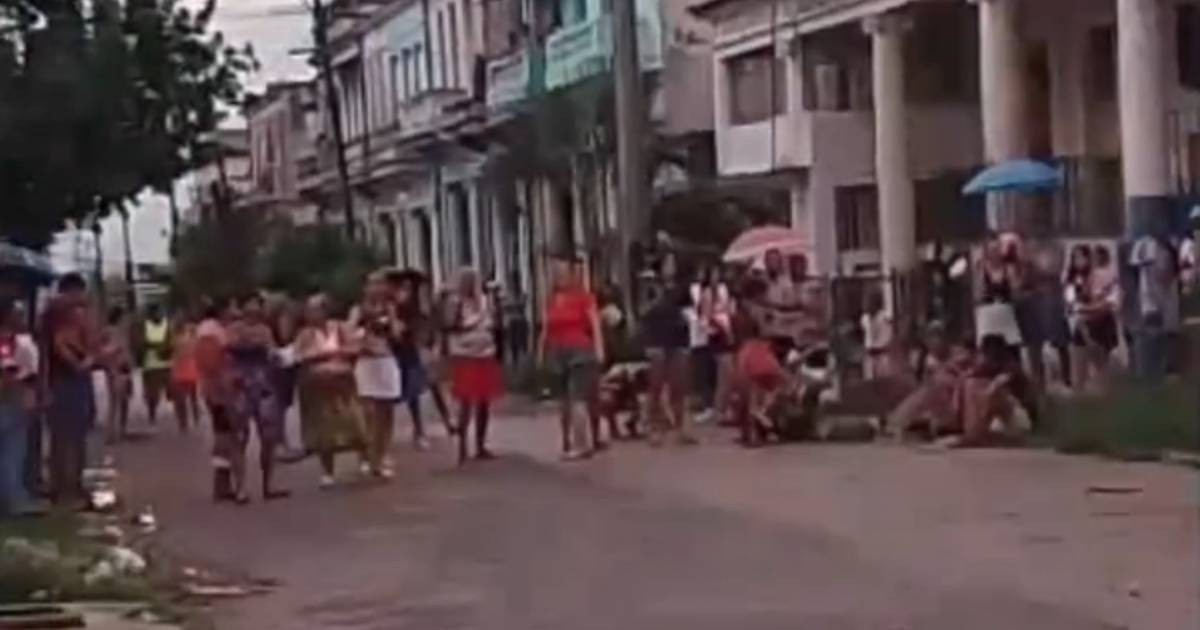
On Tuesday night, at least 24 individuals were taken into custody in Luyanó, located in the Diez de Octubre municipality, as a result of a protest against extensive power outages and water shortages. This information was obtained through an investigation conducted by Diario de Cuba.
The detainees, all of whom are men of African descent, were arrested following demonstrations in front of the Hijas de Galicia maternity hospital. The protesters banged on pots and pans, set trash on fire, and blocked traffic during a blackout caused by the collapse of the National Electric System (SEN). Police caravans moved in swiftly to make arrests.
Residents of the neighborhood had been enduring almost two days without electricity and approximately ten days without water supply when the protest erupted.
“Before the SEN collapse, we had already experienced over 40 hours without power and ten days without a drop of water, no water trucks, nothing. It's every person for themselves. We can't continue living like this, so we protested and made noise until our demands are met,” Zenia, a local resident, expressed.
Aguilera's Police Station Overwhelmed
The wave of arrests has overwhelmed Aguilera's police station capacity. An anonymous source within the station revealed that they are holding over 30 protesters, necessitating the use of cells intended for women and communal areas for holding detainees.
“We already have more than 30 detainees here, which is a critical number,” stated the official.
An urgent transfer of 14 detainees to the Valle Grande prison was planned for Thursday. “There’s no more room for any more detainees in Aguilera. We are overwhelmed with these protest-related issues,” the source added.
Growing Unrest in Havana Neighborhoods
Luyanó joins a growing list of Havana neighborhoods responding to grievances with mass protests. Recently, residents of Jaimanitas, La Hata, and Alamar have also engaged in pot-banging demonstrations, citing police crackdowns and internet outages.
Among the documented cases is that of Elías Heli González Palma from Sevillano, who is held in provisional detention facing public disorder charges after participating in a pot-banging protest from his home.
The Luyanó demonstrations come five years after the significant social uprising on July 11, 2021, in the same neighborhood. The current trigger is Cuba’s most severe energy crisis in recent history: the SEN's complete collapse on July 6 marked its seventh total blackout in 18 months, leaving over 9.6 million people without power.
Escalating Repression Amid Protests
Repression has been escalating alongside the demonstrations. Justicia 11J reported at least 220 public protests in June, while the Cuban Conflict Observatory documented 107 street protests that month, a record number, with 82 occurring in Havana.
According to Infobae, Cuba reached a record of 1,306 political prisoners this Thursday, including 40 minors, 16 of whom are in adult prisons.
Understanding the Current Crisis in Cuba
What triggered the recent protests in Luyanó?
The latest protests in Luyanó were sparked by long-lasting power outages and water shortages, which led residents to express their frustration through demonstrations.
How is the Cuban government responding to the protests?
The government has responded with mass arrests, overwhelming local police facilities, and has been transferring detainees to prisons. They have also reportedly increased police presence and internet restrictions in protest areas.
What is the current state of Cuba's energy crisis?
Cuba is experiencing one of its most severe energy crises, with the National Electric System (SEN) recently collapsing for the seventh time in 18 months, affecting millions of people.