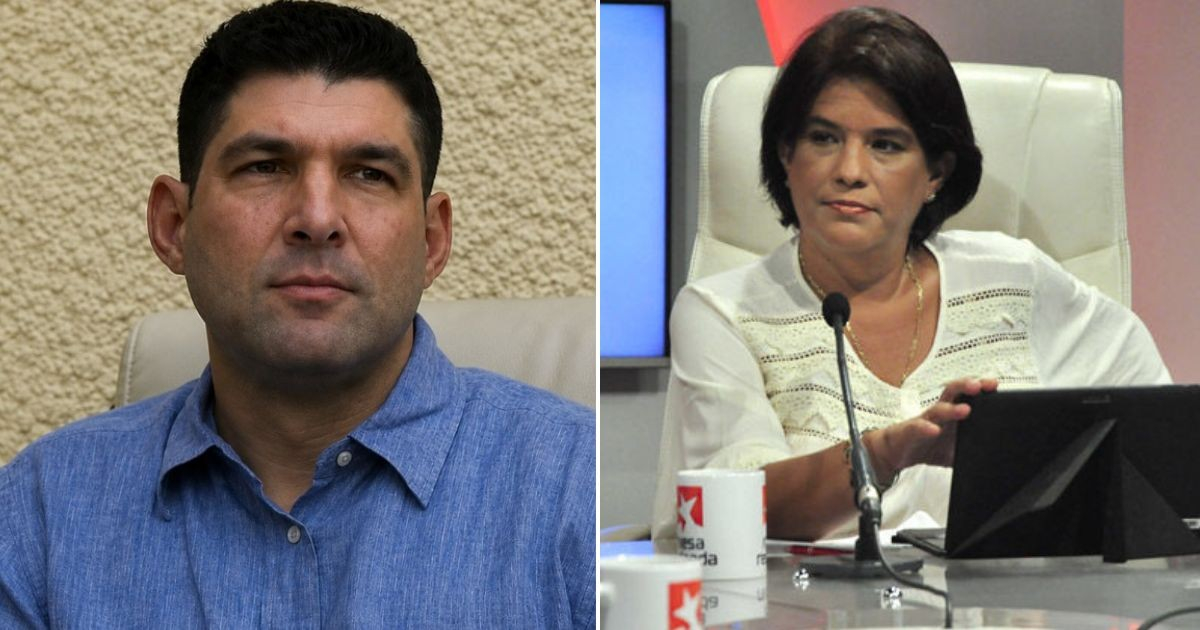
An official journalist from Cuba, who holds a doctorate in sciences, has stepped forward to publicly support the involvement of Colonel Raúl Guillermo Rodríguez Castro, known as "El Cangrejo," in negotiations between Havana and Washington. Her argument underscores the island's ongoing crisis: if these talks bring electricity, then they should proceed.
Ana Teresa Badia Valdés expressed her views in a detailed Facebook post titled "The Colonel Does Have Someone to Write for Him," inspired by Rodríguez Castro's interview with USA Today on July 6, 2026, where he offered to directly negotiate with Donald Trump.
The core message of her post is summarized in this statement: "If Raúl Guillermo can help ensure I have electricity, then he should be part of the dialogue," the professor remarked, echoing the comforting rhetoric now common among the regime's spokespersons.
Badia admits to writing her piece under dire conditions: "I write without power, sharing my people's economic suffocation and with almost no internet access."
This detail is significant. Cuba is enduring one of its worst energy crises, and a state journalist with a doctorate writes without electricity, prompting the question: does this justify any negotiation that could change the status quo?
The article also confronts speculation about Rodríguez Castro potentially becoming president, which Badia dismisses with a double-edged comment: "Raúl Guillermo didn't choose the family he was born into, nor does his last name entitle him to the presidency, which, I emphasize, he never claimed," though she neglected to mention the privileges he enjoys.
The Castro surname, inherited as the grandson of Raúl Castro and son of Débora Castro Espín, is precisely what fuels these speculations. Badia acknowledges this implicitly: the name is neither a merit nor a fault. However, she omits that it is this very name that has opened all doors for him.
Without holding any official government position, "El Cangrejo"—a nickname derived from a malformation in one of his fingers—has emerged as a key unofficial intermediary between the regime's elite and Washington.
Reports from Axios and the Miami Herald indicate that he met with Secretary of State Marco Rubio in Saint Kitts and Nevis during the CARICOM summit and with the Department of State official Jeremy Lewin at the Havana Convention Palace in April 2026.
Badia acknowledges the country's dire situation: "The current circumstances in which Cubans live are unsustainable, pushing the limits of human endurance."
Yet, she frames any negotiation within the context of the "economic and social transformations" announced by the Party, without questioning the regime's responsibility for the current situation.
She also criticizes a detail from the USA Today interview: "I didn't like some references to brands and such because most of this population has no access to any of that, and is almost dying, or rather, we are almost dying." A hint of criticism.
That "we are almost dying"—using the first-person plural—might be the most candid admission in the entire piece: a regime-affiliated journalist including herself among those suffering the crisis created by that same regime over decades.
Badia's article aligns with a narrative previously established by Colonel Francisco Arias Fernández in Granma on April 18, 2026, when he defended U.S.-Cuba contacts and blamed Miami exiles for sabotaging any rapprochement.
Two doctors in Social Communication Sciences, both within the system, are laying the groundwork for negotiations that the regime has yet to officially acknowledge.
Key Insights into Cuba-U.S. Negotiations and Energy Crisis
Who is Raúl Guillermo Rodríguez Castro, also known as "El Cangrejo"?
Raúl Guillermo Rodríguez Castro, nicknamed "El Cangrejo," is a Cuban colonel and the grandson of Raúl Castro. He is emerging as a key informal intermediary in U.S.-Cuba negotiations, despite holding no official government position.
What is the current energy crisis in Cuba?
Cuba is experiencing one of its worst energy crises, with widespread power outages affecting daily life. This situation has led to a sense of urgency in seeking negotiations that could improve energy availability.
What are the implications of the Castro surname in Cuban politics?
The Castro surname, associated with Raúl and Fidel Castro, carries significant influence in Cuban politics. While it opens many doors, it also fuels speculation and expectations regarding political roles and privileges.