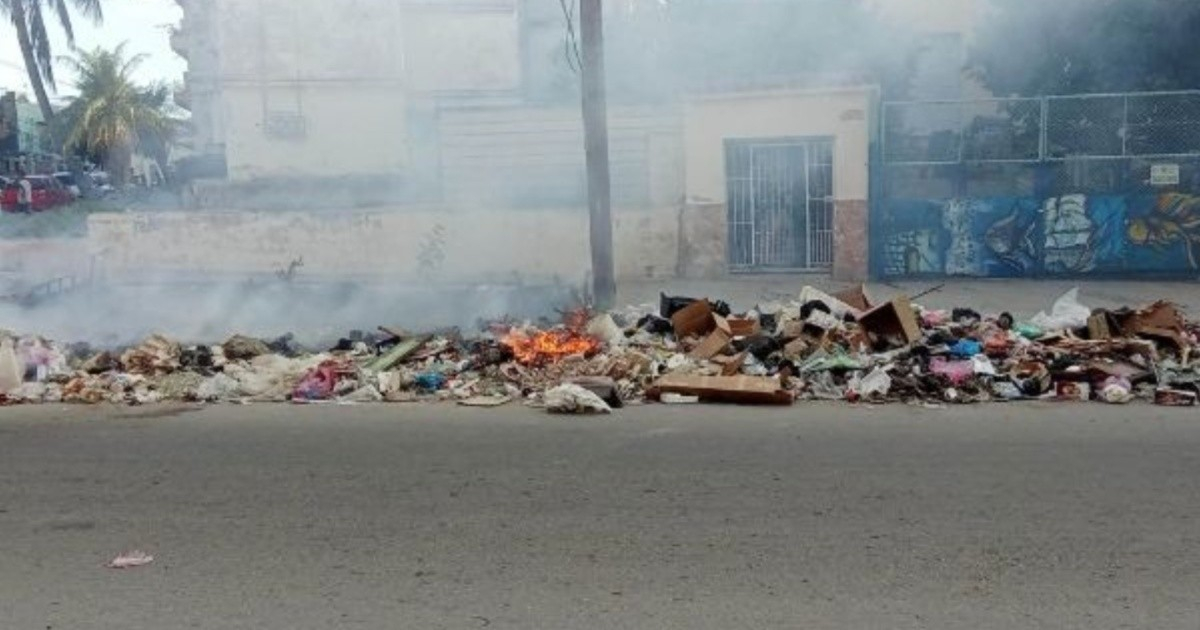
The streets of Havana have transformed into a contamination hub, posing a direct threat to what its residents consume.
This month, the Food Monitor Program issued a warning about a health emergency that adds to the existing energy crisis: uncollected garbage, sewer leaks, blocked drains, and waste spills running through the Cuban capital's roads.
The independent food monitoring organization highlighted that these pollution sources are not merely aesthetic problems but pose a significant threat to the food supply chain.
"Flies, cockroaches, rats, and other vectors can carry pathogenic microorganisms to the food consumed by the population," the FMP cautioned in its public statement.
Logistical Breakdown and Infrastructure Decay
The logistical collapse behind this emergency is backed by stark figures. Only 44 of the 106 garbage trucks in Havana are operational—just 41% of the fleet—hindered by diesel shortages and mechanical failures. The city generates between 24,000 and 30,000 cubic meters of solid waste daily, yet as much as 23,814 cubic meters remain uncollected each day.
The underlying issue is structural. Havana's sewer system, dating back to 1908-1914, was designed for a city of 600,000 residents, whereas today, it houses two million people without receiving adequate maintenance for decades.
In the face of government inaction, many residents resort to burning trash in the streets, creating toxic smoke and further damaging public infrastructure.
Public Health Crisis and Government Response
In June, young military servicemen were dispatched to clean up Havana's garbage, highlighting the civil waste management system's failure.
On June 21, activist Guillermo Rodríguez Sánchez documented the sale of fruits and vegetables on a street surrounded by waste. A biologist warned then that a gastroenteritis outbreak could occur at any moment.
The health consequences are already severe. Cuba ended 2025 with at least 81,909 dengue and chikungunya cases and 65 official deaths, a surge that The New York Times linked directly to the garbage crisis. So far in 2026, the outbreak persists with over 2,800 cases across 134 municipalities in 14 provinces. Epidemiologists also associate the trash heaps with outbreaks of leptospirosis, hepatitis A, and oropouche.
Food and Sanitation Crisis Overlap
The FMP points out a contradiction escalating the crisis: while sanitary conditions worsen, authorities focus their scrutiny on those who prepare and sell food, "ignoring that they operate within the same contaminated environment affecting all citizens."
This health emergency compounds an unprecedented food crisis. The FMP reports that 96.91% of the Cuban population lacks adequate food access, with 33.9% of households having a member who went to bed hungry at least once in the past 30 days, and 80% of homes lost refrigerated food due to blackouts.
The organization warns that the regime shifts responsibility to an already impoverished population, "forcing them to even take on the cleaning of public spaces in the absence of state solutions." The FMP asserts that "the deterioration of sanitation also threatens the right to safe food consumption."
Understanding the Sanitation and Food Security Crisis in Cuba
How does waste in Havana affect food security?
The accumulation of waste and sewage leaks can introduce pathogens into the food supply chain, posing a direct threat to the health and safety of the food consumed by Havana's residents.
What measures has the government taken to address the waste crisis?
In June, military personnel were deployed to assist in waste collection, highlighting the inadequacy of the civilian waste management system. However, systemic issues remain largely unaddressed.
What are the health implications of the garbage crisis in Havana?
The crisis has been linked to significant outbreaks of diseases such as dengue, chikungunya, leptospirosis, hepatitis A, and oropouche, impacting thousands across the country.