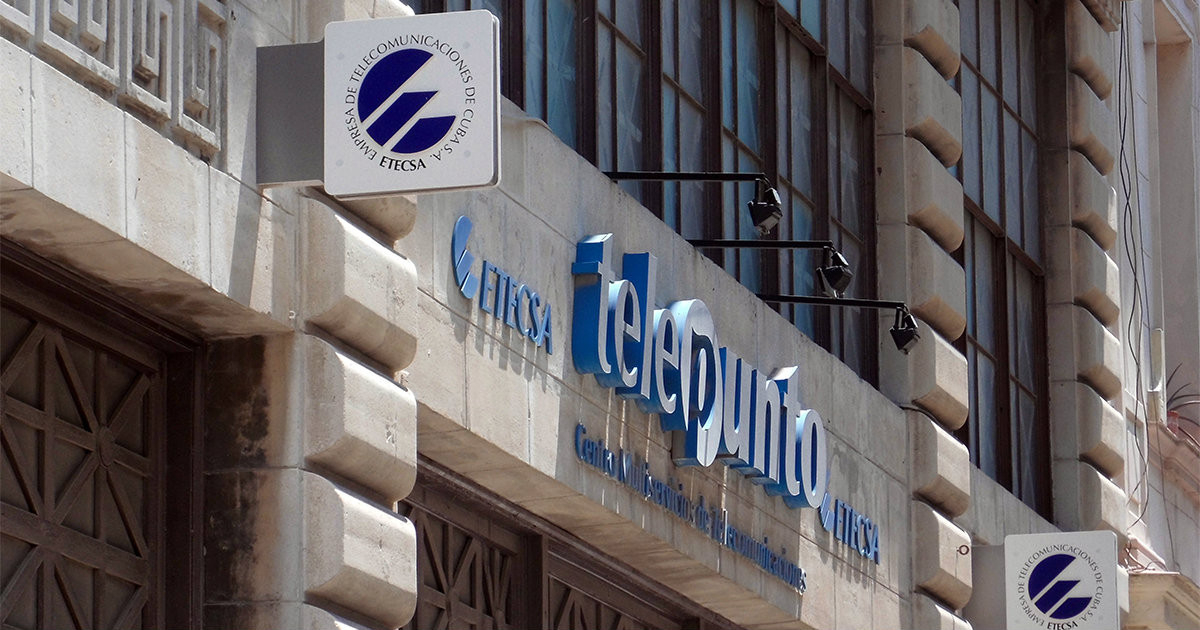
The state-run telecommunications company, ETECSA, acknowledged on Tuesday that the nationwide power failure on Monday left countless Cubans without mobile signal, sparking a wave of outrage on social media directed at the telecom provider.
In an announcement shared on its Facebook profile, ETECSA admitted that "due to electrical failures and issues with the backup generators supporting the network, there has been an increase in mobile service disruptions." The company assured that its specialists are "working continuously to ensure service availability."
This statement followed Cuba's seventh total blackout in 18 months, marking the third such incident in 2026, which left approximately 9.6 million people without electricity. The collapse of the National Electric System (SEN) was triggered by the unexpected shutdown of Unit No. 6 at the Nuevitas thermoelectric plant in Camagüey at 12:17 PM on Monday.
Widespread Infrastructure Failures
Without electrical power, ETECSA's cell towers began to shut down in succession. According to data released by the company, about 47.5% of mobile base stations became non-operational, and 56.5% of telecommunications cabinets were rendered useless. Approximately 450 base stations experienced mechanical failures or ran out of fuel for their backup generators.
The core of the issue is systemic: only half of the roughly 2,520 base stations across the country have any form of energy backup. In provinces like Sancti Spíritus, just 21 of 70 telephone exchanges have generators, leaving over 288,000 mobile lines vulnerable during power outages.
Public Outcry and Reactions
An ETECSA official admitted back in June 2026 that the telecom infrastructure cannot remain operational for more than 24 hours without electricity from the grid. The most recent incident confirmed this vulnerability: in March 2026, a massive blackout caused a 65% drop in national internet traffic, with service restoration taking 29 hours.
The public reaction was one of explosive anger. Cubans flooded social media with critiques aimed directly at the contradiction of paying high fees—following ETECSA's controversial 2026 rate hike—for a service that collapses with each blackout. "When the power goes out, there's no internet for anyone, ETECSA, why are you even selling?", one frustrated user summarized on Facebook.
The U.S. Embassy in Havana issued a security alert on Monday, reporting interruptions in mobile and internet services in areas such as Centro Habana, Regla, and other localities.
Slow Recovery Process
The restoration of electrical service progressed slowly and unevenly. Havana's Electric Company reported on Tuesday that only 46% of the capital had power restored, while areas like Guanabo were enduring 41 consecutive hours without electricity and a full week without water. According to the Electric Union, the complete recovery of the system could take several more days.
Understanding Cuba's Telecom Challenges
What caused the recent mobile service disruption in Cuba?
The disruption was caused by a nationwide power failure that led to the shutdown of ETECSA's mobile base stations and telecommunications equipment, impacting service availability.
How did the public react to ETECSA's service issues?
The public expressed significant outrage on social media, criticizing ETECSA for charging high rates for a service that fails during power outages.
What measures is ETECSA taking to address the service disruptions?
ETECSA has stated that its specialists are working continuously to restore and maintain service availability despite the challenges posed by power outages.