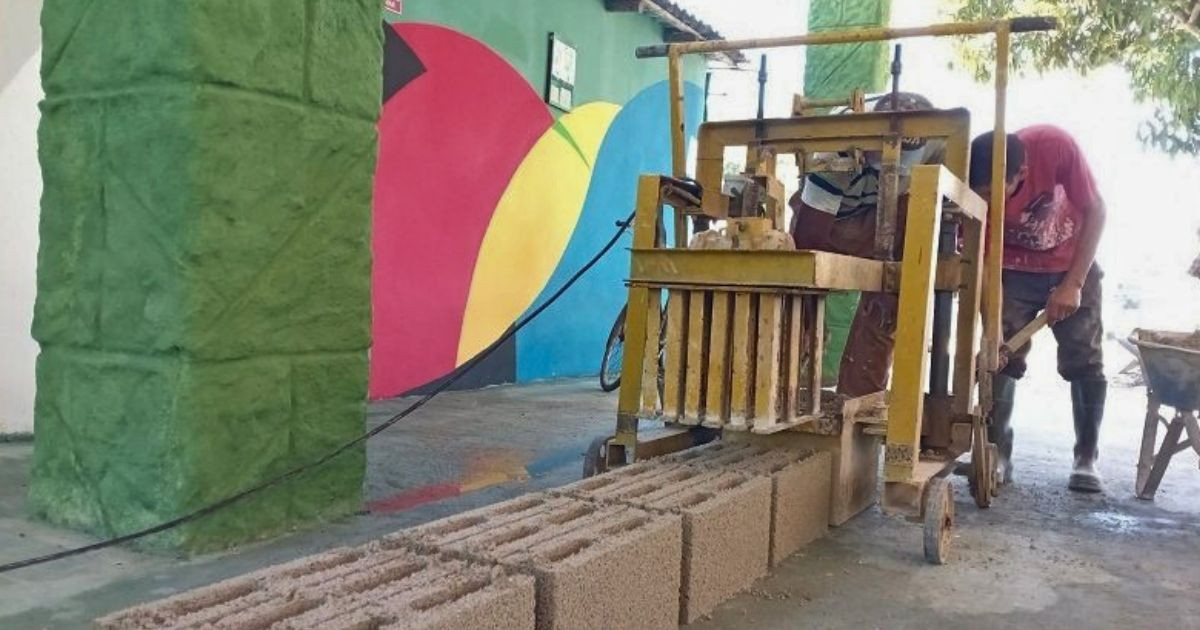
Three small to medium-sized enterprises (SMEs)—CALYPM, PAMA, and Carlos Bakery—located in Yaguajay, in northern Sancti Spíritus, have been chosen to receive a collective financial backing of around $120,000. This funding comes as part of the New Economic Actors (NEA) project, supported by the European Union (EU).
Daysel García Bello, director of Territorial Development for the Provincial Government of Sancti Spíritus, confirmed the news, noting that the funds will be allocated towards investments in renewable energy, expansion of production capabilities, and the acquisition of technological equipment, as reported by Escambray.
These three SMEs are among more than 60 entities in Cuba benefiting from the NEA project. This initiative, with a budget of 14 million euros, is backed by the EU in Cuba and is executed in partnership with the Ministry of Economy and Planning, its National Institute of Economic Research, the French Cooperation in Cuba, and the United Nations Development Program (UNDP).
The selection process was rigorous: 176 proposals passed an initial evaluation phase, 80 received on-site feasibility verification visits, and finally, 63 were chosen as winners. The results were announced on July 1, 2026.
Profiles of the Beneficiary SMEs
CALYPM, located near the Mayajigua community, specializes in producing construction materials using local resources. Their offerings include mortars—mixtures used in masonry for bonding blocks, coating walls, or filling joints—stone dust, blocks, pavers, and acrylic paints.
PAMA, a small industry established just over three years ago, produces 12 lines of food products—such as jams, fruit juices, tomato puree, and garlic, onion, and seasoning pastes—sourced from farmers in the Meneses area and surrounding villages.
Carlos Bakery, also based in Mayajigua, focuses on bread production and aims to diversify its offerings with the received support.
Project Goals and Challenges
According to the UNDP, the project's calls for proposals aim to deliver material resources and equipment rather than direct cash payments. The goal is to enhance production capacities, improve product and service quality, expand market presence, and create employment opportunities in the regions.
The NEA project kicked off in June 2024 and is slated for completion in October 2028. The project has recorded total contributions of $8,679,250, with reported expenditures of $25,646 in 2024, $715,528 in 2025, and $336,012 in 2026 on the UNDP portal.
Priority sectors include agro-food, renewable energy sources, and information and communication technologies. The project also aims to boost leadership among women and young people, promote a circular economy, and encourage sustainable production practices.
This external support comes amid increasing regulatory pressure on Cuba's private sector. In May, the UNDP and the EU announced progress in renewable energy projects for food production in Cuba. However, the harsh realities of the Cuban countryside and the population's food crisis starkly contrast with the achievements touted by the regime's official media.
At that time, Prensa Latina reported that the Alass project—Local Self-Sufficiency for Sustainable and Healthy Eating—had irrigated 123 hectares with solar energy across six municipalities in the central region, including Placetas and Remedios in Villa Clara, as well as areas in Sancti Spíritus.
Additionally, in 2025, about a dozen projects linked to the agro-food sector in eastern Cuba were selected to receive funding as part of a foreign cooperation program driven by international organizations.
Frequently Asked Questions about EU Financial Support for Cuban SMEs
What is the New Economic Actors (NEA) project?
The NEA project is an initiative supported by the European Union aimed at providing financial resources to small and medium-sized enterprises in Cuba to boost production capacities, renewable energy investments, and technological advancements.
How were the SMEs selected for EU financial support?
The selection process involved an initial evaluation of 176 proposals, followed by feasibility verification visits to 80 candidates, culminating in 63 final selections.
What are the main objectives of the NEA project?
The NEA project aims to enhance production capabilities, improve product quality, expand market reach, and create jobs while focusing on sustainable practices and empowering women and youth in leadership roles.