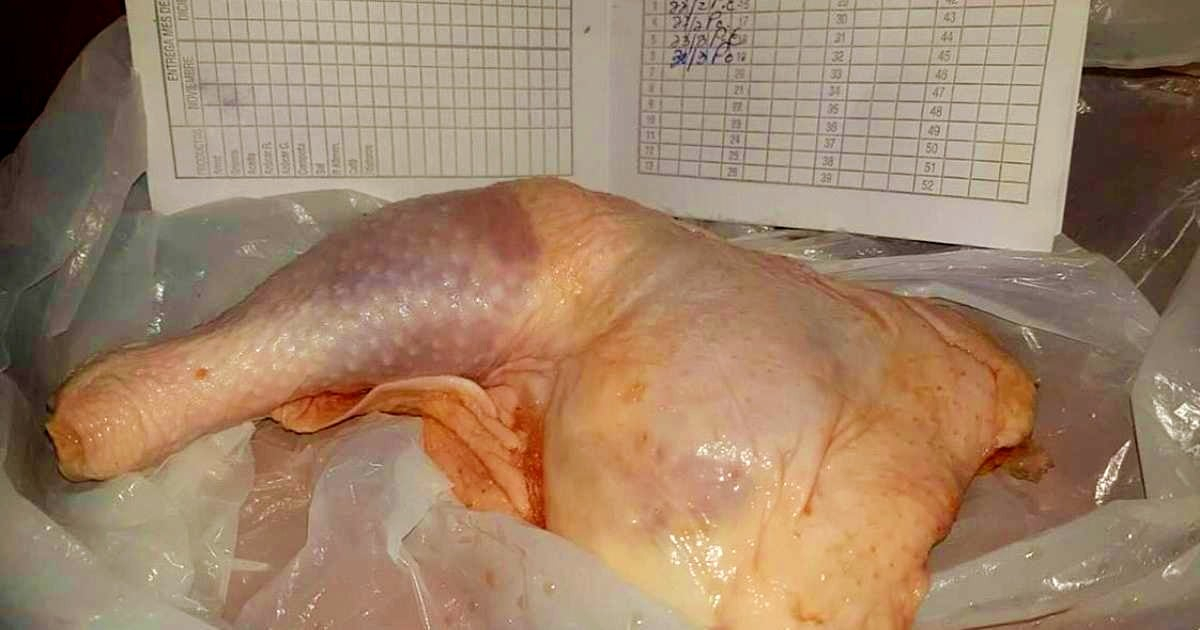
As the fifth anniversary of July 11, 2021, approaches, Santiago de Cuba's Commerce authorities have announced the distribution of five pounds of rice donated by China, ten ounces of beans, ten ounces of peas, children's compotes, and the sale of one pound of chicken per person. This announcement, made on Wednesday, was highlighted by Cuban social communicator Yosmany Mayeta Labrada, now exiled in the United States.
The immediate question on the minds of Santiago's residents mirrors Mayeta's query: "Why now?"
The timing of this distribution, coinciding with a politically sensitive date for the regime, fuels the perception that it is a social control tactic aimed at easing public discontent as the fifth anniversary of the largest anti-government protests in Cuba since 1959 looms.
China's Support Amidst a National Crisis
The rice being distributed is not sourced from national production but is a donation from China. In 2026, China provided Cuba with a total of 90,000 tons of rice, including an emergency package of 60,000 tons approved by Xi Jinping in January, from which a shipment of 15,000 tons arrived at the port of Santiago de Cuba.
This reliance on foreign aid contradicts decades of official rhetoric about achieving food self-sufficiency. As Mayeta points out, "There is no announcement of increased national production, only the distribution of a donation."
Escalating Hunger and Energy Shortages
The distribution comes amidst an unprecedented food crisis. Cuba's Minister of Food Industry, Alberto López Díaz, acknowledged on June 6, 2026, that this year, no oil, chicken, or yogurt has been distributed through the official ration book, and children in Havana have gone over two months without meat or ground beef.
In the informal market, rice prices have soared beyond 400 Cuban pesos per pound, while the average state salary hovers around 7,000 pesos monthly. The Food Monitor Program estimates that 96.91% of the Cuban population lacks adequate access to food.
On top of the food crisis, energy shortages are rampant. In July 2026, Santiago de Cuba faces up to 20 hours of daily power outages due to the third nationwide blackout of the year, with a generation deficit exceeding 2,100 MW against a demand of 3,100 MW. Water scarcity and virtually nonexistent transportation exacerbate the situation.
The True Meaning of Stability
As the fifth anniversary of 11J approaches, a significant number of political prisoners remain incarcerated in Cuba, with at least 338 individuals still serving sentences directly related to the 2021 protests. During these events, Díaz-Canel declared "the order to combat is given," which led to a widespread crackdown.
Mayeta warns that July 11, 2021, was not solely about the lack of chicken or rice but was the result of "a deep accumulation of economic, social, and political grievances."
He concludes that "true stability is not achieved by distributing a pound of chicken on the eve of a symbolic date. It is built when the population can regularly access food, electricity, water, transportation, and opportunities to live with dignity, without relying on exceptional measures or foreign donations."
Frequently Asked Questions about Cuba's Current Crisis
Why did China donate rice to Cuba?
China donated rice to Cuba as part of an emergency package to alleviate the severe food crisis the country is facing. This support underscores Cuba's reliance on foreign aid amidst its ongoing struggles to achieve food self-sufficiency.
What is the significance of the July 11 protests in Cuba?
The July 11 protests in 2021 were the largest anti-government demonstrations in Cuba since 1959, sparked by widespread dissatisfaction with economic hardships, social injustices, and political repression. They marked a significant challenge to the communist regime.
How are the current energy shortages affecting daily life in Cuba?
The energy shortages, resulting in up to 20 hours of daily power outages, severely disrupt daily life in Cuba. These blackouts affect everything from food preservation to healthcare and communication, exacerbating the already challenging living conditions.