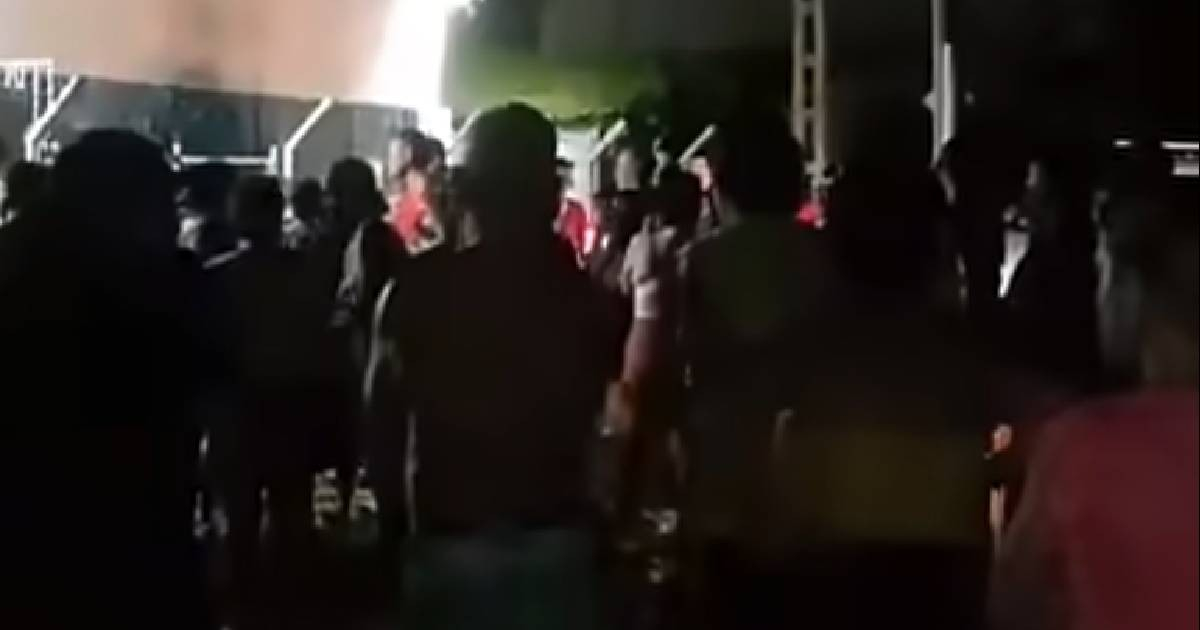
On Tuesday, the community of La Hata in Havana's Guanabacoa district took to the streets in a noisy protest. Locals, including families relocated from shelters and residents of military housing, banged on pots and pans to express their frustration, as reported in an audio clip shared by José Raúl Gallego on Facebook.
This demonstration occurred amid a widespread blackout that has left Cuba without power for nearly 24 hours. The national power grid suffered a complete collapse on Monday at 12:17 PM, marking the seventh full-scale outage in 18 months and the third one in 2026.
The immediate cause of the outage was the failure of Unit No. 6 at the Nuevitas thermoelectric plant in Camagüey. This shutdown left the country with only 935 to 1,000 megawatts available to meet a demand of 3,100 megawatts, resulting in a shortfall exceeding 2,200 megawatts.
Growing Discontent Amidst Power Struggles
The crisis worsened on Tuesday with a new malfunction at the Victoria de Girón substation, which led to the additional shutdown of the Renté 3 and Felton 1 units. Meanwhile, 106 distributed generation plants remained inactive due to fuel shortages, as reported by the Electric Union.
In some regions, such as Matanzas, outages have persisted for 87 consecutive hours, while Granma has experienced 72 hours without power. In Havana, some areas, including Guanabacoa, have faced up to 35 hours of daily outages, making it a hotspot for protests from 2024 to 2026.
Community Divide and Persistent Protests
La Hata, sometimes spelled La Jata, is a residential area where stark contrasts exist between the housing blocks. Military buildings feature tiled floors, gardens, and public lighting, while the homes of families relocated from shelters suffer from cracked cement floors.
Guanabacoa has a history of protests, with previous demonstrations in Calzada Vieja in May 2026 and Minas-Barreras in November 2024, establishing it as one of the capital's most persistent centers of unrest.
This latest protest is part of a larger wave of demonstrations sweeping the island. In June 2026, the organization Cubalex recorded 109 protests, setting a new record nearly double the previous high, with at least 38 arrests linked to the cacerolazos, including six minors.
Days before these events, Miguel Díaz-Canel sparked outrage by suggesting that Cubans direct their protests at the U.S. government rather than the Cuban regime. This statement was met with widespread rejection and further demonstrations across the country.
The government's response to recent protests has included increased militarization of key areas, deployment of armed black berets in Santiago de Cuba, and police operations with internet blackouts in Havana neighborhoods like El Cerro, El Vedado, La Lisa, and Regla.
Frequently Asked Questions About the Protests in Cuba
What triggered the nationwide blackout in Cuba?
The immediate cause was the failure of Unit No. 6 at the Nuevitas thermoelectric plant, which significantly reduced the available power supply below national demand.
Why is Guanabacoa a focal point for protests?
Guanabacoa has experienced frequent power outages and has a history of protests, making it a hotspot for community action against the government's handling of the situation.
How has the Cuban government responded to these protests?
The government has responded with increased militarization, deploying armed forces and conducting police operations, including internet blackouts in several Havana neighborhoods.