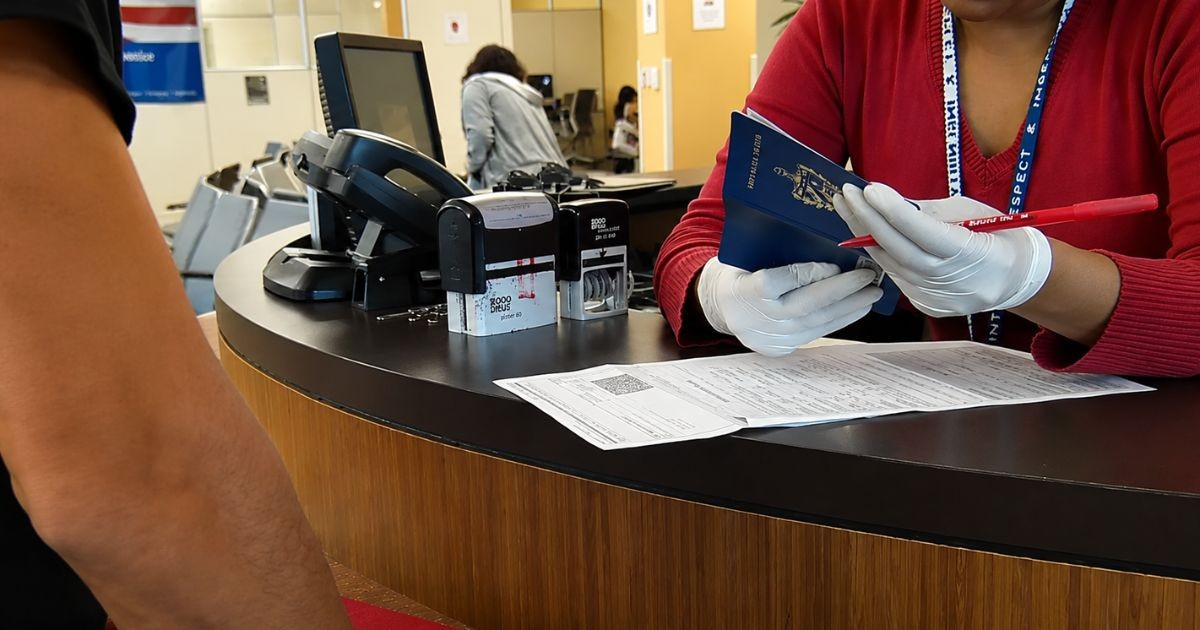
The United States Citizenship and Immigration Services (USCIS) has made the process for status adjustment interviews significantly more stringent. Applicants seeking permanent residency are now required to not only meet technical qualifications but also provide compelling reasons for why they deserve this benefit from within the U.S., according to a report by Telemundo on Tuesday.
This change stems from policy memorandum PM-602-0199, signed on May 21, 2026, which redefines status adjustment as an "extraordinary discretionary relief" rather than a routine administrative procedure.
The document clearly states that "the foreign national bears the burden of demonstrating why administrative discretion should be exercised in their favor," implying that simply meeting legal requirements no longer assures approval.
In practice, officials are now questioning applicants on their choice to process their residency from within the U.S. instead of using consular processing abroad. This question was not a standard part of interviews before.
Factors Influencing USCIS Decisions
Applicants must present specific positive factors to support their case, such as family ties to U.S. citizens or permanent residents, stable employment, tax payment history, community involvement, and adherence to immigration laws.
Conversely, negative factors—such as a history of immigration violations, unauthorized employment, overstaying visas, false statements, or inconsistent documentation—can lead to denial and potentially trigger deportation proceedings if the applicant lacks legal status at the time of refusal.
Legal and Community Implications
Attorneys present at interviews post-memorandum report on-the-spot affidavits and questions that deviate from the usual script, indicating a deeper level of scrutiny than in previous years.
According to an analysis by VisaVerge, around 1.2 million applicants pursue residency through this method. Those most affected by the change include H-1B visa holders in the EB-2 or EB-3 queues, L-1 executives, F-1 students who switched to H-1B, and family-based applicants.
Experts caution that responses suggesting the adjustment of status was chosen for convenience—such as "because it's easier" or "didn't want to travel"—may be perceived as an avoidance of the required discretionary analysis.
Specific Challenges for Cuban Applicants
The Cuban community faces unique challenges. Although the Cuban Adjustment Act of 1966 remains in force—only Congress can repeal it—the memorandum introduces a level of discretionary scrutiny previously absent for its beneficiaries.
Interviews for I-220A cases, the document received by Cubans entering through parole or with entry authorization, resumed in June 2026 with appointments in offices like Jacksonville, Florida. Attorney Liudmila Marcelo identifies three critical areas in these sessions: the intention upon entering the country, military service in Cuba, and affiliation with political organizations such as the Committees for the Defense of the Revolution.
The situation is further complicated by a Department of Homeland Security rule effective July 10, 2026, allowing USCIS to deny already accepted applications if technical errors like invalid or missing signatures are found. This results in case loss, a complete reprocessing, and forfeiture of fees paid.
The July 2026 Visa Bulletin confirms that several employment categories have reached their annual limits, leading to longer wait times and an anticipated increase in denials until September 30, 2026.
Understanding the New USCIS Interview Process
What changes have been made to the USCIS status adjustment interviews?
The interviews now require applicants to justify why they deserve residency from within the U.S., emphasizing discretionary relief rather than just meeting technical requirements.
How can applicants strengthen their cases during these interviews?
Applicants should present strong positive factors like family ties, stable employment, tax history, community involvement, and compliance with immigration laws.
What specific challenges do Cuban applicants face under the new guidelines?
Cuban applicants face additional scrutiny regarding their intentions upon entering the U.S., military service in Cuba, and affiliations with political organizations.