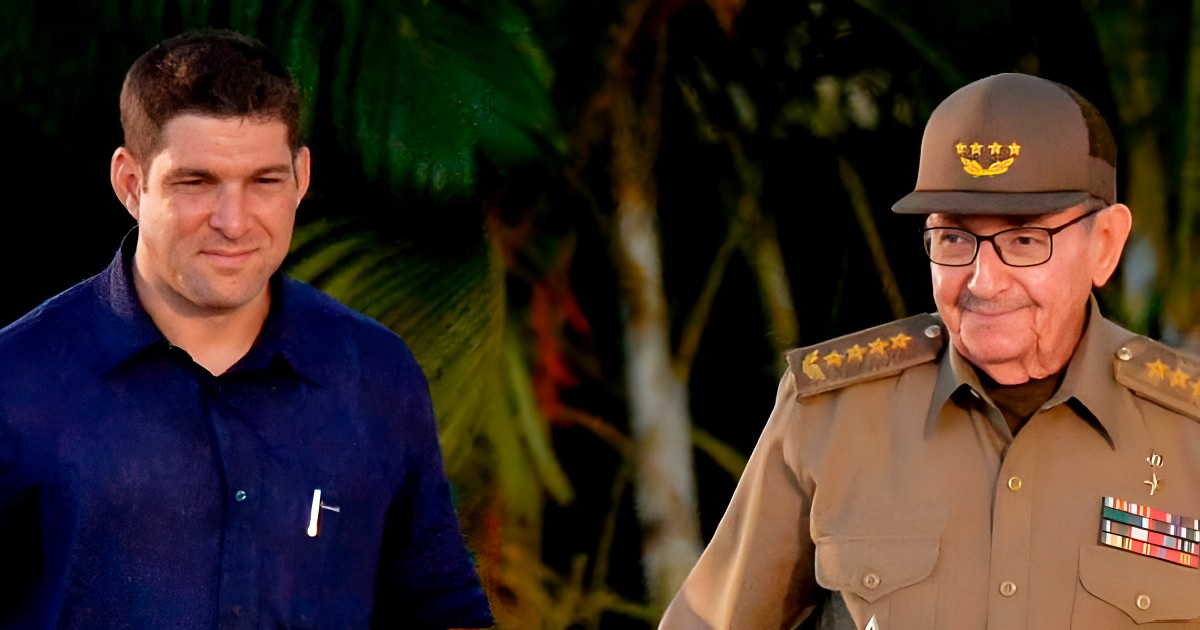
The comments made by Raúl Guillermo Rodríguez Castro, commonly known as "El Cangrejo" and grandson of Raúl Castro, ignited a wave of outrage among Cubans after his first interview with an American media outlet was published on Monday. The interview, given to USA Today, became a topic of heated discussion on Tuesday.
During the interview, El Cangrejo, dressed in Hermès sneakers, a Hugo Boss shirt, and a Rolex Submariner watch, made a statement that set social media ablaze: "It pains me that people can’t live as I do. My greatest regret is seeing people struggle. But I wake up every day to change that situation."
The response from Cubans was swift and fierce.
"Let him live a month like us," one person wrote.
"That’s not pain; that’s disconnection," another retorted.
Comments like "Let him go hungry for a month and then talk," "Try living on 2,000 pesos a month," and "Experience a 72-hour blackout" were echoed across social media platforms.
Contrasting Words and Lifestyle
The stark contrast between his words and his luxurious lifestyle was unbearable for thousands who survive on meager wages of $10 to $15 a month and endure power outages lasting up to 23 hours a day.
The interview took place over two days in June, within the office that once belonged to his grandfather at the Palace of Conventions, the seat of the Cuban parliament.
El Cangrejo completed his look with a gold chain and a medallion dedicated to Fidel and Raúl Castro, while storing his classified reports in a Salvatore Ferragamo leather briefcase.
Electricity Crisis and Political Aspirations
Coincidentally, the same day the interview was published, Cuba experienced its eighth total blackout in 24 months, with the electrical system producing a mere 935 megawatts against a demand of 3,100 MW, leaving 71% of the country without power.
In his interview, El Cangrejo posed himself as a potential mediator with Washington: "I can negotiate with anyone designated by the U.S. If given the opportunity, certainly with Trump."
Nonetheless, he emphasized his adherence to Castrism's principles and hinted at a dynastic succession: "I've never been interested in politics. It has never been my calling. But if the revolution needs me, I'll step up."
This last statement was publicly challenged by comedian Ulises Toirac, who questioned on Facebook: "What revolution decides who should step forward and who should step back?" suggesting that this notion is merely a disguise for a dictatorship lacking a democratic mandate.
El Cangrejo's Background and Public Perception
El Cangrejo serves as a colonel in the Ministry of the Interior and has headed the General Directorate of Personal Security for Raúl Castro since 2016. He is the son of the late General Luis Alberto Rodríguez López-Calleja, who led GAESA, the military conglomerate controlling a significant portion of the Cuban economy.
A journalistic investigation revealed that he made at least 23 private jet trips to Panama between 2024 and late 2025.
Frank Mora, a professor at Florida International University, described him to USA Today as "the favored grandson. Raúl Castro trusted his father, and he is the grandson he cherished most."
For the many Cubans enduring endless queues, eating whatever they can find, and living in darkness, his remarks about the "pain" of seeing the people suffer did not evoke sympathy but anger.
"The problem is he has never lived like the people," one commenter noted. "Let him dismiss his bodyguards and walk alone," another suggested.
Key Questions on El Cangrejo's Interview and Impact
What was the public reaction to El Cangrejo's statements?
The public reaction was one of outrage, with many Cubans criticizing the disconnect between his luxurious lifestyle and the struggles of ordinary citizens.
Why was El Cangrejo's interview controversial?
The interview was controversial because it highlighted the disparity between his affluent lifestyle and the hardship faced by most Cubans, as well as his role in the political landscape.
What are El Cangrejo's ties to the Cuban government?
El Cangrejo is a colonel in the Ministry of the Interior and has led the General Directorate of Personal Security for Raúl Castro since 2016. He is also connected to GAESA through his late father.