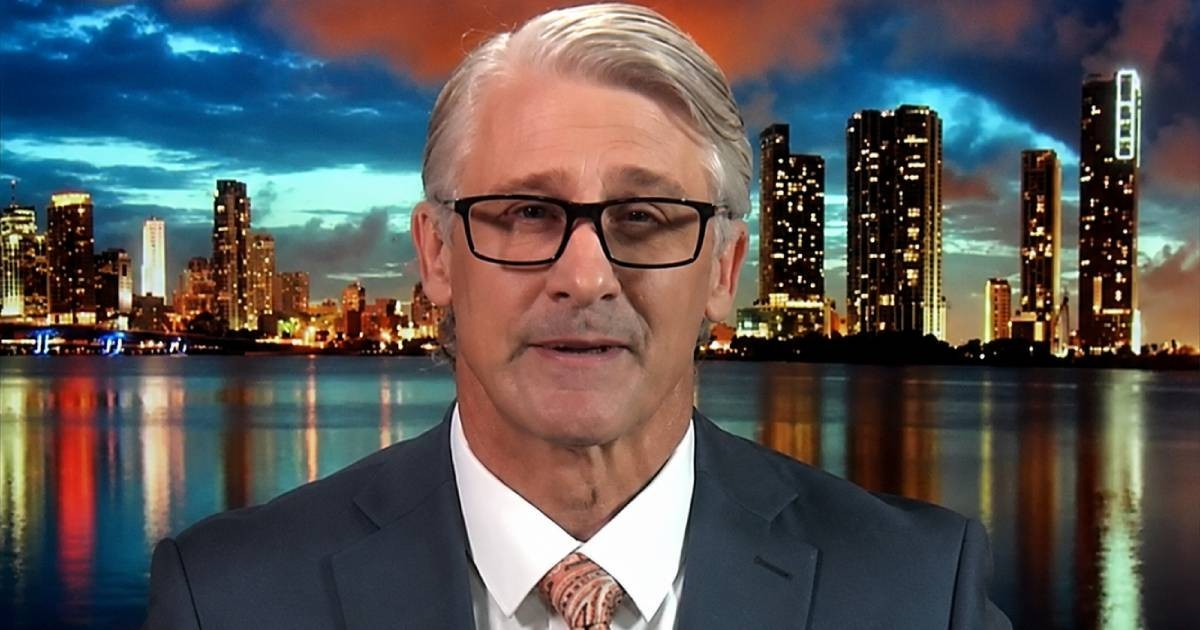
White House correspondent for Axios, Marc Caputo, reminded the public on Monday that the outlet had previously warned about a potential collapse in Cuba during the summer, following the island's latest complete power outage of the National Electric System (SEN).
“Over a month ago, Axios informed its readers that the United States was preparing for a potential collapse of Cuba as early as this summer, with July specifically mentioned. Now, the Associated Press reports that Cuba is facing a nationwide blackout,” Caputo noted on his X account.
Caputo's message included a link to an AP report attributing the blackout to depleted fuel reserves and the deteriorating state of Cuba's electrical infrastructure.
This comment from Caputo refers to an Axios article released on May 28, detailing how the Trump administration was considering various scenarios amid a worsening crisis on the island.
According to that report, U.S. officials considered the collapse of Cuba's totalitarian government a possibility as soon as this summer and had reviewed response plans for different instability scenarios.
The blackout on Monday marked the seventh total collapse of the National Electric System in the past 18 months and the third one in 2026 alone.
The Electric Union confirmed the disconnect with a short statement: "A total disconnection of the National Electric System has occurred. The causes are under investigation."
Prior to the collapse, the system faced a deficit exceeding 2,200 megawatts, with availability near 1,000 MW compared to an estimated demand of 3,100 MW. Additionally, eleven of the country's sixteen thermoelectric units were out of service due to breakdowns or maintenance.
The U.S. Embassy in Havana also issued a security alert to its citizens, advising them to avoid large gatherings and maintain supplies of water, food, and fuel due to the uncertainty caused by the blackout.
Meanwhile, Miguel Díaz-Canel once again blamed the energy crisis on U.S. sanctions and praised the efforts of Electric Union employees. The Ministry of Energy and Mines reported that protocols had been activated to restore the system.
The May Axios report highlighted Washington's strategy to gradually increase economic pressure on Havana. In an interview on Morning Joe, Caputo explained that fuel supply restrictions were part of this policy.
“The U.S. has effectively taken control of trade towards Cuba. It has restricted fuel; oil no longer reaches Cuba, partly because Cuba can't afford it,” Caputo stated.
In a related context, Secretary of State Marco Rubio described Cuba as "a failed state 90 miles from our shores," while President Donald Trump declared that a military intervention was unnecessary, claiming, "The place is falling apart."
Key Questions on Cuba's Energy Crisis and Political Instability
What caused the recent nationwide blackout in Cuba?
The blackout was caused by depleted fuel reserves and the deterioration of the island's electrical infrastructure.
What has the U.S. response been to Cuba's ongoing crisis?
The U.S. has been preparing for possible instability in Cuba, reviewing response plans, and increasing economic pressure through fuel supply restrictions.
How has the Cuban government responded to the energy crisis?
Cuban officials, including Miguel Díaz-Canel, have blamed U.S. sanctions for the crisis and praised local efforts to manage it, while the Ministry of Energy and Mines works on restoring the system.