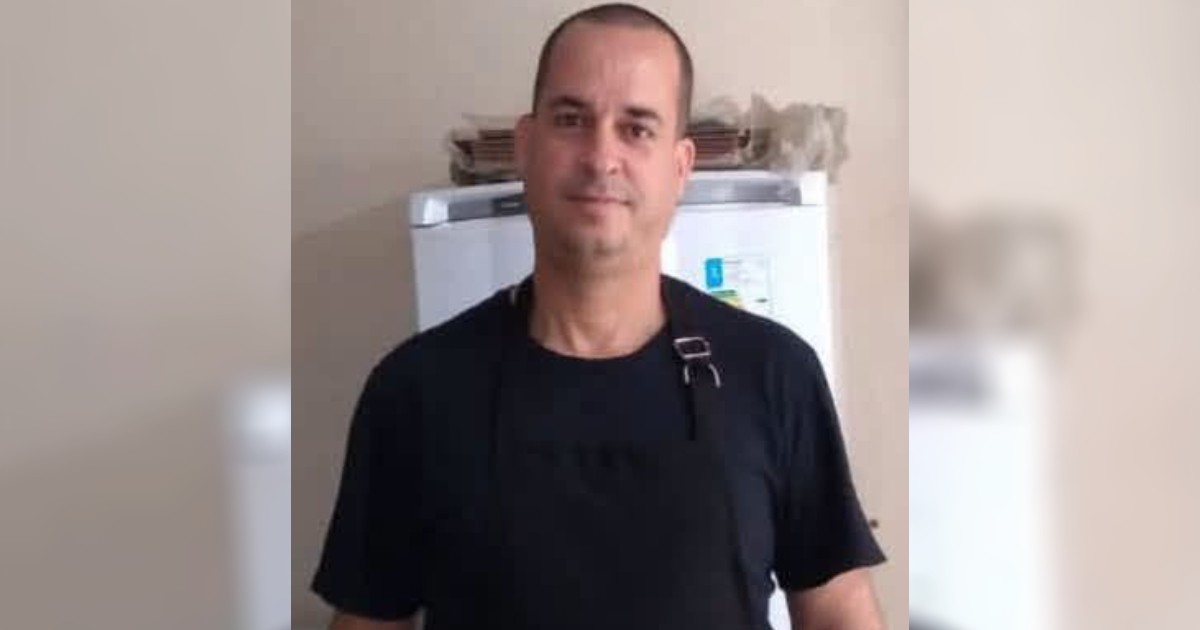
Yuri Domínguez Álvarez, a Cuban national, has been missing in Florianópolis, located in Brazil's state of Santa Catarina, for the past month, leaving his family in the dark about his whereabouts.
The 46-year-old was last seen on June 5, when he left his rented accommodation in the Saco Grande neighborhood carrying a backpack, and has not been seen since.
His sister-in-law, Karen Rubio, raised the alarm on Facebook within the "Cubans in Florianópolis" group this past Sunday, marking exactly one month since his disappearance.
"It has been a month since my brother-in-law went missing, and we have no information about his situation. (...) The family is frantic, not knowing what might have happened," Rubio expressed, sharing a photograph of Domínguez, described as a tall, fair-skinned man, although she provided no further physical details.
Domínguez's phone has been turned off since the day he disappeared, hindering any attempts at contact, Rubio explained.
An Urgent Plea to the Community
Rubio made a heartfelt appeal to the local Cuban community: "We kindly ask the Cuban community in and around Florianópolis, if anyone has seen him or knows anything, please help us or get in touch. Any piece of information, no matter how small, can be crucial."
"We are extremely anxious. Please share this message. Truly, any assistance is valuable," she concluded.
In response to inquiries from fellow Cubans in the group, Rubio clarified that her brother-in-law is in Brazil alone, while his wife and children remain in Cuba. She described him as a hardworking and peaceful individual who avoids trouble.
She noted that a fellow Cuban residing in the same city assisted the family by reporting his disappearance to the police and visiting the hospital in search of him, but there were no records of his presence.
Efforts to Broaden the Search
"A report was filed with the police, and his case is listed on the missing persons page. I've shared it across all groups I found in Florianópolis," Rubio said. "I want to believe he's safe and that nothing terrible has happened, but it's been a month without any news."
On the same social platform, user Belkis Castellanos López shared an alert on her profile and in the "Cubans in Curitiba" group. She explained that Maite, Álvarez's sister, reached out to her to extend the case's awareness among the Cuban community in Brazil.
"Seen for the last time on June 5, leaving his rental with a backpack, and did not return, we suspect he might be in a rural area," Castellanos detailed. She added that his phone remains off, and he had not been paying the phone bill.
Domínguez was residing in Saco Grande, a neighborhood in the northern part of Santa Catarina Island with access to natural and rural areas, which supports the theory that he might be in a remote location.
His disappearance was also reported by the SOS Desaparecidos organization in Brazil following the formal complaint to authorities.
The Broader Context of Cuban Migration
This incident occurs amid a significant Cuban exodus to Brazil. In 2025, Cubans filed 41,919 asylum requests in Brazil, an 88% increase from the previous year, surpassing Venezuelans as the top nationality seeking asylum. From January to April 2026 alone, another 13,414 Cubans sought refuge, making up 58% of the country's total applications.
Florianópolis is a favored destination for Cuban migrants in Brazil, featuring an active online community that utilizes social media platforms to assist in locating fellow countrymen.
Frequently Asked Questions About Missing Cuban Nationals
What are the main steps taken in the search for Yuri Domínguez Álvarez?
The search for Yuri Domínguez Álvarez involves his family reporting his disappearance to the police, listing him on missing persons pages, and spreading awareness through social media groups dedicated to Cubans in Brazil.
What challenges are faced in locating missing persons in rural areas?
Locating missing persons in rural areas is challenging due to limited communication networks, difficult terrain, and fewer resources available for search operations compared to urban settings.