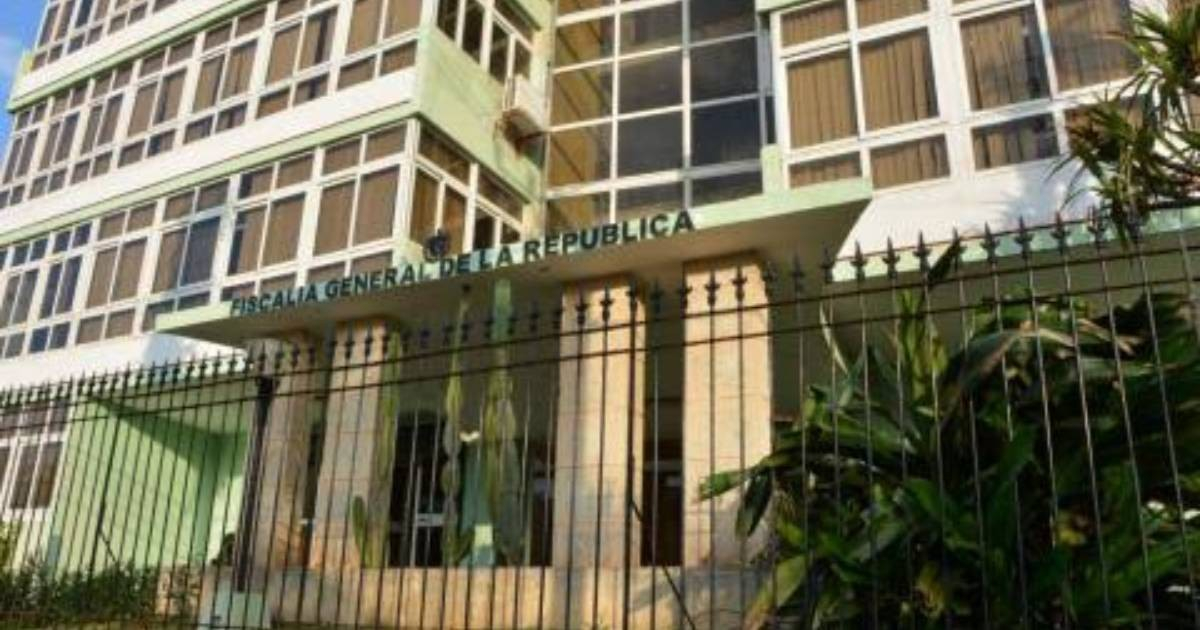
This Monday, the Office of the Attorney General of the Republic released an article to clarify the scope of the new Law No. 168 on Transparency and Access to Public Information, which took effect this month after the 180-day period set from its publication in the Official Gazette had elapsed.
First approved by the National Assembly of People's Power on July 18, 2024, and officially published on January 9, 2026, the law marks Cuba's inaugural comprehensive legislation regulating citizens' access to public information and the transparency obligations of state institutions.
Constitutional Principles and Obligations
In its publication, the Prosecutor's Office emphasizes that the law enacts principles from the 2019 Constitution. Among these are Article 53, which affirms the right of individuals to request and obtain "truthful, objective, and timely" information from the State; Article 97, concerning personal data protection; and Article 101, which mandates that state organs and officials operate transparently.
Implementation and Exceptions
The legislation establishes the National System for Transparency and Access to Public Information, managed by the Ministry of Science, Technology, and Environment (CITMA). Institutions known as "obliged subjects," including state bodies, public companies, and entities handling state resources, are required to proactively disclose public interest information without waiting for citizen requests.
The law mandates a 15-working-day period to respond to information requests, with extensions allowed only for justified reasons. However, it also includes exceptions that restrict access to information concerning national security, sovereignty, ongoing legal proceedings, personal data, and trade secrets, among other scenarios.
Challenges Amid Press Freedom Concerns
The law's implementation coincides with Cuba's persistent reputation as one of the most restrictive countries for journalism and information access. In the 2026 edition of Reporters Without Borders’ World Press Freedom Index, the Island ranked 160th out of 180 countries, placing it among the lowest in the Americas.
Independent organizations tracking freedom of expression noted 1,188 violations against journalists, activists, and citizens during 2025, with an additional 114 incidents, including several arbitrary detentions, recorded in January 2026.
Cuba's constitutional framework also dictates that major media outlets are state or socially owned, a model criticized by international organizations advocating for press freedom due to its limitations on independent media.
The Prosecutor's Office claims that this new legislation aims to "strengthen the culture of transparency" and foster "more efficient, organized, and participatory public management." The practical application of the law and the genuine realization of the right to information access are now key aspects for its execution.
FAQs on Cuba's New Transparency Law
What is the purpose of Cuba's Law No. 168?
The purpose of Law No. 168 is to regulate citizens' access to public information and establish the transparency obligations of state institutions in Cuba.
Who manages the implementation of this law?
The Ministry of Science, Technology, and Environment (CITMA) is responsible for coordinating the implementation of the National System for Transparency and Access to Public Information.
Are there any exceptions to the public information access under this law?
Yes, the law includes exceptions that can limit access to information related to national security, ongoing legal matters, personal data, and trade secrets.
How does Cuba rank in terms of press freedom?
Cuba is ranked 160th out of 180 countries in the 2026 World Press Freedom Index by Reporters Without Borders, indicating severe restrictions on press freedom.