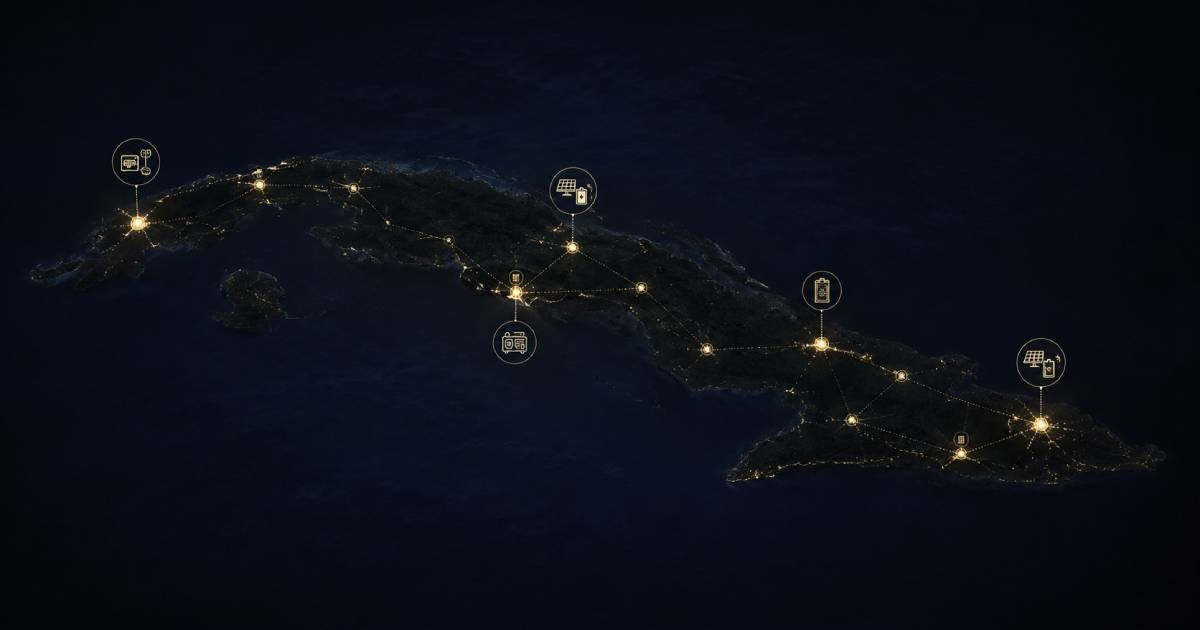
As millions of Cubans remained without power on Monday following the seventh complete failure of the National Electric System (SEN) in just 18 months, the state-run Unión Eléctrica (UNE) released a brief Facebook statement. The announcement mentioned that "microsystems are operational across the country" to protect essential services, and that a new unit at Energás Boca de Jaruco was being integrated into the grid.
Rather than offering reassurance, the message sparked a flood of criticism, sarcasm, and desperation on social media.
"What a country! Famous phrase," wrote one user, capturing the widespread frustration among Cubans.
Widespread Skepticism Over Microsystem Effectiveness
Many expressed doubts about the effectiveness of these so-called microsystems. "The microsystems aren't working everywhere; when activated, many failed," commented a Cuban woman. Another user questioned, "And what about the batteries in Cotorro and other places? Aren't they supposed to prevent this?"
There were also numerous accounts from those who had been without electricity for days. "This is an unbearable level of torture," lamented one person. From another affected area, a Cuban demanded, "And what about El Naranjal? We've been without power for over three days." A different user criticized, "And there's no fuel to even light up a thermoelectric plant."
Understanding Cuba's Microsystem Strategy
Microsystems are isolated electrical networks using diesel generators and solar parks to maintain power in prioritized circuits like hospitals, communication centers, and water supply systems when the SEN collapses. Energás Boca de Jaruco, located in Mayabeque, is a key facility for restoring the power system in the western region.
The UNE's announcement comes amidst one of the most severe electrical crises the country has faced. As of Monday, the deficit was over 2,200 megawatts, with availability near 1,000 MW against a demand of about 3,100 MW. On Sunday, 72% of the national territory was left without power during peak demand hours, an unprecedented level of disruption.
Roots of the Energy Collapse
The crisis is primarily attributed to the shutdown of 106 distributed generation plants due to a lack of fuel, sidelining about 890 MW. Additionally, there have been over three months without oil supplies. The situation is further exacerbated by the state of the Antonio Guiteras thermoelectric plant, the country's largest, which has experienced 17 disconnections in 2026 alone and hasn't undergone significant maintenance since 2010.
The energy crisis is spilling onto the streets. Recent days have seen protests in various parts of the country. On July 2, residents of La Lisa gathered outside the local Communist Party headquarters after over 50 hours without electricity or water. A day later, Regla residents took to the streets after more than 24 hours without power, marked by heavy police presence and internet outages. In some areas of Matanzas, outages have lasted up to 87 consecutive hours.
As of now, UNE has not disclosed how long it will take to fully restore service. Recovery from a total system disconnection can take several hours, even days. The most recent precedent was on March 16, 2026, when reconnection took 29 hours and 29 minutes.
Understanding Cuba's Energy Crisis
What are microsystems in Cuba's electrical grid?
Microsystems are isolated networks that use diesel generators and solar parks to provide electricity in critical areas like hospitals and communication centers during national grid failures.
Why is Cuba facing an energy crisis?
Cuba's energy crisis stems from fuel shortages leading to the shutdown of distributed generation plants, lack of oil supplies for months, and frequent disconnections and lack of maintenance at major power plants like Antonio Guiteras.
How are Cubans affected by the power outages?
The power outages have left millions without electricity, leading to protests and significant disruptions in daily life, including prolonged periods without water and essential services.