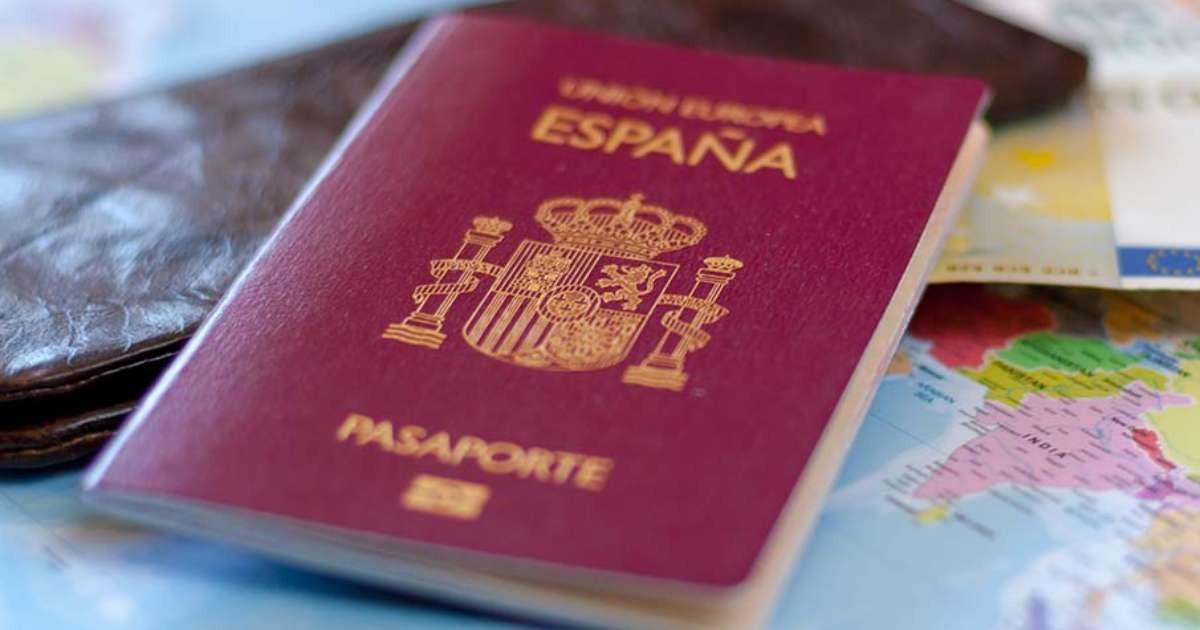
The controversial Grandchildren's Law is poised to drastically alter Spain's electoral landscape. An analysis by El Mundo suggests that the Register of Absent Spanish Residents (CERA) could expand from 2.7 million to nearly five million voters. This has reignited a heated debate over whether individuals who have never set foot in Spain should have a say in electing the government.
Since the Democratic Memory Law was enacted in October 2022, CERA has already seen a 20% increase. The numbers are expected to soar once consulates finalize the processing of 2.4 million pending nationality applications, with a denial rate below 2%.
If the 10% voter turnout from the 2023 general elections holds, this nearly five million-strong voting bloc could yield about half a million overseas votes, potentially swaying outcomes in small districts by 2027.
The Debate Over Political Community Membership
Political analyst Manuel Mostaza captures the crux of the debate: "Does it make sense for people who have never lived here, who don't pay taxes, and who bear different voting responsibilities than residents, to be part of the political community? It seems odd that someone who wasn't born in Spain could decide the last seat."
The controversy traces back to a directive from the Ministry of Justice, signed by Sofía Puente—sister of Minister Óscar Puente—shortly after the law's approval. This directive extended the law's scope beyond just republican exiles to include any descendant of a Spanish emigrant, reaching as far back as the 19th century.
Legal Interpretations and Historical Context
This broadened interpretation was never voted on in Congress. In fact, during the law's processing, the majority explicitly rejected a Citizens amendment proposing this expansion.
Manuel Pulido, a legal advisor, notes that "the instruction offers a very generous interpretation of the law," highlighting that "it references grandparents without age limits, allowing applicants to trace back to migrations from 150 years ago."
The scale of this phenomenon is evident in country-specific figures: Argentina has a million applications, and Cuba over 350,000, numbers that far exceed the estimated 30,000 to 50,000 republican exiles.
Cuban Connection and Administrative Challenges
The Cuban case presents an additional layer of complexity: to manage the overwhelming number of applications in Havana, the Spanish government engaged Grupo Empresarial Palco, a Cuban state enterprise linked to the military conglomerate GAESA, which has been under U.S. sanctions since May 1, 2026.
The process's opacity exacerbates concerns, with the only official data dating back to March 2026. The three ministries consulted by El Mundo—Democratic Memory, Justice, and Foreign Affairs—offered no updated statistics, deferring to one another.
Political and Electoral Implications
Politically, the Grandchildren's Law has sparked a fierce battle between parties. PP leader Alberto Núñez Feijóo labeled the process "electoral engineering," while Vox has called for the instruction's annulment and an audit of CERA by the Secretary of State for Justice.
Beyond the political skirmish, a deeper discussion on electoral models has emerged. Some experts suggest detaching nationality from voting rights, while others propose creating a dedicated constituency for overseas Spaniards, similar to Italy, France, or Portugal.
CSIC researcher Luis Miller provides a more cautious outlook: "For the Grandchildren's Law to impact general elections, several conditions would need to align: a large number of foreigners gaining nationality, a significant turnout, and a unified party preference. While it's uncertain this will happen by 2027, the external census is set for long-term transformation."
Key Questions About Spain's Electoral Changes
What is the Grandchildren's Law in Spain?
The Grandchildren's Law allows descendants of Spanish emigrants, even those from the 19th century, to apply for Spanish nationality.
How could the Grandchildren's Law affect Spain's elections?
The law could significantly increase the number of eligible overseas voters, potentially influencing election outcomes, particularly in smaller districts.
Why is there controversy over the voting rights of non-resident Spaniards?
Critics argue that individuals who have never lived in Spain and do not contribute taxes should not have a say in its governance.