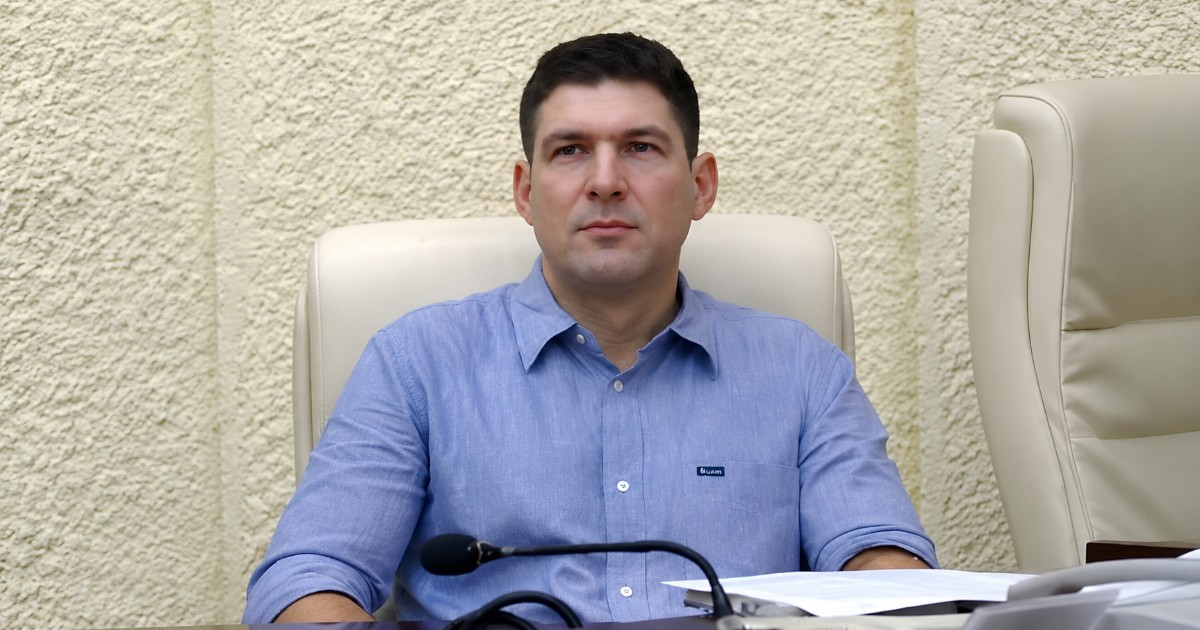
Raúl Guillermo Rodríguez Castro, widely known as "El Cangrejo" and the grandson of former Cuban leader Raúl Castro, granted his inaugural interview to a U.S. media outlet — USA Today — this Monday. The interview took place in the office that once belonged to his grandfather at the Havana Convention Center, the location of the Cuban parliament. Rodríguez Castro positioned himself as the individual poised to directly engage with Donald Trump about Cuba’s future.
At 42, Rodríguez Castro holds no official government position, yet he serves as a colonel in the Ministry of the Interior and acts as a crucial informal intermediary between Cuba's regime and Washington.
“Politics has never been my interest or vocation. However, if the revolution ever requires me, I’m ready to step in,” he expressed to the American outlet during a series of interviews conducted over two days in June in Havana.
Potential Negotiator with Trump
When discussing the possibility of negotiating with the Trump administration, Rodríguez Castro was forthright: “I can negotiate with anyone appointed by the U.S. Given the opportunity, I would engage with Trump.”
The USA Today interview marks his first with a U.S. media entity, although he previously spoke with the Arab outlet The National on June 19, defending the regime’s package of 176 economic reforms.
Rodríguez Castro met the journalist in his grandfather’s office, wearing casual attire of tight jeans, a black Hugo Boss t-shirt, and Hermès sneakers — a stark contrast to the prolonged blackouts affecting the Cuban populace.
Rising to Power
His climb to the epicenter of power was not accidental. Raised in the same building as his grandparents, he moved in with them at 18 and attended state meetings from a young age, including discussions between Fidel and Raúl Castro.
He is the son of the late General Luis Alberto Rodríguez López-Calleja, who headed GAESA — the military conglomerate controlling a significant portion of Cuba’s economy — until his death on July 1, 2022.
Frank Mora, a Florida International University professor, describes him without hesitation: “He’s the favorite grandson. Raúl Castro trusted his father, and he is the grandchild he cherished most.”
Rodríguez Castro was educated at the military school "Los Camilitos" and graduated with a degree in Accounting and Finance from the University of Havana.
On May 14, 2026, the CIA director John Ratcliffe met with him in Havana, marking the highest-level visit by a Trump administration official to Cuban soil since 2016, underscoring his role as a key interlocutor.
Challenges Amidst Crisis
Despite these interactions, Rodríguez Castro admitted to The National that negotiations have yet to yield results: “I wish I could say yes to that question, but the reality is no.”
The backdrop is an unprecedented crisis. Trump’s executive orders have slashed Cuban oil imports by 80% to 90%, and in June, UN High Commissioner for Human Rights Volker Turk warned that children are dying due to a lack of medicine.
The U.S., meanwhile, dismissed the regime's 176 economic reforms as “superficial smoke signals,” and on June 23, Marco Rubio announced new sanctions against five entities linked to GAESA, including the International Financial Bank and GeoMinera S.A.
Vice President JD Vance reacted cautiously to the reforms: “We’ll see what they do. If they make smart decisions, we’ll have a much better relationship with that island.”
Understanding the Role of El Cangrejo in Cuban Politics
Who is Raúl Guillermo Rodríguez Castro?
Raúl Guillermo Rodríguez Castro, also known as "El Cangrejo," is the grandson of former Cuban leader Raúl Castro. He is a colonel in the Ministry of the Interior and an informal intermediary between the Cuban regime and Washington.
What is Rodríguez Castro's stance on negotiating with the U.S.?
Rodríguez Castro is open to negotiating with any U.S. appointee and expressed willingness to engage directly with Donald Trump if given the opportunity.
What challenges does Cuba face under current U.S. policies?
Cuba is experiencing an unprecedented crisis, with U.S. policies under Trump reducing oil imports drastically and new sanctions targeting entities linked to GAESA, impacting the economy and access to essential goods like medicine.