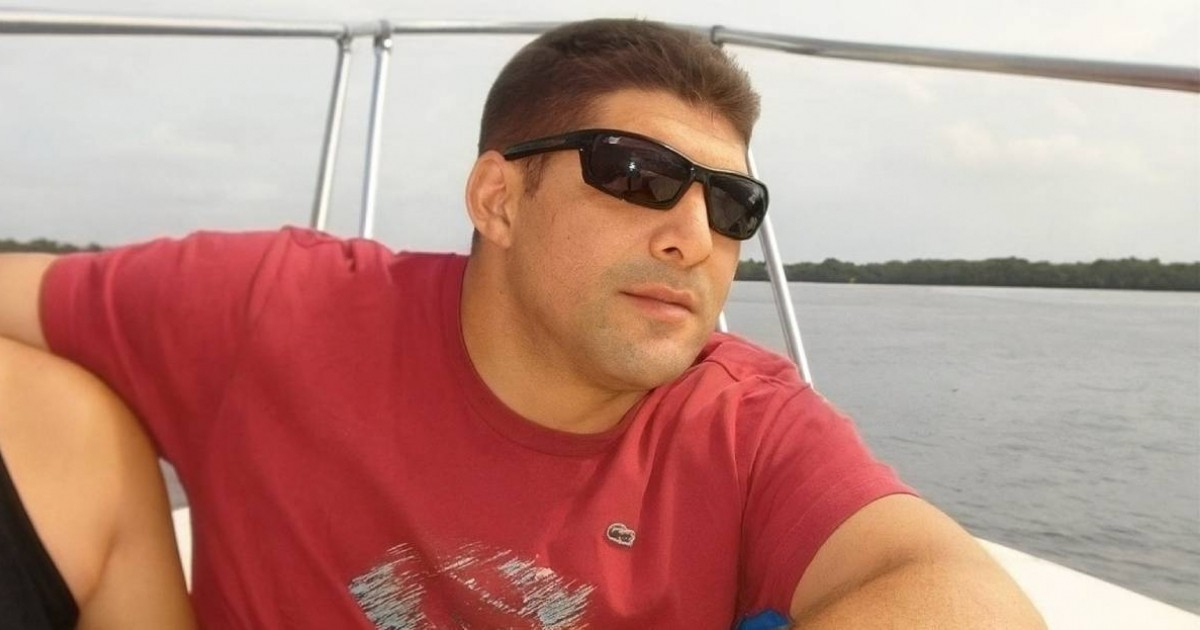
Raúl Guillermo Rodríguez Castro, known as "El Cangrejo," is the 42-year-old grandson of Raúl Castro. In a striking statement during his first interview with a U.S. media outlet, he expressed regret that Cubans do not live as he does—a stark contrast to his opulent lifestyle amid the struggles faced by the Cuban people under the regime he supports.
The interview, conducted over two days in June in Havana and published by USA Today on Monday, marks Rodríguez Castro's debut with an American publication. He appeared in light blue skinny jeans, a black Hugo Boss T-shirt, and Hermès sneakers, seated in his grandfather's former office atop the Havana Convention Palace, home to Cuba's parliament.
In sharp contrast, ordinary Cubans manage to survive on monthly wages ranging from $10 to $15, endure power outages lasting up to 25 hours a day, and face food and medicine shortages. These dire conditions prompted Volker Türk, the UN High Commissioner for Human Rights, to raise alarms in June about the deteriorating healthcare and its impact on children.
Rodríguez Castro keeps his classified reports in a Salvatore Ferragamo leather briefcase. Furthermore, a journalistic investigation revealed he took at least 23 private jet trips to Panama between 2024 and the end of 2025.
During the interview, Rodríguez Castro expressed willingness to engage in negotiations with Washington: "I can negotiate with anyone the U.S. designates. Of course, if given the chance, even with Trump."
Yet, he attempted to distance himself from politics, saying, "I've never been interested in politics. It has never been my calling. But if the revolution ever needs me, I would step in."
Though he holds no official government position, Rodríguez Castro is a colonel in the Ministry of the Interior and has served as Raúl Castro's personal security chief since 2016. His real influence stems from his lineage and decades of access to the core of power, having attended state meetings with Fidel and Raúl Castro since his youth. Frank Mora, a professor at Florida International University, succinctly puts it: "He is the favored grandson. Raúl Castro trusted his father, and he is the grandchild he cherished the most."
This marks his second public appearance, but his first with a U.S. outlet. Earlier, on June 19, he spoke with the Arab media outlet The National to defend the largest package of 176 economic reforms in Cuba's history, which includes private banking and the introduction of private capital. During that conversation, he admitted the negotiations with Washington had not borne fruit: "I would like to say yes to that question, but the reality is no."
Washington responded with skepticism. The State Department labeled the reforms as "superficial smoke signals," and on June 23, Marco Rubio announced new sanctions against five entities linked to GAESA, including the Banco Financiero Internacional and GeoMinera S.A.
The backdrop is an unprecedented energy crisis: Trump's Executive Order 14380, signed in January 2026, imposed secondary tariffs on those supplying oil to Cuba, slashing energy imports by 80% to 90%.
Rodríguez Castro's claim that it "pains" him that many do not live as he does, made from a seat of power while the island endures blackouts, is profoundly contradictory. It is the very system that El Cangrejo embodies, defends, and seeks to preserve that dictates the daily lives of millions of Cubans.
Understanding the Impact of Cuba's Economic and Political Climate
What are the living conditions like for ordinary Cubans?
Ordinary Cubans endure challenging conditions, surviving on monthly wages between $10 and $15, facing frequent power outages, and dealing with shortages of food and medicine.
What was Raúl Guillermo Rodríguez Castro's response to the current U.S.-Cuba relations?
Rodríguez Castro indicated a willingness to negotiate with any U.S. representative and expressed a readiness to engage in dialogue, even with former President Trump.