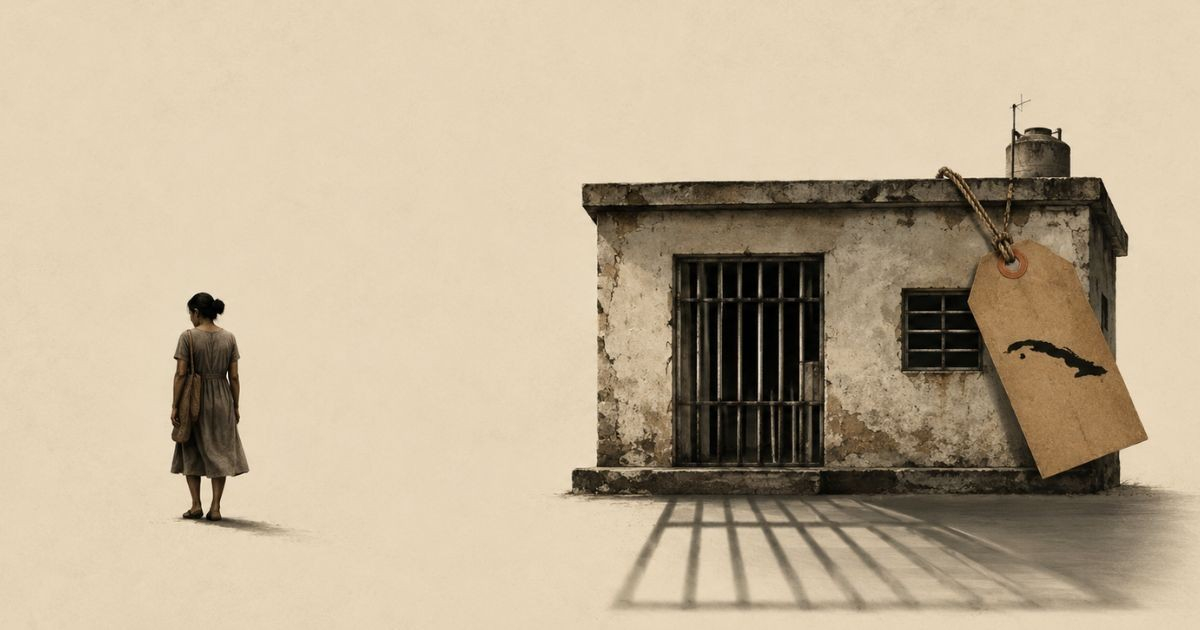
On Sunday, a Cuban woman named Gretel Aparicio shared a poignant post on Facebook, detailing the severe hardships she faces due to the ongoing crisis in Cuba. Her message lays bare her utter exhaustion from the constant water shortages, relentless power outages, and the impossibility of maintaining a dignified life for her family.
"I'm selling my bed since I've forgotten what it means to sleep peacefully in it. I'm selling my refrigerator because it's become nothing more than a decorative piece in my home. I'm selling my house because it no longer feels like a home, only a prison that doesn’t bring me joy," Aparicio lamented in her post, which includes a photo of her young son lying on a bed.
The post vividly captures the harsh reality of daily life in Cuba, illustrating the toll the crisis has taken on every aspect of existence.
The Struggle for Water
"I'm selling my water tanks and plumbing to the local scrap dealers, perhaps they'll find more use for them than I do, as having water has become a luxury," she remarked, referencing La Güinera, a neighborhood in Havana where residents have gone weeks without regular water supply, facing contaminated water and illegal sales of tanker deliveries at 40,000 pesos.
Nationally, approximately 2.7 million Cubans experience daily water shortages, as reported in May 2026, with the water system functioning at only 37% of its required fuel capacity.
Endless Power Outages
Aparicio also described the impact of the energy collapse on her household: "I'm tired of my son crying at night because of the unbearable heat. I'm exhausted from cooking with charcoal for over a year, as if I were living in ancient times."
The scarcity of domestic gas and power outages that exceed 20 hours daily in many areas have forced countless Cuban families to revert to using wood and charcoal for cooking. The United Nations has identified this situation as part of a humanitarian crisis, particularly affecting children and the elderly.
Cuba's electrical grid has suffered seven total collapses in the past 18 months, with a record blackout lasting 29 hours and 29 minutes on March 16, 2026. The Antonio Guiteras Thermoelectric Plant, the country's most significant, went offline for the 17th time this year just last Friday, accumulating 293 hours out of service.
A Heart-Wrenching Connection
Aparicio confesses that the only thing keeping her tethered to Cuba is her grandmother, whose plight she describes with deep sorrow: "Only God knows that my grandmother is the only reason I stay in this country. She suffers every night, and I have to listen to her cry because she sleeps on a plastic sheet that burns her skin to preserve her mattress for as long as God allows her to endure."
"I'm selling my dreams, maybe someone else can make use of them. It hurts to hope that one day the life of a Cuban will improve," Aparicio concluded her post with a heartfelt plea: "God, if you truly exist, have mercy on your people who are in such desperate need of you."
Frequently Asked Questions About the Cuban Crisis
What are the main challenges faced by Cubans like Gretel Aparicio?
Cubans are dealing with severe water shortages, frequent and prolonged power outages, and a lack of basic necessities, which make it difficult to maintain a standard quality of life.
How is the energy crisis impacting daily life in Cuba?
The energy crisis has led to power outages lasting over 20 hours a day, forcing families to cook with wood and charcoal. This has been identified as part of a humanitarian crisis, especially affecting vulnerable groups like children and the elderly.
What is the state of the Cuban electrical grid?
The Cuban electrical grid has experienced seven total collapses in 18 months, with significant outages, such as a 29-hour blackout. Critical infrastructure like the Antonio Guiteras Thermoelectric Plant has been frequently out of service.