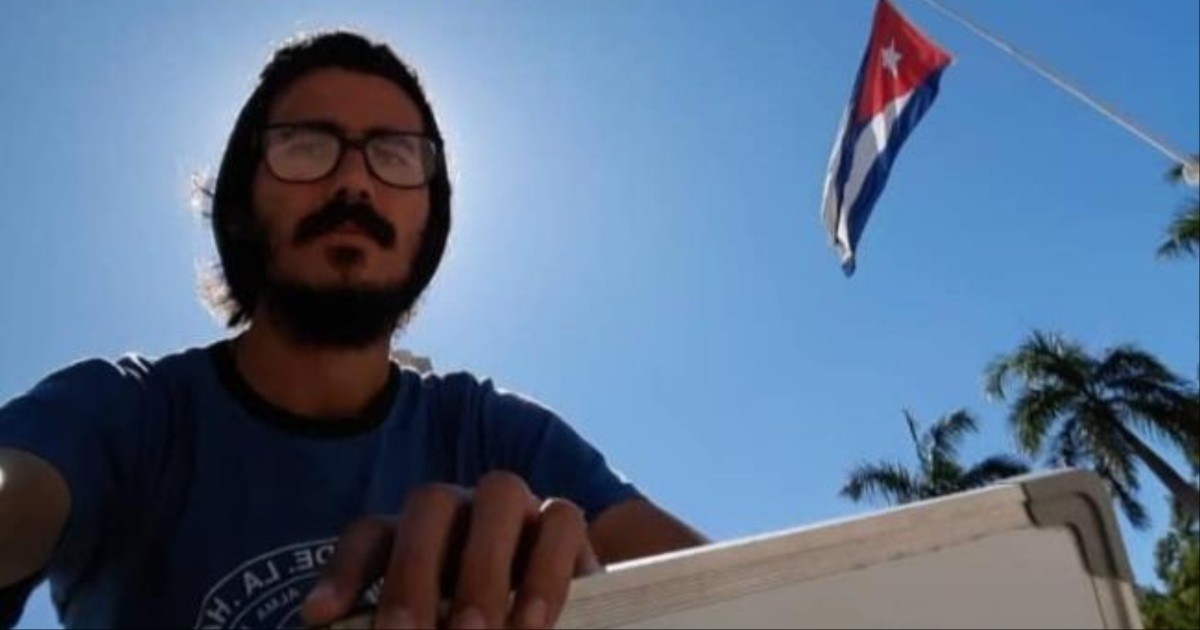
Leonardo Romero Negrín's mother raised alarms on Sunday regarding the continued police harassment her son faces, even after being released on Friday, as reported by Martí Noticias. The young activist was freed with a 2,000 Cuban pesos fine after spending two days in custody for participating in a pot-banging protest in Centro Habana's Colón neighborhood.
Romero Negrín was taken into custody on the night of Wednesday, July 1, at the corner of Ánimas and Consulado, where locals were demonstrating against prolonged power outages and water shortages. Authorities transferred him to the Zanja Street police station and initiated a criminal case against him for the alleged crime of "public disorder."
Family's Struggle During Detention
His mother, Aixa Negrín, shared the family's ordeal during the detention with Martí Noticias: "Getting Leonardo out was tough because every time we went to the station, they never let us see him or bring him anything. When we went on Friday morning to inquire, they told us to wait, and only at ten did they say he would be released with a 2,000 pesos fine. We had to pay the fine, bring back the receipt, and that's how he was released."
Harassment Continues After Release
The nightmare persisted beyond his release. Upon returning home with a group of people, as they passed in front of the police sector on Águila Street between San Rafael and San Miguel, the same officer who had previously detained and allegedly assaulted him reacted aggressively.
"He yelled insults, cursed at him, forced him into the sector, and threatened him," Aixa Negrín described, emphasizing the ongoing vulnerability her son faces from repressive forces.
The activist attempted to identify the officer: "Leo said, 'I'm not going to argue with you; I just want to see your badge number.' The officer remained silent, and the chief said, 'Let him go, drop it.' This shows how the harassment continues; it's never enough for them," his mother recounted.
Backdrop of a Severe Energy Crisis
The detention and subsequent harassment take place amidst an unprecedented energy crisis in Cuba, with a power deficit reaching a record 2,211 MW on July 3, cutting off electricity to approximately 69% of the country and sparking pot-banging protests across multiple municipalities in Havana and Santiago de Cuba.
The case has sparked a significant wave of solidarity. Filmmaker Fernando Pérez recorded a message of support during a blackout, warning, "As long as many young people are not heard and cannot participate, we will have a broken Cuba, not the Cuba we dream of."
The organization Cubalex highlighted that the case "confirms a pattern of persecution against former political prisoners in Cuba," who are subjected to surveillance, threats, arbitrary detentions, and criminal proceedings based on false accusations.
Pattern of Repression
Romero Negrín has a long history of repression: he was arrested in April 2021 for holding a sign on Obispo Street, detained during the July 11 protests of the same year—when he spent six days in jail and reported beatings—and arrested again in March 2025 and February 2026 alongside Professor Alina Bárbara López Hernández in Matanzas.
Following his release, journalist Lisbeth Moya González warned that the fight is far from over: "We freed Leo, but many remain inside. For those imprisoned for protesting, for fighting, for raising their voices, for dreaming of a Cuba where we all belong, we must continue."
Understanding the Harassment of Cuban Activists
Why was Leonardo Romero Negrín arrested?
Leonardo Romero Negrín was arrested for participating in a pot-banging protest against prolonged power outages and water shortages in Centro Habana.
What continues to happen to Romero Negrín after his release?
Despite his release, Romero Negrín continues to face harassment and threats from the same police officer who previously detained him, highlighting ongoing repression in Cuba.
How does this case reflect broader issues in Cuba?
This case reflects a broader pattern of persecution against political activists in Cuba, amidst a severe energy crisis that has led to widespread protests and significant civil unrest.