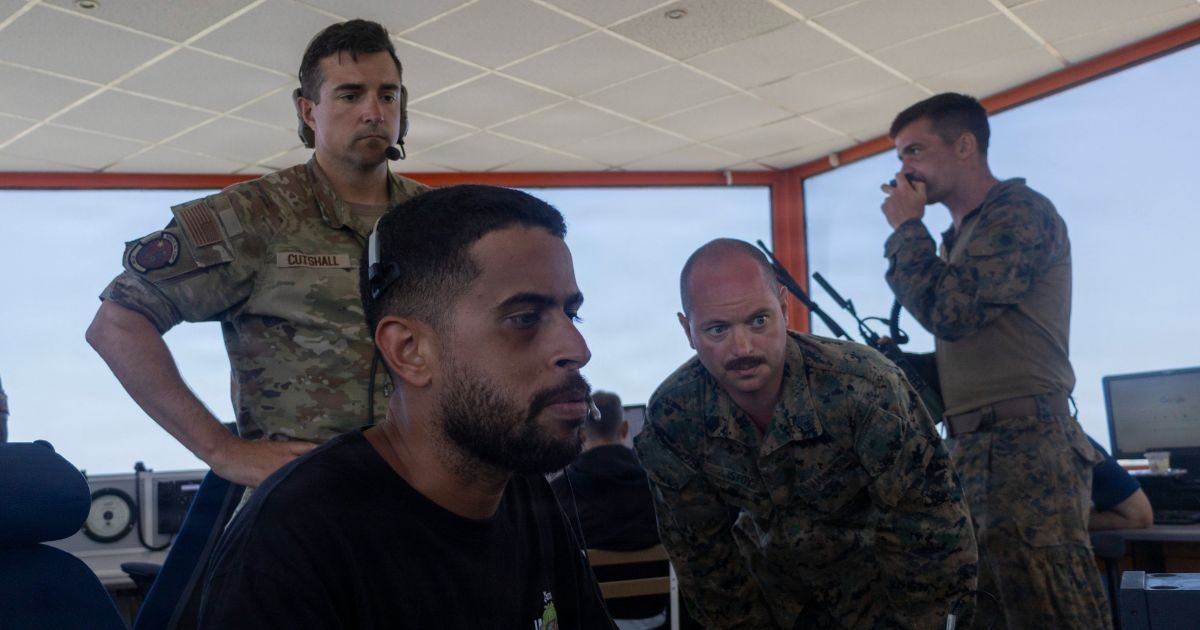
The United States has assumed operational control of the air traffic control tower at Simón Bolívar International Airport in Maiquetía, following a series of devastating earthquakes in Venezuela. This joint effort, involving U.S. Marines and airmen working alongside Venezuelan controllers, began on July 1, 2026, as confirmed by the U.S. Southern Command (SOUTHCOM).
The deployment comes in response to the catastrophic earthquakes measuring 7.2 and 7.5 magnitudes that struck Venezuela on June 24. According to official reports, by July 4, these seismic events had resulted in at least 2,954 fatalities and over 16,592 injuries.
Critical infrastructure at the airport was severely damaged by the quake, including collapsed roofs, cracked runways, and the destruction of the Area Control Center, which halted international humanitarian aid from reaching the country.
In a swift response to restore the flow of aid, the U.S. Air Force's 621st Contingency Response Wing dispatched 110 specialized airmen to manage tower and ground operations, effectively reestablishing the movement of humanitarian cargo aircraft.
SOUTHCOM stated that this intervention has alleviated logistical bottlenecks, ensuring vital supplies, heavy equipment, and aid personnel reach the front lines where they are needed most.
This operation is directed by the U.S. State Department as an integral part of the American government's humanitarian response, which SOUTHCOM described as direct support to civil-led diplomatic efforts.
Images released by the Southern Command depict military personnel in MultiCam and MARPAT uniforms—representing the Air Force and Marines, respectively—working closely with Venezuelan civilian controllers at the radar and communication consoles in the tower.
The U.S. has increased its financial commitment to over $300 million in aid, following an initial $150 million allocation authorized by President Donald Trump on June 25.
The military operation involves more than 1,300 marines from the 24th Marine Expeditionary Unit, aircraft such as the C-17, C-130, MV-22 Osprey, CH-47 Chinook, and UH-60 Blackhawk helicopters, as well as the USS Fort Lauderdale operating in the Port of La Guaira with amphibious vessels.
The United Nations has estimated up to 50,000 people missing and more than 6.7 million affected, while NASA's satellite assessments have identified 58,870 buildings damaged or destroyed and over 1.2 million tons of debris in La Guaira alone.
International sources estimate the economic damages from the disaster to be around $6.7 billion, marking the most severe seismic disaster in Venezuela's recent history.
This unprecedented operation marks a new chapter in direct military cooperation between the U.S. and Venezuela, two nations that have not maintained full diplomatic relations for years, now sharing personnel in the control tower of Venezuela's main airport.
FAQs on U.S. Involvement in Venezuela's Earthquake Relief
Why did the U.S. take control of the air traffic operations in Maiquetía?
The U.S. took control to ensure the efficient flow of humanitarian aid into Venezuela, which was disrupted due to the significant damage caused by the recent earthquakes.
What was the extent of the damage caused by the earthquakes in Venezuela?
The earthquakes resulted in extensive damage, including at least 2,954 deaths, over 16,592 injuries, and significant infrastructure destruction, including the airport's control center.
How has the U.S. supported the relief efforts financially?
The U.S. has pledged over $300 million in aid, following an initial $150 million authorization by President Donald Trump.
What role do the U.S. Marines and Air Force play in the relief operation?
U.S. Marines and Air Force personnel are managing air traffic operations and logistical support to facilitate the delivery of humanitarian aid efficiently.